




Illuminated timber-and-stone luxury homes along a residential street at dusk, with snow-capped mountains visible in the background.

Mini Split Installation in Pocatello, ID

Tell us about the job

Takes about a minute. No obligation.

New system or replacementMini-splitBannock County, ID
Step 1 of 2

What ZIP code is the job in?

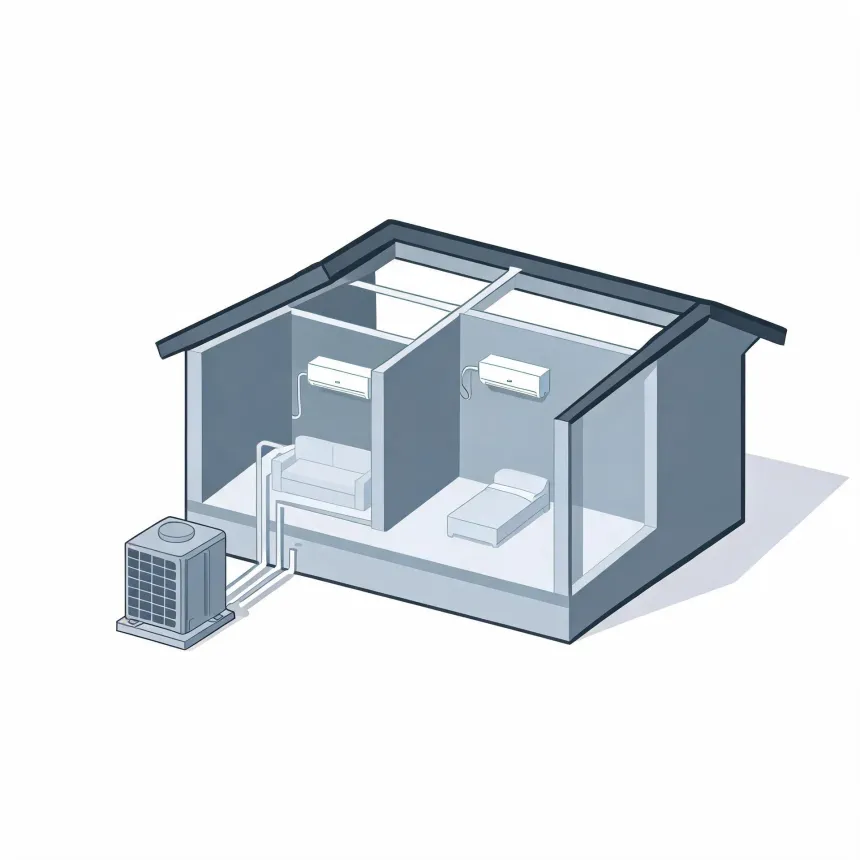
Most homes in Bannock County heat with utility gas, 58.9 percent of them. A mini split works differently. It has no furnace, no gas line, no ductwork to tie into, just an outdoor unit and one or more indoor heads wired for power. That makes it a common choice for a room an existing gas system does not reach well, or a home that wants heating and cooling from one piece of equipment. Electricity already heats 31.9 percent of homes here, so running a mini split alongside or instead of a gas furnace is not unusual in this area.

10 months
September through June, your system heats
2 months
July through August, it cools
18°F
the average winter night it heats against
81°F
the average summer afternoon it cools against
Illustrated cutaway of a two-room house showing two wall-mounted indoor air conditioning units connected by pipes to an outdoor condenser unit on the ground outside.
Your system heats September through June and cools July through August.

NOAA nClimDiv, 1991–2020 normals

Half the homes in Bannock County were built in 1976 or earlier, half in 1976 or later.

A standard mini split size covers either one, no special sizing for the older or newer homes here.

Two months of real work a year, the rest is idle time

Cooling runs July through August
Summer afternoons average 81°F
46 damaging wind events from 2015 to 2024
Cheap power means slow paybackIdaho electricity ran 11.52 cents a kilowatt-hour in 2024, so efficiency alone takes longer to earn back

Bannock County sits in zone 6B, a cold zone with a long winter. Any mini split installed here has to meet the same federal rule as other split-system heat pumps. That means 14.3 SEER2 for cooling and 7.5 HSPF2 for heating, with no lower bar for ductless equipment. SEER2 measures efficiency, not how much heat or cooling the unit puts out, so it narrows which models qualify without deciding what size you need. A system meeting that standard may also qualify for the federal tax credit available on heat pumps.

June is the month to have it ready

Cooling here runs July through August, so June is the month to have it in place. Install it then and the system is already running when the first hot days come, not partway through a two month window. There is no booked-up rush to beat. It is just easier to size and set up a system before you need it than while you are using it.

Find a contractor
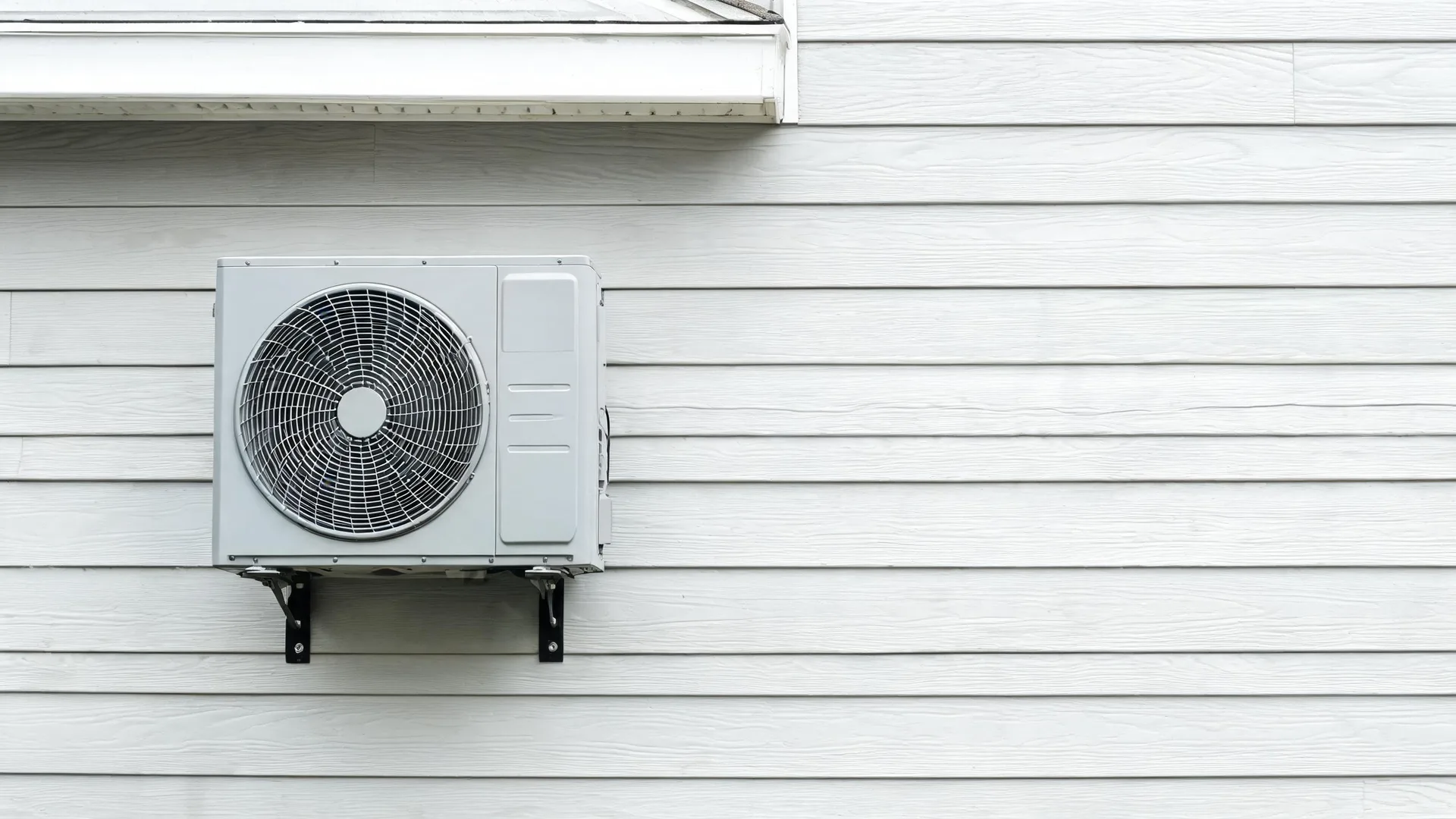
A beige split-system air conditioner outdoor condenser unit mounted on metal wall brackets atop a stucco wall.

Buy for reliability, not for the SEER2 number

Two months of real work a year means a mini split here does not need to chase the highest efficiency number to earn its keep. A reliable mid-range unit sized right for the room will do the job through July and August and sit idle the rest of the year. Put the money into a correct install instead, a unit sized for the space and a crew that sets the line set and mounts the outdoor unit the right way.

Sizing comes from a room by room load calculation

A contractor measures the room, counts the windows, checks the insulation and the ceiling height, and works out how much heat the space gains in summer and loses in winter. That number, not the square footage alone, decides which outdoor unit and which head go in. Rooms the same size can need different equipment if one has more glass or faces a different direction.
Oversized cools the air without drying it out

A mini split that's too big shuts off almost as soon as it starts, before it's run long enough to pull moisture out of the air. The room hits temperature but feels damp and clammy. An undersized unit has the opposite problem, running constantly and never quite catching up on the hottest days. The right size cycles on, runs long enough to do its job, and shuts off.

If a mini split is going in alongside an existing gas furnace, the old system usually stays right where it is. It keeps heating the rooms it always has, and the ductwork doesn't change. Nothing says the furnace has to go just because a new head is on the wall. Where the old system does come out is when a mini split is replacing it outright, room by room, with the goal of getting off gas or ductwork entirely. That's a bigger job. The gas line gets capped, the old equipment comes out, and sometimes the ducting that no longer serves a purpose comes out with it. A contractor can tell you which situation applies once they know whether this is an addition or a full swap.

Installation starts outside, not in. The outdoor unit needs a spot with clear airflow on at least a couple of sides, set on a pad or brackets above grade so it isn't sitting in standing water or buried in snow. From there a line set runs to each indoor head, carrying refrigerant lines, a drain, and electrical wiring through a hole drilled in the wall. That hole is usually the only real penetration the house needs. Once the lines are run, the system gets evacuated with a vacuum pump to pull out air and moisture before refrigerant goes in, and the crew checks the charge against what the line length calls for. Longer runs and more indoor heads add time, but the work is the same whether it's one room or several. A straightforward single-head job can often finish in a day. Adding heads or routing lines through tight framing stretches it longer.