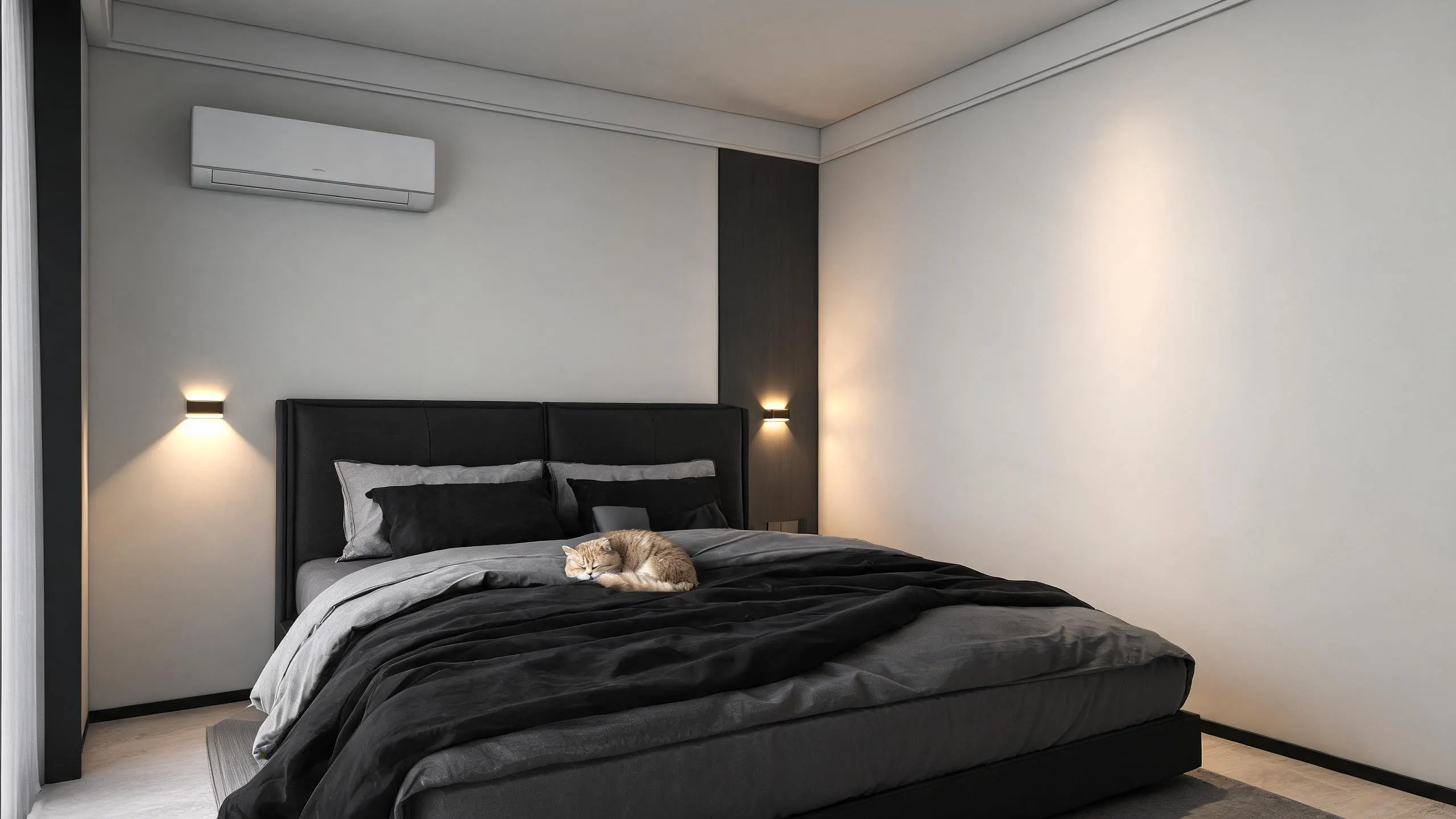






An orange cat sleeps on a neatly made bed with dark grey bedding in a minimalist bedroom with wall sconces and a mounted air conditioner.

Mini Split Installation in Rupert, ID

Tell us about the job

Takes about a minute. No obligation.

New system or replacementMini-splitMinidoka County, ID
Step 1 of 2

What ZIP code is the job in?

Electricity heats 73.2% of homes in Minidoka County, more than any other fuel. A mini split fits right into that picture, since it runs on electricity too and does not need a gas line. Utility gas heats 15.3% of homes here, and propane heats 5.3%, so an electric system already matches what most houses have in place. That makes a mini split a straightforward swap or addition, without rewiring the home's fuel setup to suit it.

9 months
September through May, your system heats
2 months
July through August, it cools
18°F
the average winter night it heats against
84°F
the average summer afternoon it cools against
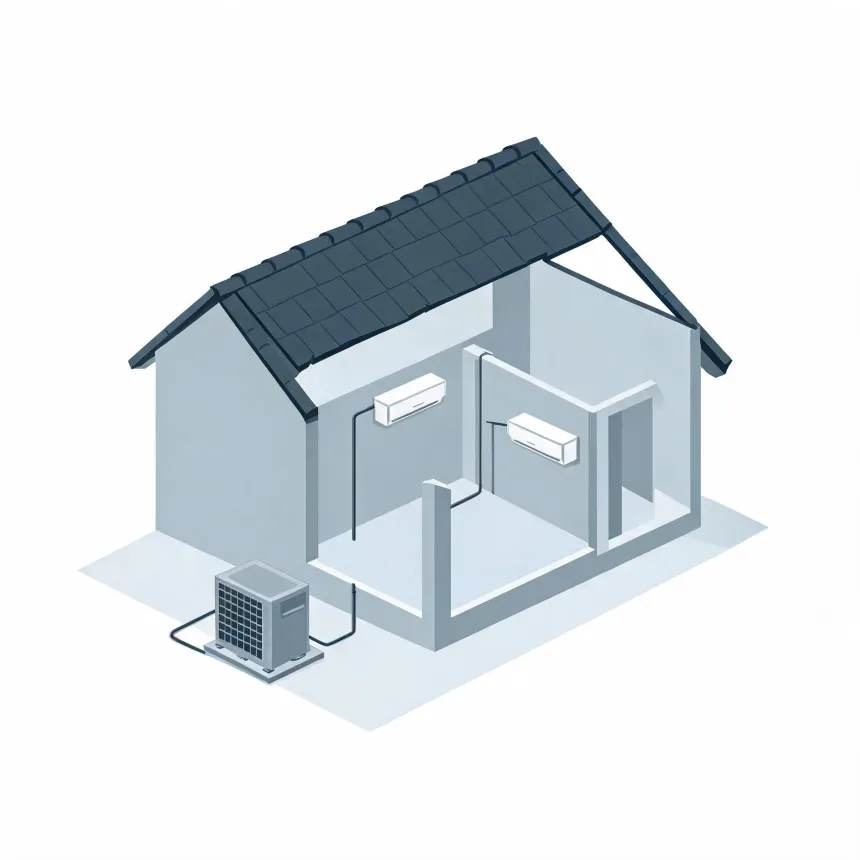
Isometric illustration of a cutaway house with a dark tiled gable roof, showing two wall-mounted indoor split air conditioning units connected by lines to an outdoor condenser unit on the ground outside.
Your system heats September through May and cools July through August.

NOAA nClimDiv, 1991–2020 normals

Homes in Rupert run cooling from July through August.

Put the mini split in during June and it's ready before the first hot day, not in the middle of one.

Two months of cooling a year is a light ask for a mini split

Cooling runs July through August
Summer afternoons average 84°F
42 damaging wind events from 2015 to 2024
Rupert, IDHalf the homes in Minidoka County were built in 1976 or earlier, half later. A standard mini split fits either one.

Idaho electricity ran 11.52 cents per kilowatthour in 2024, cheaper than most of the country. That changes the math on which mini split to buy. A higher SEER2 unit costs more upfront and saves less here than it would somewhere with pricier power, so the payback stretches out. That doesn't make efficiency worthless, but it means it shouldn't be the only thing driving the choice. How well the unit is sized to the room, how well it's installed, and how it holds up over the years matter more to what you'll actually be happy with.

A mini split for Rupert has to clear zone 5B's standard, and a tax credit can help cover it

Minidoka County sits in climate zone 5B, a cool zone where heating carries the bigger load. Any mini split installed here, ductless units included, has to meet the federal minimum of 14.3 SEER2 for cooling and 7.5 HSPF2 for heating. That's the floor, not a menu of options to weigh. A federal tax credit is available on top of that for units that qualify, which helps offset a system built to meet zone 5B's demands.

Find a contractor
A man in a cap, dark jacket and tan work pants carries a canvas tool bag up porch steps toward a green front door, with a potted shrub beside the entrance.
A beige split-system air conditioner outdoor condenser unit mounted on metal wall brackets atop a stucco wall.

Sized to the room, not the square footage

Sizing a mini split is not about matching the room's square footage to a number on a brochure. A unit too big cools the air fast and shuts off before it pulls the moisture out. The room ends up cold and damp at the same time. A unit too small never gets there at all. It runs and runs, chasing a setpoint it can't reach, and the compressor wears from being asked to do that day after day. Either mistake shortens the life of the system. Getting it right means a contractor works out the heat gain and heat loss for that room. That means the window area and which way they face, how the walls and ceiling are insulated, what else inside is already throwing off heat. Rooms that look the same size on paper can need different sized units once all that gets accounted for. Sized right, the system cycles on, runs long enough to actually condition the air, and shuts off. That's what steady, even comfort looks like over years of running, not just the first week.

The number of zones changes the whole job

A single indoor unit tied to one outdoor unit is the simplest install there is. Add a second or third zone and the outdoor unit has to be sized for all of them at once, the line set routing gets longer and more complicated, and each indoor head needs its own power run and its own path for the condensate to drain. More zones means more places for a line set to bend around framing, more wall penetrations, more time on the ladder.
What the wall and the ceiling are hiding costs more to work around

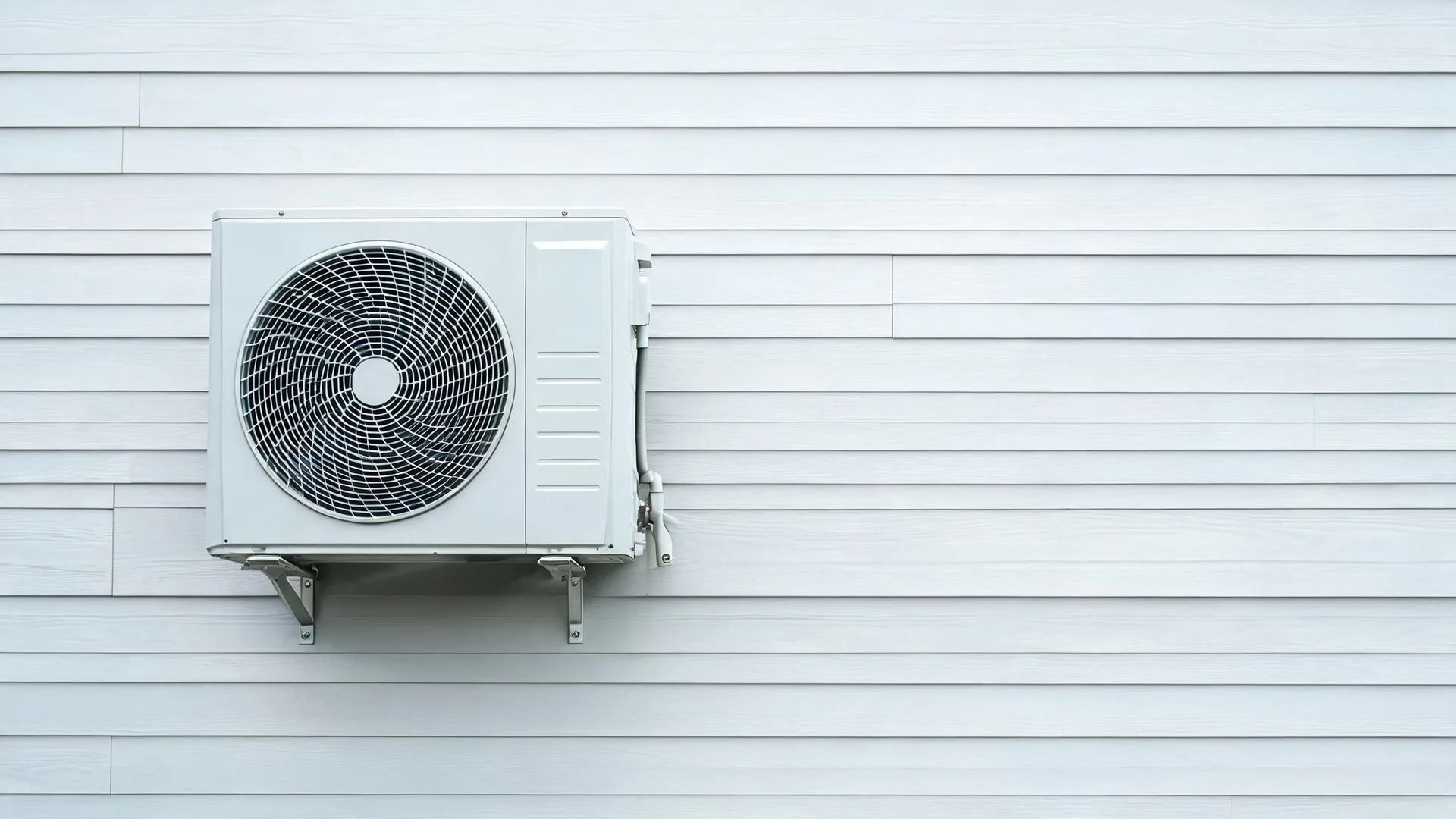
Running the line set and wiring between the outdoor compressor and the indoor head is easy when there's a clear, short path through the wall. When the run has to go up through an attic, across a long stretch of exterior wall, or around framing that's already in the way, it takes more line set, more mounting hardware, and more labor to get it hidden and sealed properly. A contractor won't know which kind of run a given room needs until the walls and the path are actually looked at.

If the old system is forced air, the furnace and the ductwork usually stay put even after a mini split goes in. The ducts don't feed the new system at all, since each indoor head delivers directly to the room it's mounted in. Some homeowners keep the furnace running as backup for the coldest stretches and let the mini split carry the rest of the year. Others have it disconnected once the new system proves out. A window unit or an electric baseboard being replaced is a simpler case, since there's nothing left to tie into or work around. Either way, removing the old equipment is a separate job from putting in the new one, and it's worth saying out loud to the contractor which one you want.

When comparing quotes, ask each contractor to walk through the load calculation instead of just handing over a number. Contractors can land on different sizes for the same room if one is going by a rule of thumb and the other actually worked out the heat gain and loss. Ask what brand and line of equipment is being quoted, since parts availability and warranty terms vary between them. Ask whether the warranty requires the installing contractor to handle maintenance to keep it valid. Ask who pulls the permit and who handles the inspection, since that step isn't optional on a job like this. And ask what happens to the old equipment, since removing it is a separate job that should be priced and scheduled on purpose, not assumed as part of the install.