





A row of illuminated timber-frame and stone houses photographed at dusk, with evergreen trees and a mountain range in the background.

Mini Split Installation in Salmon, ID

Tell us about the job

Takes about a minute. No obligation.

New system or replacementMini-splitLemhi County, ID
Step 1 of 2

What ZIP code is the job in?

Electricity heats 40.8% of homes in Lemhi County, more than any other fuel, with LP gas running second at 25.5%. A mini split runs on electricity alone, so it fits right into a house already wired for electric heat, no gas line or fuel tank involved. For a home with electric baseboards or wall units, a mini split usually means a system that can also cool the house in summer, something baseboard heat never could. It's worth checking what your current system runs on before you compare quotes, since that changes what the installation actually involves.

11 months
August through June, your system heats
13°F
the average winter night it heats against
73°F
the average summer afternoon it cools against
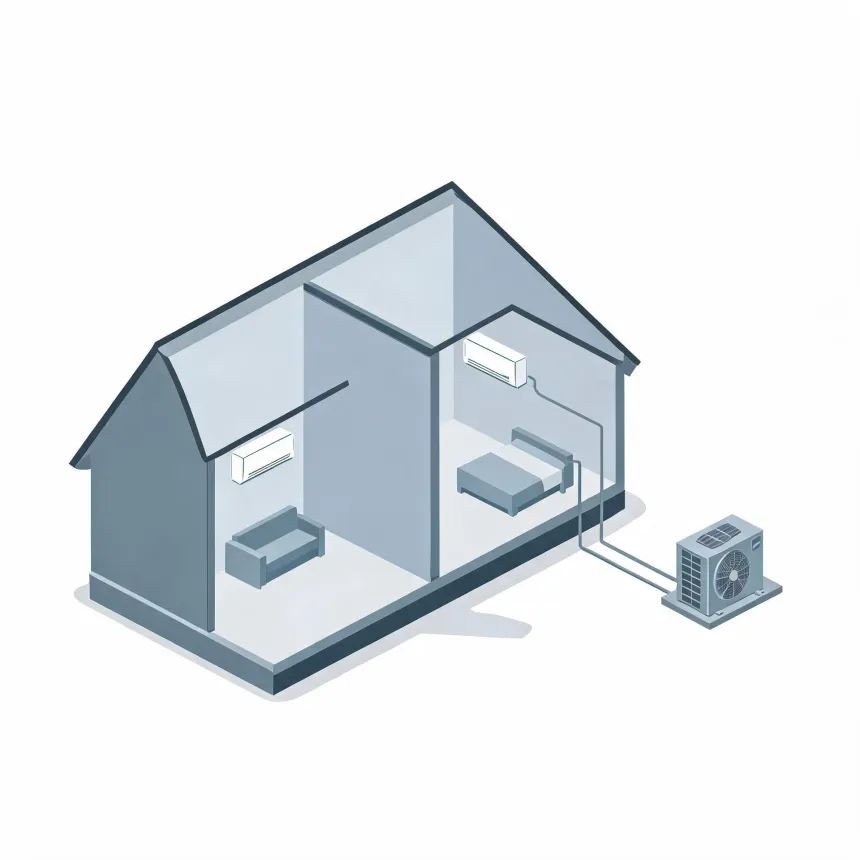
Isometric grey illustration of a cutaway house showing two rooms with wall-mounted indoor air conditioning units connected by lines to an outdoor condenser unit beside the building.

Idaho electricity ran 11.52 cents per kilowatthour in 2024, well under what a lot of the country pays.

A high-efficiency mini split still costs more up front, and cheap power means it takes longer to earn that difference back.

Summers here barely ask a mini split to work

Summer afternoons average 73°F
15 damaging wind events from 2015 to 2024
5 hail events from 2015 to 2024
Sizing a mini split for SalmonHalf the homes in Lemhi County were built in 1979 or earlier, and standard sizes fit them fine.

Lemhi County sits in zone 6B, a cold climate zone with winters that run long. Any mini split installed here has to meet the federal minimum for split-system heat pumps, 14.3 SEER2 for cooling and 7.5 HSPF2 for heating. That rule covers ductless units the same as any other split system, since the standard doesn't treat them as a separate class. With winters this long, the heating number matters as much as the cooling one, maybe more. A unit that just clears 7.5 HSPF2 will still heat the house, but it's working at the bare minimum through the coldest months. If the purchase is meant to qualify for the federal tax credit, check that credit's own efficiency requirement, since it sits above this minimum.

Pick the mini split that fits Salmon, not the one with the highest price tag

With power this cheap, picking a mini split for heating and cooling capacity makes more sense than chasing the highest efficiency number on the shelf. A unit that fits Salmon's winters and cools the house well in summer will serve this home better than one that costs more up front and takes years longer to earn that cost back.

Find a contractor
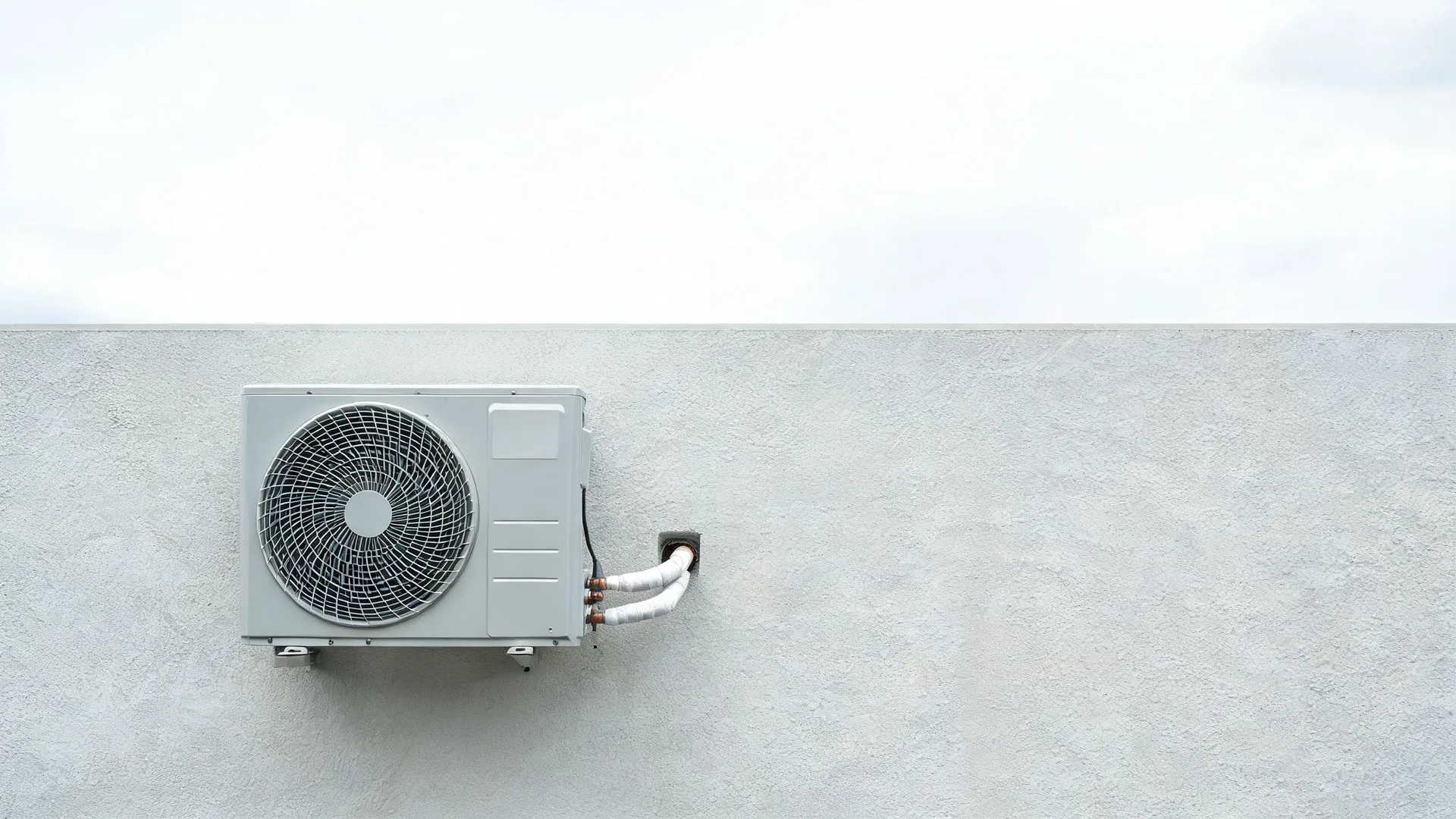
A white outdoor air conditioner condenser unit mounted on metal wall brackets against gray horizontal siding, with a blue sky and white clouds behind it.

What actually drives the price

Installation cost mostly comes down to what the crew has to do to get refrigerant lines from the outdoor unit to the indoor head. A straight run through a single wall, with the outdoor unit placed close by, is the cheapest version of this job. Add distance, add a second indoor head, or route the line set through framing, a soffit, or up multiple floors, and the labor climbs along with it. Electrical work is the other variable. A mini split needs its own circuit, and whether that means a short tap into an existing panel or a full new circuit run from a panel with no room left changes the job considerably. Where the outdoor unit goes matters too. It needs clearance for airflow and a path for condensate drainage, and a location that fights either of those adds work. The size and number of units drive cost directly, since a house heated by one zone costs less to fit than one split across several rooms with separate heads. None of this shows up on a price list until someone walks the house and sees what the lines, the panel, and the walls actually require.

Ask about low-temperature performance, not just the rating plate

Heat pumps lose capacity as the outdoor air gets colder, and that drop isn't the same across brands or models. Ask what the unit actually puts out at low outdoor temperatures, not just its rated capacity at mild conditions. Some mini splits hold most of their heating output down into deep cold, others fall off hard well before that. That number tells you whether it will keep up on the coldest night of the year, which the rating plate alone won't show you.
Ask who services the brand locally

A mini split needs its outdoor coil cleaned, its refrigerant charge checked, and eventually a part replaced under warranty. If the installer only works on a narrow set of brands, or the manufacturer has few dealers nearby, getting warranty work done later can mean a long wait or a tech unfamiliar with that specific system. Before deciding on a unit, ask who else in the area can service it, not just who's selling it now.

The number on the label, SEER2 for cooling and HSPF2 for heating, tells you how much heat a unit moves for the power it uses, not how strong it is. A higher rating means lower running cost, nothing about how fast a room heats up or how cold it can still deliver heat outside. Units carrying the same rating can still perform differently on a cold night, because that number comes from a test run under set conditions, not whatever weather you actually get. Chasing the top rating on the shelf can land you a unit that's efficient in mild weather and short on capacity when it's genuinely cold out. Compare that rating only after you've narrowed units down by capacity and low-temperature output, not before.

Installation starts with the outdoor unit and the indoor head going up, and most of the day goes to the part you never see. The line set carrying refrigerant between them has to run through a wall, which means a hole gets drilled and sealed, and the path it takes matters for how clean the job looks when it's done. Once both units are mounted and connected, the line set gets evacuated with a vacuum pump to pull out air and moisture before any refrigerant moves through it. Skip that step and the system can run, but moisture left in the lines causes problems down the road. After the vacuum holds, refrigerant gets charged to the amount that unit calls for, checked against pressure and temperature readings rather than guessed. The last part is testing it, running heating and cooling and checking that the head is actually putting out air at the temperature it should.