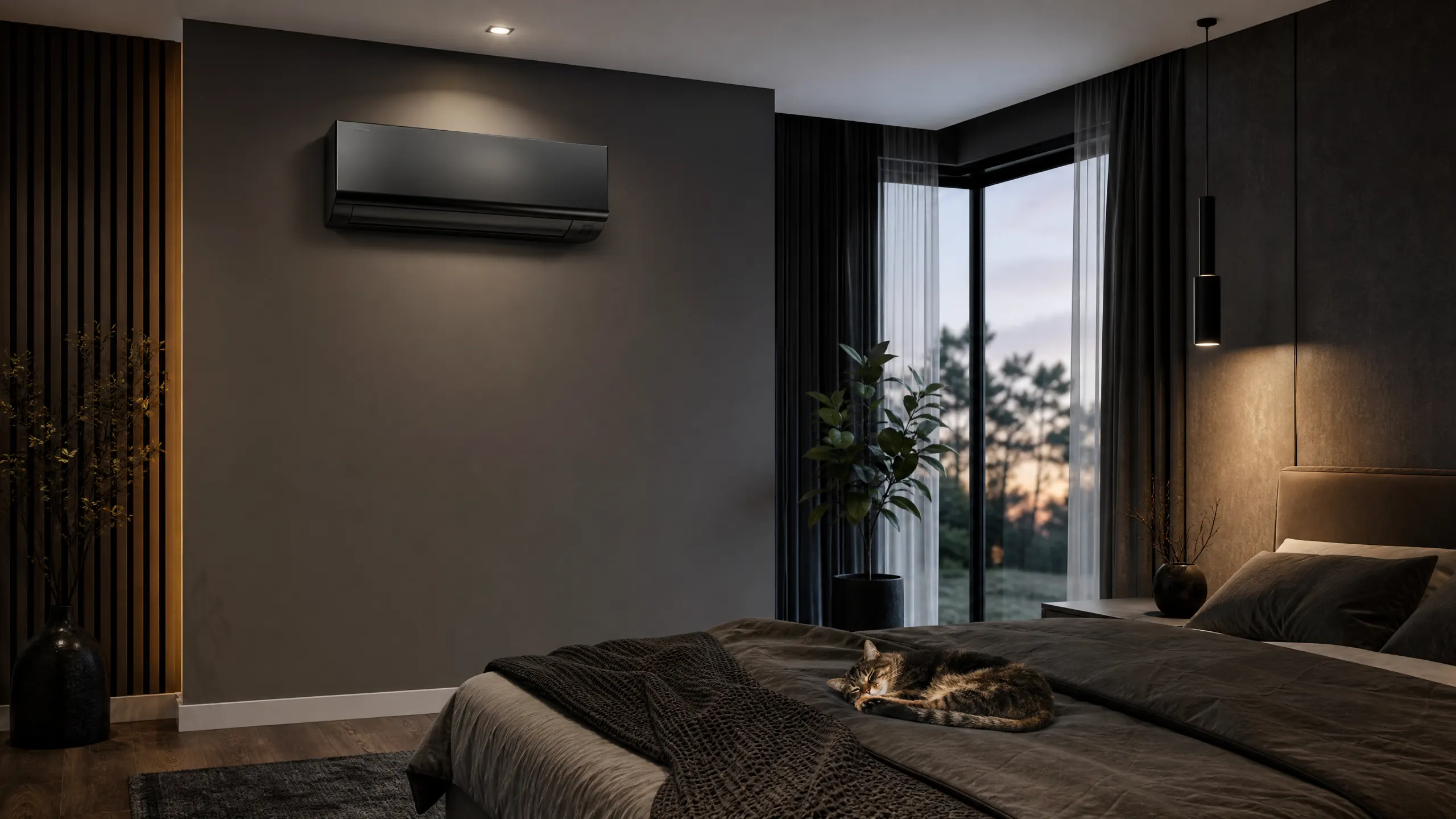






A tabby cat rests on a made bed in a dark modern bedroom equipped with a wall-mounted split air conditioner.

Mini Split Installation in Shoshone, ID

Tell us about the job

Takes about a minute. No obligation.

New system or replacementMini-splitLincoln County, ID
Step 1 of 2

What ZIP code is the job in?

Electricity heats 44.4% of homes in Lincoln County, more than gas, propane or oil. A mini split runs on electricity, so it fits into a home already wired for electric heat without adding a new fuel line or venting. Utility gas is the next biggest share at 26.5%, and plenty of those homes pair a gas furnace with a mini split for the shoulder seasons, since it heats and cools from the same unit. Either way, the electrical panel is the thing worth checking before installation, not the fuel you had before.

9 months
September through May, your system heats
2 months
July through August, it cools
18°F
the average winter night it heats against
84°F
the average summer afternoon it cools against
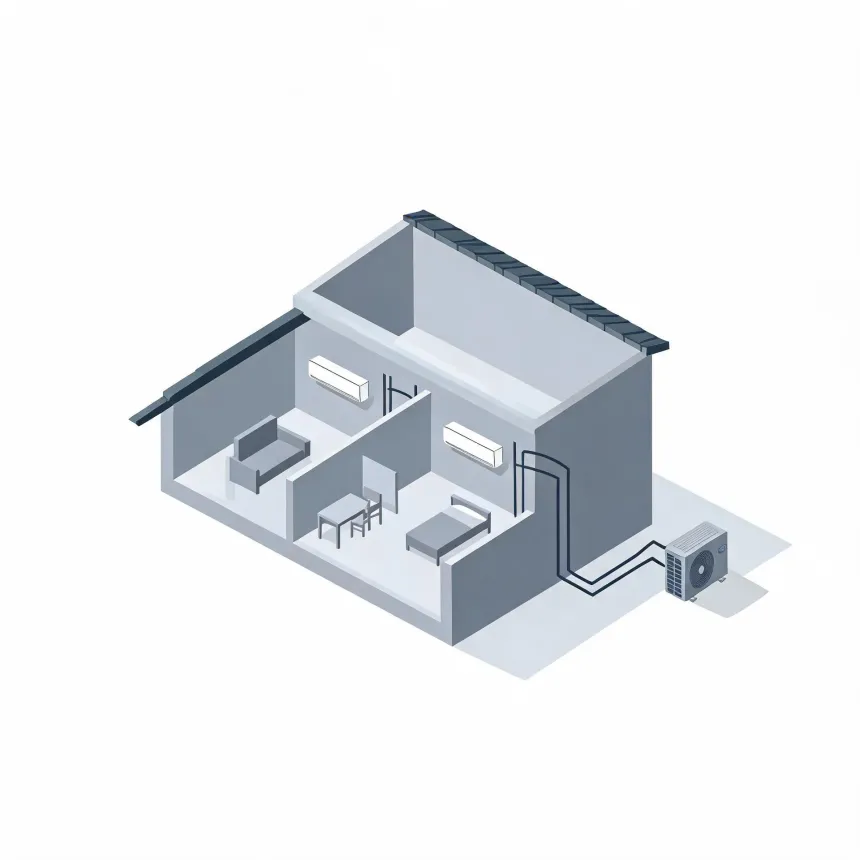
Isometric cutaway illustration of a gray house showing two wall-mounted indoor air conditioning units in separate rooms with furniture, connected by line sets to an outdoor condenser unit on a pad outside.
Your system heats September through May and cools July through August.

NOAA nClimDiv, 1991–2020 normals

Half the homes in Lincoln County were built in 1985 or earlier, half in 1985 or later.

A mini split sized to the room works the same in either one, no special sizing for the age of the house.

Two months of cooling, July and August, so get it in before July

Cooling runs July through August
Summer afternoons average 84°F
Power costs 11.52 cents a kWh statewide
Two months of real cooling loadAfternoon highs average 84°F in June, July and August, the only stretch a mini split in Lincoln County has to work hard.

When a mini split goes in, the old equipment doesn't always come out whole. A contractor will disconnect the furnace or the old central air condenser, cap off what needs capping, and haul away what the homeowner doesn't want kept. If the home had ducted air conditioning, the ducts themselves usually just get sealed off or left alone, since a mini split doesn't use them. A gas furnace that still handles the coldest months often stays in place, with the mini split working alongside it rather than replacing it outright. The old condenser pad outside can sometimes hold the new outdoor unit instead of needing a new one poured. Ask what happens to the refrigerant in the old system before work starts. It has to be recovered properly, not vented, and that's part of the job, not an extra.

Cheap power here means fit and installation matter more than the efficiency rating

Electricity in Idaho ran 11.52 cents per kilowatthour in 2024, well below the national average. A mini split still cuts costs against electric resistance heat or an aging air conditioner, but the payback on the most efficient model stretches out when power is already this cheap. That makes the choice less about squeezing out another efficiency point and more about picking a unit sized right for the room and installed well. Get the sizing and the installation right first.

Find a contractor
A man in a dark long-sleeve shirt and olive cargo pants, seen from behind, carries a waxed canvas tool bag up porch steps toward a green front door of a gray clapboard house.
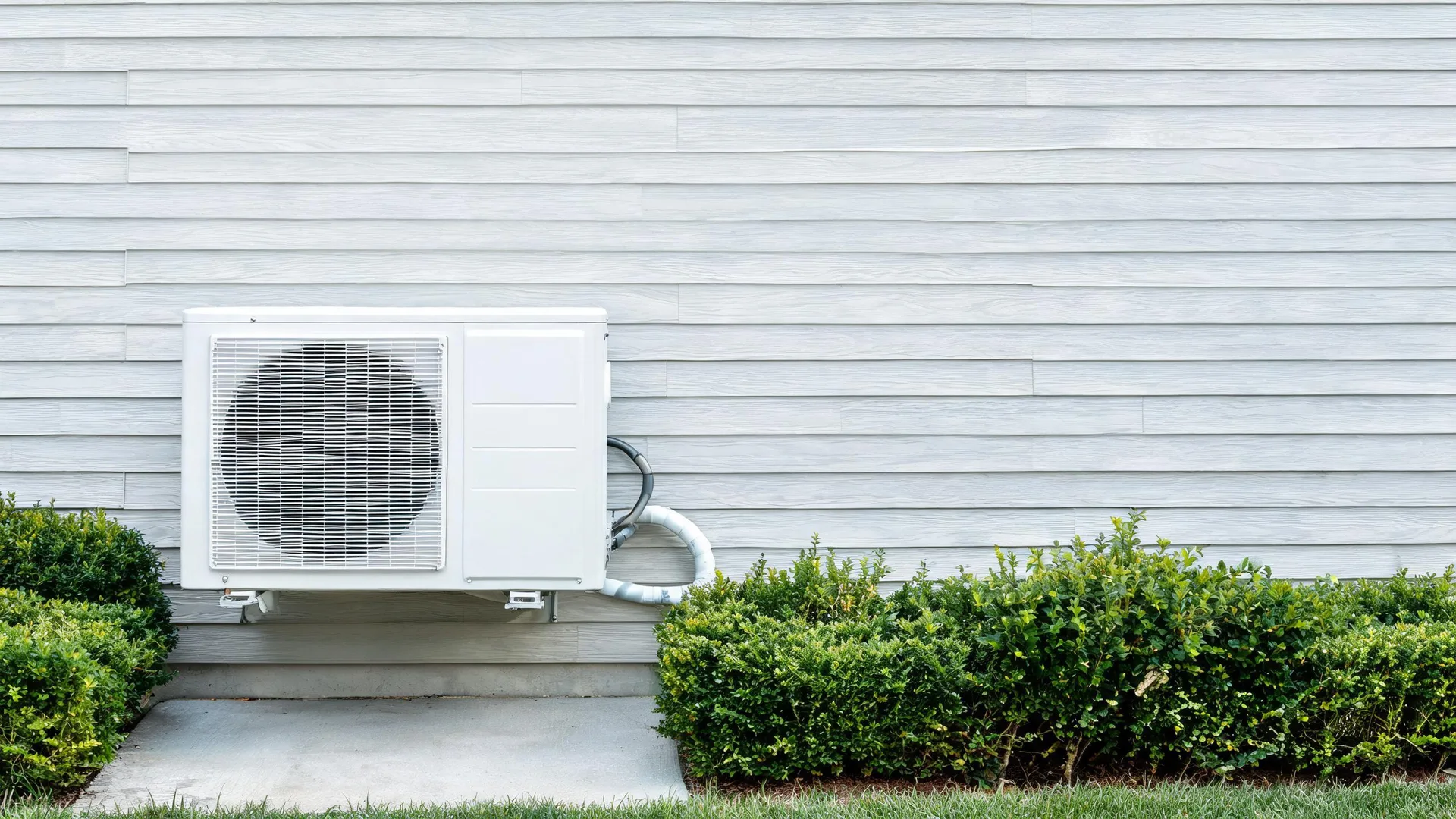
A white outdoor air conditioner condenser unit mounted on metal wall brackets against gray horizontal siding, with a blue sky and white clouds behind it.

Sized to the room, not the square footage

Sizing a mini split comes down to the heat load of the room it's going into, not the square footage alone. A contractor works out how much heat the room gains in summer and loses in winter, walking through window area, which way the room faces, the insulation in the walls, and the ceiling height. Rooms the same size can carry different loads if one has west-facing glass and the other doesn't. That load calculation is what tells you the output the unit needs to hit. It's also what tells you a bigger unit isn't automatically a safer bet. A unit sized above the load spends most of its time cycling on and off rather than running steady, and short cycling is harder on the compressor than a long, steady run. It also means the room overshoots the setpoint and swings back instead of holding level. An undersized unit has the opposite problem. It runs constantly and still can't keep up when the load peaks. Getting the load right before anything gets mounted is what makes the rest of the install worth doing.

The rating measures the equipment, not the install

The efficiency number on the label is tested under set conditions, with the line set length and airflow the lab used. A unit cut to fit a room that's too big or too small for it won't hit that number in the wall. A mismatched refrigerant charge or a line set run longer than it should be costs more efficiency than moving up a rating tier ever gains back.
A higher rating doesn't change what size you need

Picking a more efficient unit doesn't let you size down, and it won't make an oversized unit behave. A mini split that's too big for the room cycles on and off fast, which wears the compressor and leaves the room swinging between too warm and too cold. The rating on the box tells you how the unit performs. It doesn't tell you whether it's the right one for the room it's going in.

When you're comparing systems, ask how many zones each one supports and whether that matches how many rooms actually need separate control. A single zone cools or heats one space well. A multi zone system splits output across several indoor heads from one outdoor unit, but adding zones divides the total capacity, so ask what happens when every head is calling for cooling at the same time. Ask about the minimum output too, not just the maximum. A unit that can't throttle down low will short cycle in a small room, switching on and off instead of holding steady. Ask what sound level the indoor and outdoor units run at, since that varies more between brands than people expect. And ask who services the brand locally, because a system nobody nearby can get parts for becomes a problem well after install day.

Install day starts outside with the line set path. The outdoor unit gets its spot, usually on a mounting bracket or pad, and the indoor head gets hung on an interior wall where the refrigerant lines and the condensate drain can reach it through a hole bored in the wall. Those lines get run, the system gets connected, and the whole thing gets pulled down to a vacuum to clear out air and moisture before refrigerant ever moves through it. That step matters more than people think, since moisture left in the lines turns to acid and eats at the compressor over time. Once it holds vacuum, the system gets charged, powered on, and checked for temperature split and airflow at the head. A clean install leaves the line set hidden or covered, the wall penetration sealed against weather, and the unit running quiet before anyone signs off on it.