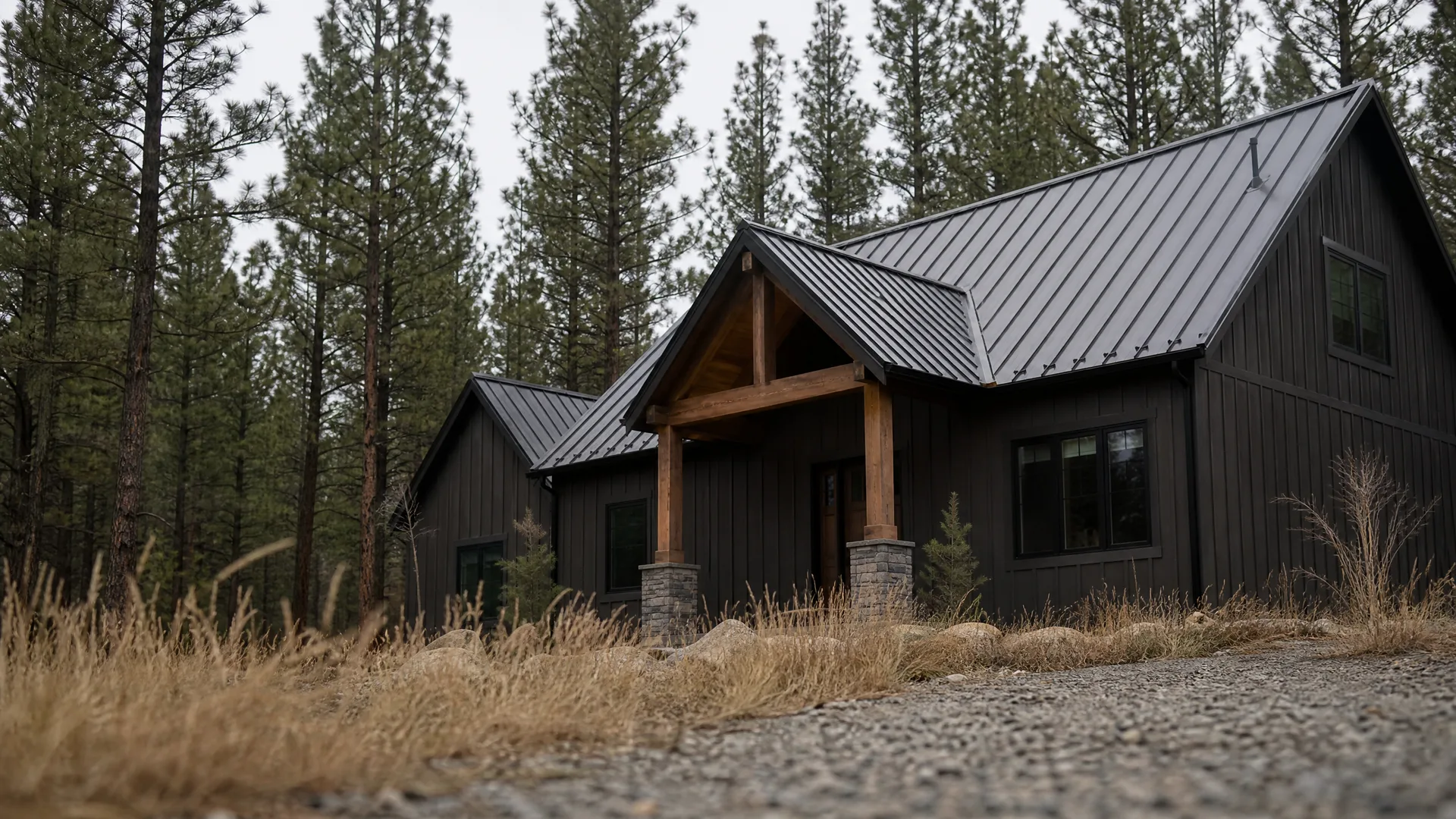





A dark-painted board-and-batten house with a standing-seam metal roof, timber entry porch and stone column bases, set among pine trees behind dry grass and a gravel drive.

Mini Split Installation in Soda Springs, ID

Tell us about the job

Takes about a minute. No obligation.

New system or replacementMini-splitCaribou County, ID
Step 1 of 2

What ZIP code is the job in?

Most homes in Caribou County heat with utility gas, 61.8 percent of them. A mini split works differently. It's electric, and it both heats and cools from the same unit. For a home with a gas furnace, that usually means adding a mini split to cover a room the furnace doesn't reach well, or to get cooling into a house that was never built with it. Electricity already heats 15.7 percent of homes here, so running a heating system on electric power is nothing unusual for this area. Worth checking what your current setup is before deciding whether a mini split replaces something or adds to it.

10 months
September through June, your system heats
15°F
the average winter night it heats against
77°F
the average summer afternoon it cools against
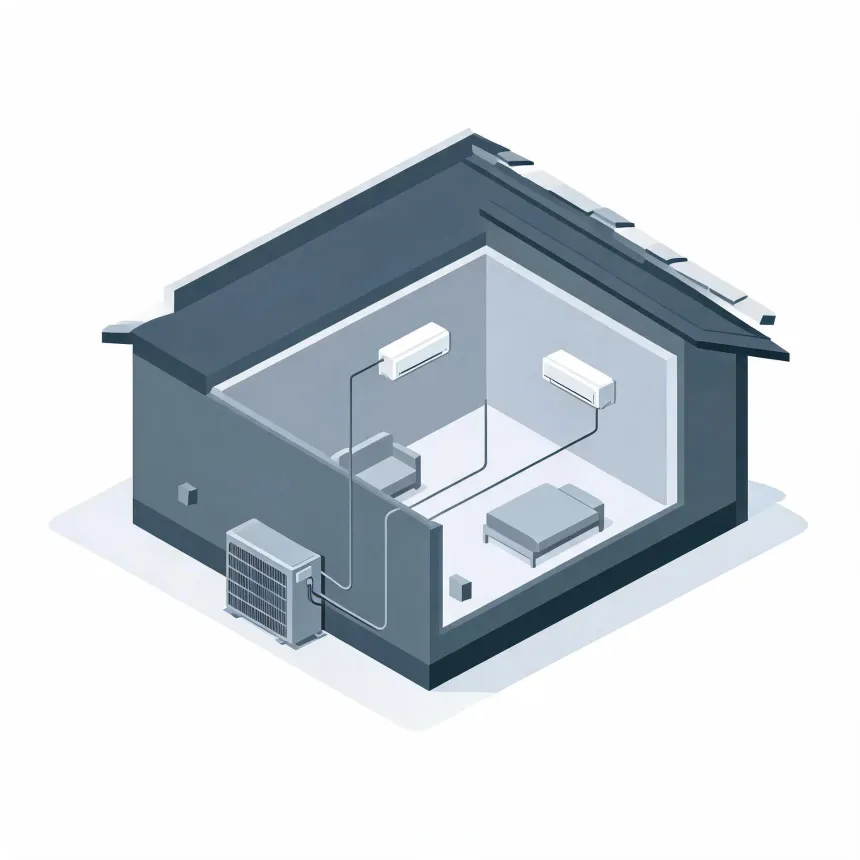
Isometric illustration of a cutaway house interior showing two wall-mounted indoor air conditioning units connected by line sets to an outdoor condenser unit beside the exterior wall.

Afternoon highs here average 77°F in June, July and August.

A mini split in Soda Springs spends most of its time heating, not cooling.

Cheap power here changes the payback math

Power costs 11.52 cents a kWh statewide
Summer afternoons average 77°F
21 damaging wind events from 2015 to 2024
Weather Caribou County plans aroundWinter storms hit this county 154 times in the last ten years.

Half the homes in Caribou County were built in 1972 or earlier. A house that age wasn't built with the wall space or electrical panel a mini split needs in mind, so an installer has to work with what's there rather than what a newer build would offer. The line set needs a clear path through the wall, and the outdoor unit needs a place to sit on its pad or bracket. Older wiring sometimes means the panel needs a look before adding a new electric load, especially if the house still has its original service. None of this rules out installation. It just means the job starts with what your walls and panel can take, not with a catalog spec sheet.

Pick reliable, not top of the line

It won't be worked hard here, so pick a reliable system that fits. You don't need the top efficiency model.

Find a contractor
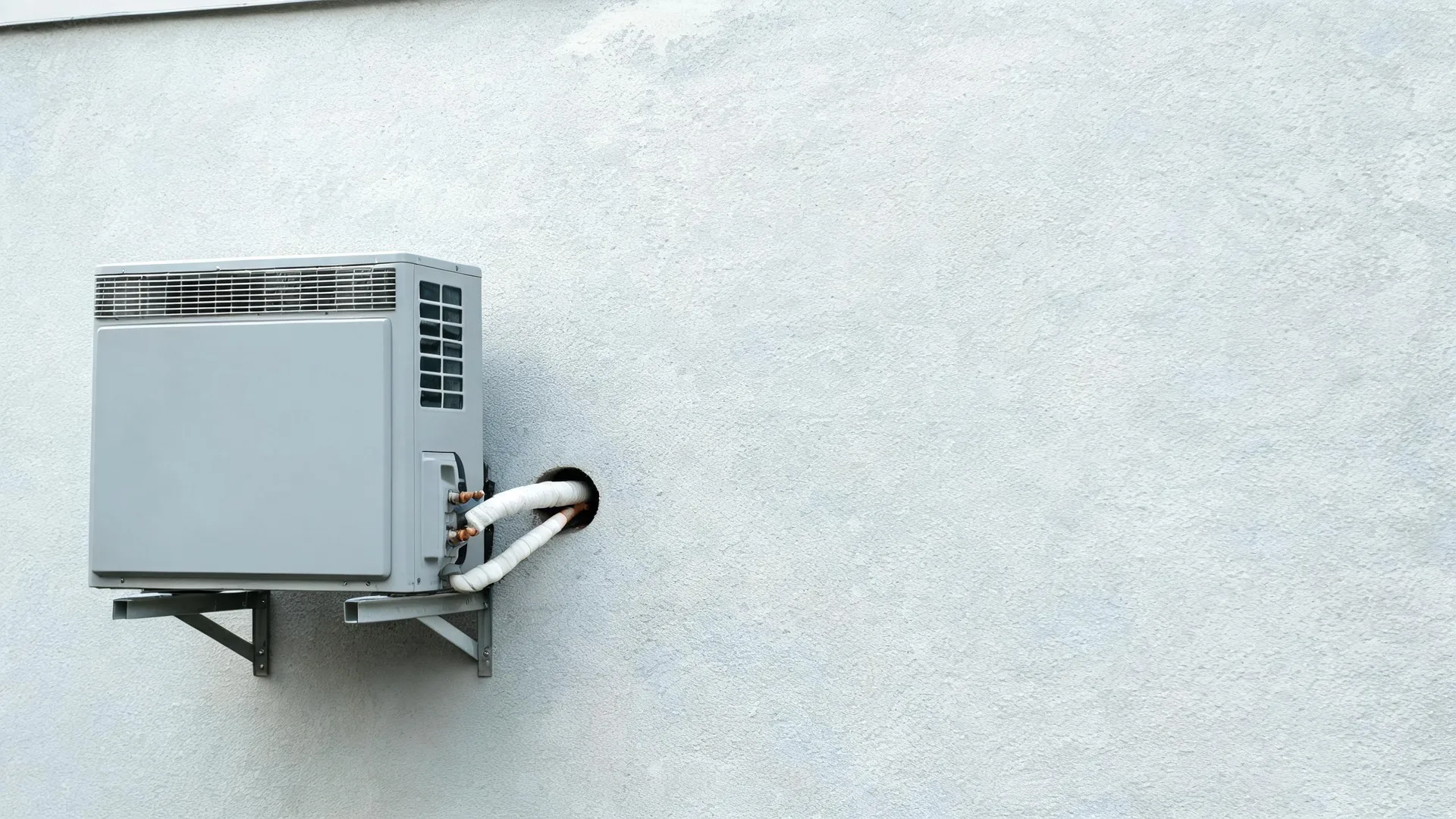
A beige split-system air conditioner outdoor condenser unit mounted on metal wall brackets atop a stucco wall.

Built for weather, not for heat

Winters here bring damaging wind and hail, with 21 wind events and 11 hail events logged in the county over the past ten years. That's what a mini split outdoor unit has to stand up to, not a long run of hot days. Put the money toward a system that's built solid and installed well rather than one chasing a high cooling rating it won't need. A mid-range unit mounted right will hold up better than a top-tier one put in wrong.

Ask about the zoning, not just the unit

A single outdoor compressor can run one indoor head or several. Ask how many heads it can support and whether each one can be set to a different temperature on its own. If a quote is for one zone now, ask what it takes to add a second head later, whether this condenser has the capacity or a new one would be needed.
Ask for the heating rating at low temperature

Every mini split has a cooling rating, but not every one is built to keep producing heat as the outdoor temperature drops. Ask for the capacity at a low outdoor temperature, not just the standard rating most spec sheets lead with. A system that loses most of its output in cold air will lean hard on backup heat strips, and that changes what it costs to run all winter.

If this mini split is going in alongside a furnace, nothing about the furnace has to change. They don't share ductwork or controls, so the furnace keeps heating the rooms it always has while the new unit covers the room it was installed for. If a mini split is replacing a window unit or an old through-wall air conditioner, that old unit comes out, and the wall or window opening it used gets sealed up properly, not just patched over. Ask the contractor whether your old equipment gets disconnected, capped, or hauled away as part of the job. That's not handled the same way on every install.

Installation day starts outside with the outdoor unit. It gets mounted on a pad at ground level or a bracket on the wall, somewhere with clear airflow on all sides and a short run to the indoor head. From there a hole gets drilled through the wall for the line set, the refrigerant lines, power wire, and condensate drain bundled together and run through a sleeve. Once the indoor head is mounted and connected, the lines get purged of air and moisture, then the system gets charged with refrigerant and tested. A good installer checks the line set connections for leaks before closing anything up, because a slow leak there is hard to trace once the wall is patched. The whole job is mechanical and electrical work, not ductwork, so there's no tearing into ceilings or floors to run supply lines.