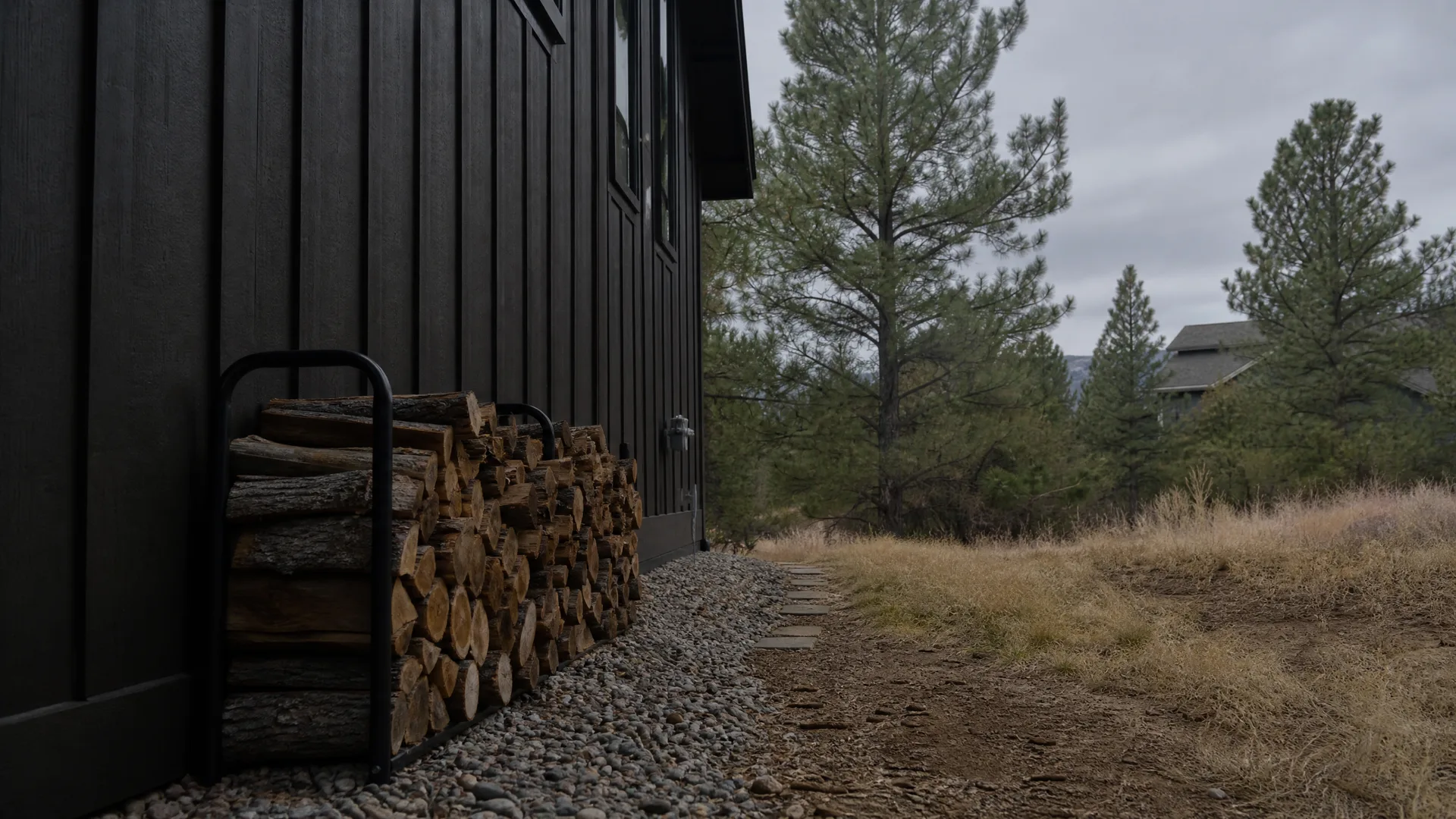





A stack of split firewood in a black metal rack sits on a gravel bed against the dark vertical board siding of a house, with dry grass, pines and an overcast sky beyond.

Mini Split Installation in St. Maries, ID

Tell us about the job

Takes about a minute. No obligation.

New system or replacementMini-splitBenewah County, ID
Step 1 of 2

What ZIP code is the job in?

Electricity heats 43.1% of homes in Benewah County, more than any other fuel. Fuel oil and kerosene account for 11.7%, bottled and tank gas another 11.4%. A mini split runs on electricity, so it fits the most common setup in the county without any new fuel line or tank. For a home already heating with electric baseboard or wall units, a mini split usually does the same job for less, since it moves heat instead of generating it. For homes on oil or propane, it can work alongside the existing system or replace it room by room.

10 months
September through June, your system heats
25°F
the average winter night it heats against
77°F
the average summer afternoon it cools against
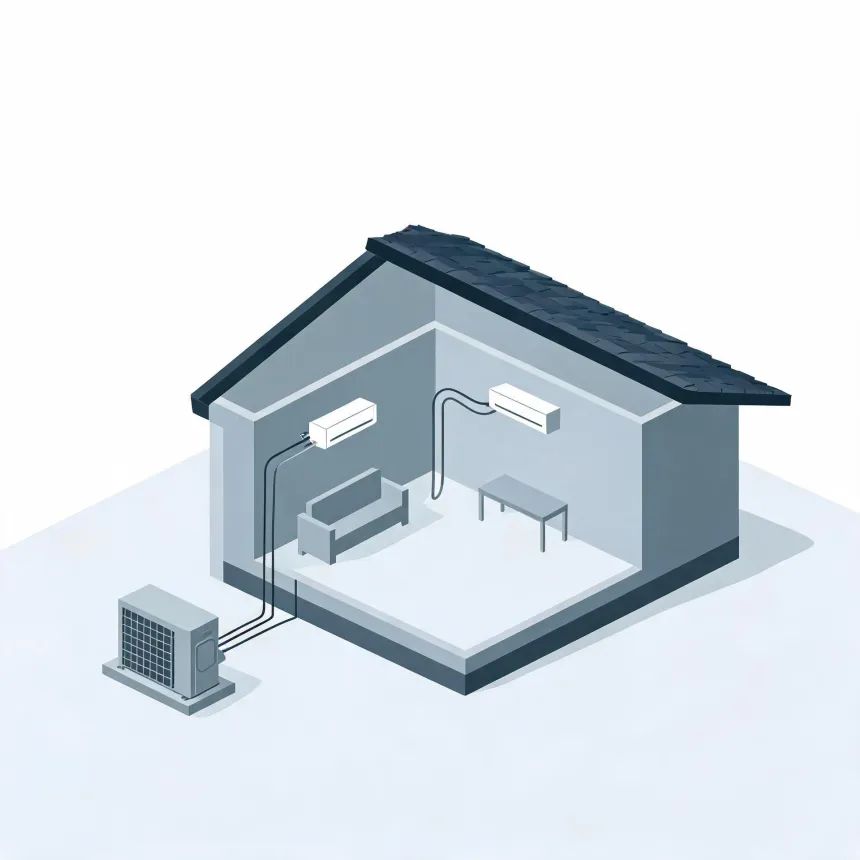
Isometric illustration of a cutaway house showing two wall-mounted indoor air conditioning units connected by line sets to an outdoor condenser unit, with a sofa and table inside the room.

Idaho electricity runs 11.52 cents per kilowatt-hour, well below the national average.

A mini split still costs less to run than baseboard or oil here, just not fast enough to pay for itself quickly.

Benewah County weather doesn't change what size unit you need

274 severe weather events from 2015 to 2024
11% of homes statewide lost power a day or more in 2024
22 damaging wind events from 2015 to 2024

Half the homes in Benewah County were built in 1979 or earlier, half in 1979 or later. That split doesn't change what a mini split install calls for. An older home needs the same load calculation as a new one, based on its square footage and how it's insulated, not its age. Mobile homes make up close to a fifth of the housing here, and those do call for a unit rated for that kind of install, since wall and ceiling cavities differ from stick-built construction. Outside of that, there's nothing about the housing stock here that pushes the job toward a bigger unit or a different setup than you'd see anywhere else.

Meet the standard here

A new system here has to meet this region's minimum efficiency, which limits what can go in.

Find a contractor
A man in a cap, dark shirt and tan work pants carries a canvas tool bag up stone steps toward a green front door flanked by potted shrubs.
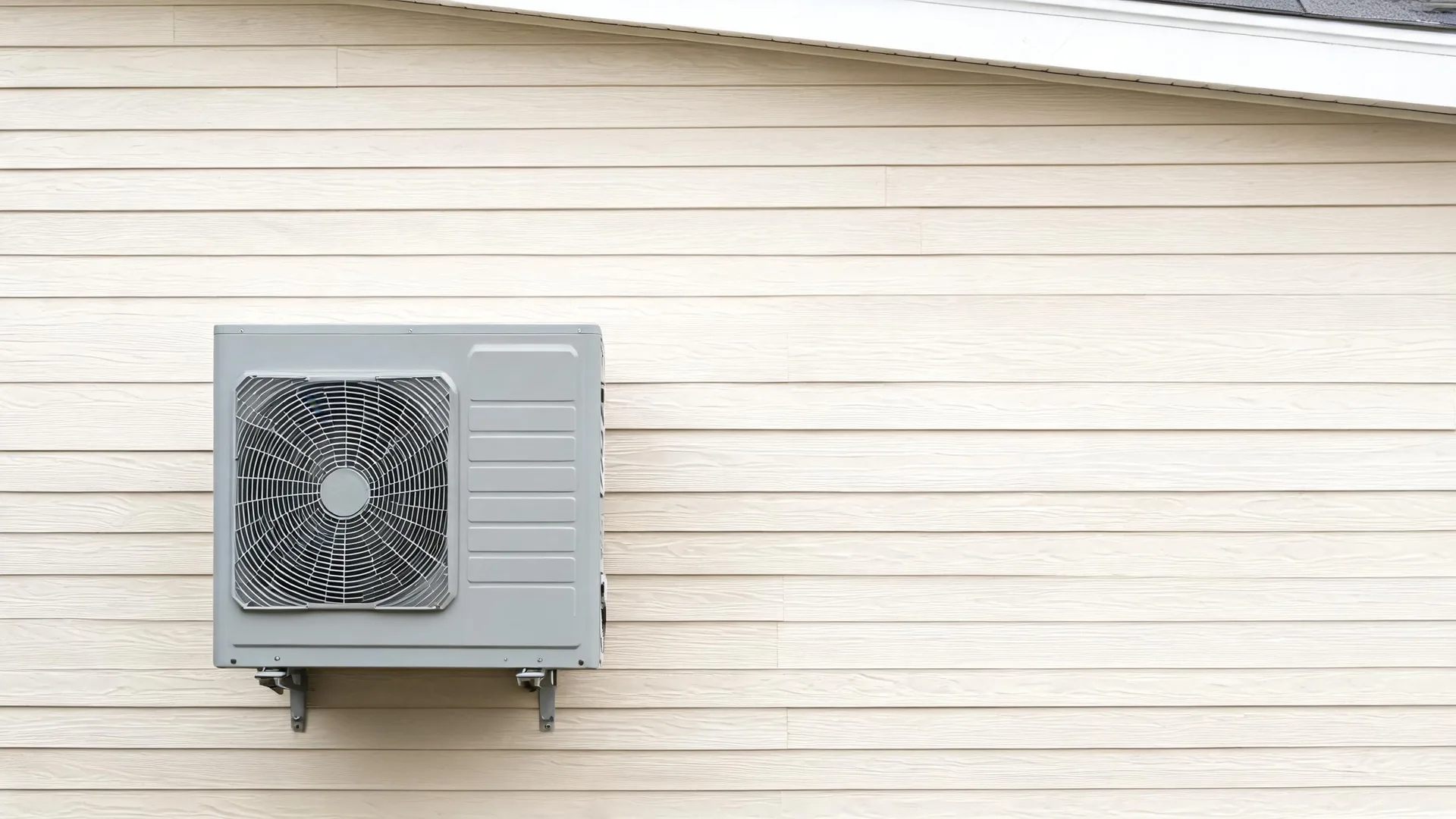
A beige split-system air conditioner outdoor condenser unit mounted on metal wall brackets atop a stucco wall.

It runs long hours. Ask what that does to the parts doing the work.

A mini split runs every day it's hot enough or cold enough to call for it, which in most climates is most of the year. That kind of run time puts the outdoor unit through a lot of cycles, so ask what happens to it when conditions get hard. What's the low ambient limit for heating, and does the unit have a base pan heater so the outdoor coil doesn't ice over and choke itself off. Ask about the compressor too. An inverter-driven compressor ramps up and down to match the load instead of switching fully on and off, and that matters for a system that's expected to run for hours at a stretch rather than in short bursts. Ask what the warranty covers on the compressor specifically, since that's the part doing the most work over the life of the system. And ask how the indoor coil and filter are meant to be serviced, because a system running long hours needs that airflow kept clear or it loses capacity exactly when it's needed most.

How many rooms, how many heads

A single outdoor unit can run one indoor head or several. Each extra zone means another line set, another indoor unit to mount, and another spot for a contractor to run refrigerant line through a wall. A single-zone install is a simpler job than a multi-zone one covering several rooms, and the equipment list grows with it.
What the line set has to cross

The outdoor and indoor units connect through a hole in the wall, and the line set runs between them, sometimes through an attic or crawlspace, sometimes along an exterior wall and up to a roof or soffit. The more distance it has to cover, or the more framing and siding it has to pass through, the more labor the install takes before the system ever gets charged with refrigerant.

A mini split sized right for the room is the whole job. Too big and it short cycles, blasting cold or hot air until the thermostat's satisfied, then shutting off before it's pulled the moisture out of the air or settled into a steady, even heat. Too small and it runs flat out without ever catching up, which wears on the compressor and still leaves the room uncomfortable. Sizing starts with a load calculation, not a guess based on square footage alone. It weighs the square footage against how many windows the room has, which direction they face, how well the walls and ceiling hold heat, and what else is already in the space giving off heat. A contractor doing this right will ask about all of it before they ever quote a unit size, because the number on the spec sheet only means something if it matches what the room actually needs to lose or gain.

Install day starts outside, with the outdoor unit. It needs a spot with clearance on all sides for airflow, set on a pad or bracket that holds it level and off the ground. Inside, the wall team picks the spot for the indoor head based on airflow across the room, not just what looks convenient, then drills through for the line set. That line set gets run, connected at both ends, and pressure tested before anyone touches the refrigerant. A proper vacuum pulls any moisture and air out of the line set, because either one left behind will damage the compressor over time. Only after the system holds that vacuum does the refrigerant go in, charged to the amount the line length calls for, and the unit gets run through its paces, heating and cooling, before the crew packs up.