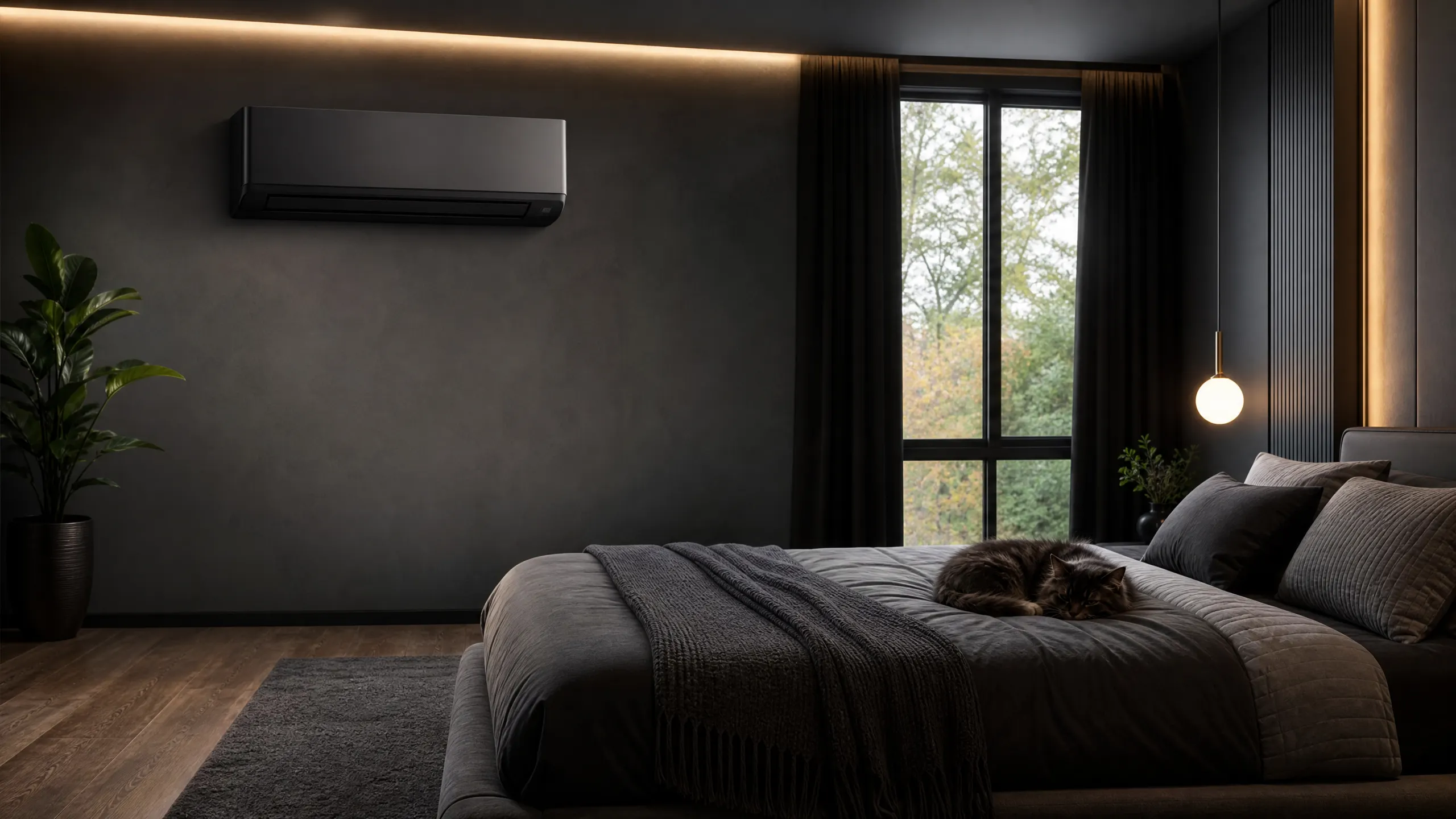





A dark modern bedroom with grey bedding, a wall-mounted air conditioning unit, and a cat resting on the bed.

Mini Split Installation in Weiser, ID

Tell us about the job

Takes about a minute. No obligation.

New system or replacementMini-splitWashington County, ID
Step 1 of 2

What ZIP code is the job in?

Electricity heats close to half the homes in Washington County, more than any other fuel. Utility gas comes in well behind at under a third, with bottled or LP gas making up a small share beyond that. A mini split runs on electricity, so it fits right into a home already wired for electric heat without any new fuel line or tank to deal with. For a house currently heating with gas or propane, it still works the same way on the electric side, but the old furnace or heater stays in place for the homeowner to decide what to do with.

9 months
September through May, your system heats
2 months
July through August, it cools
22°F
the average winter night it heats against
83°F
the average summer afternoon it cools against
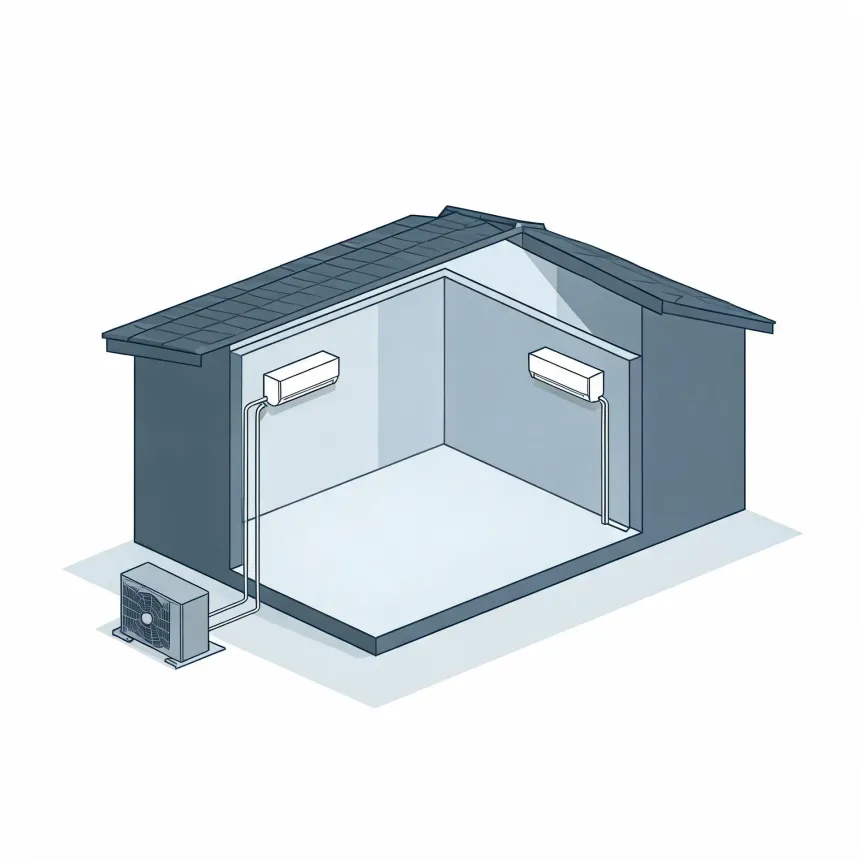
Cutaway isometric illustration of a small building interior showing two wall-mounted indoor air conditioning units connected by line sets running down to a single outdoor condenser unit on the ground outside.
Your system heats September through May and cools July through August.

NOAA nClimDiv, 1991–2020 normals

Half the homes in Washington County were built in 1975 or earlier, half in 1975 or later.

A mini split sized to this house works the same in either one, there's no older-home adjustment to make.

Two months of real cooling load, the rest is easy duty

Cooling runs July through August
Summer afternoons average 83°F
Power costs 11.52 cents a kWh statewide

Idaho electricity ran 11.52 cents a kilowatt-hour in 2024, cheaper than most of the country. That changes the math on a mini split. The efficiency gains that would pay back fast somewhere with expensive power take longer to pay off here. That doesn't make the efficiency worthless, it just moves it down the list of reasons to buy one. What matters more in Weiser is picking a unit sized right for the space and a contractor who installs it correctly. A high-efficiency model that's oversized or badly installed will cost more and perform worse than a plain one put in right.

Any mini split here has to clear a cool-climate efficiency minimum, and a tax credit is on the table for one that does

Washington County falls in climate zone 5B, a cool zone where heating carries the bigger load. Any mini split installed here has to be a split-system heat pump rated at least 14.3 SEER2 for cooling and 7.5 HSPF2 for heating, the federal minimum that applies to this type of system. That rules out the lower-efficiency units sold in warmer parts of the country. A federal tax credit is available toward the cost of a qualifying system, on top of meeting that standard.

Find a contractor
A man in a dark long-sleeved shirt and brown work pants, seen from behind, carries a worn canvas duffel bag up porch steps toward a green front door of a house with horizontal siding and a potted shrub.
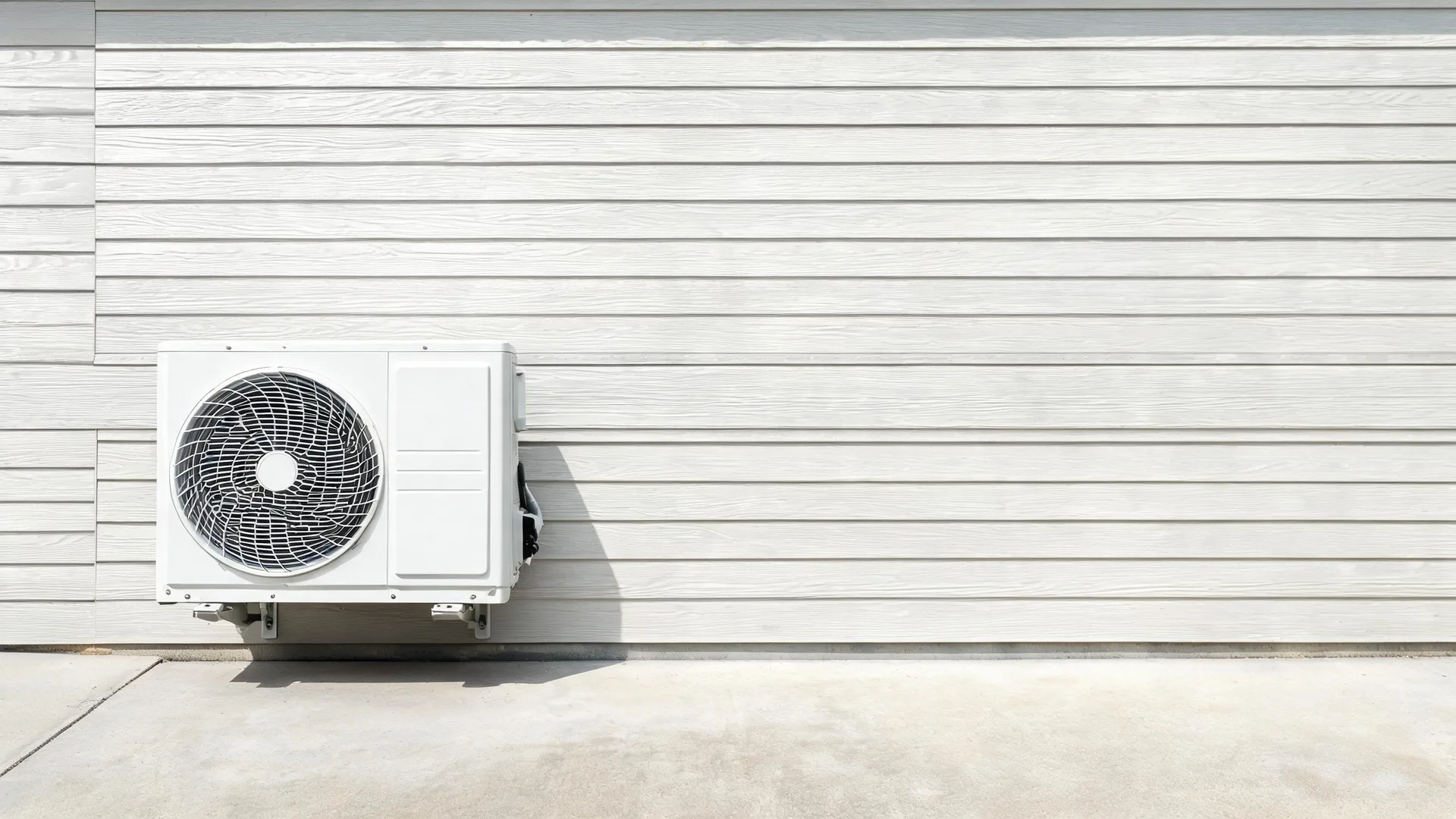
A white mini-split air conditioner outdoor condenser unit mounted on metal brackets against a beige stucco exterior wall, with a blue sky and scattered clouds in the background.

June is the month to get this done

Cooling in Washington County runs from July through August, two months a year. June is the month before it starts. Installing in June means the unit is already running and settled before the load hits, instead of going in during the first hot week alongside whoever else called that day. A mini split installed in June also gets a full summer of runtime to show if anything needs adjusting, while the schedule is still easy to work with.

The equipment itself varies the most

A mini split system is priced by how many indoor heads it runs and how much capacity each one carries. A single zone cooling one room costs less than a multi-zone system feeding several rooms off one outdoor unit. Capacity matters too. A unit sized too small for the space runs constantly and never catches up, one sized too large cycles on and off and wears out faster. Getting the sizing right takes a load calculation based on the room, not a guess based on square footage alone.
What's already in the wall decides the labor

Running a mini split needs a dedicated electrical circuit, a conduit path between the outdoor compressor and each indoor head, and a way to drain condensation from the indoor unit. If the electrical panel has room for another circuit and there's a straightforward path through an exterior wall, the install goes quick. If the panel is full or the line set has to travel through finished space or across multiple floors, that adds time and materials. None of that shows up until a contractor looks at the actual house.

Sizing a mini split starts with a room by room load calculation, not a square footage chart. The calculation looks at wall and window area, which direction the room faces, what's on the other side of the walls, and how many people and appliances add heat to it. Rooms that look alike on paper can carry different loads once all that's accounted for. Get the number too low and the unit cycles on and off all day, never running long enough to pull moisture out of the air before it shuts off again. Get it too high and the compressor can't settle into the long, low, steady run that's where these units work best. Oversizing is the more common mistake, because it feels like the safe choice, but a mini split too big for the room wears out faster and still leaves the air feeling clammy.

Install day starts with the outdoor unit and the indoor heads going up, but most of the time goes into the line set that connects them. That line set carries refrigerant through a hole drilled in the wall, so the path gets measured and planned before anyone cuts anything. The indoor head mounts on a bracket set level against the wall, high enough for the airflow to reach the room. Outside, the compressor sits on a pad or wall bracket, away from anything that would block its airflow. Once the lines are connected, the system gets pulled down to a vacuum to clear out air and moisture before the refrigerant ever moves through it. Skip that step or rush it and the compressor is working against moisture in the lines from day one. After that the electrical hookup gets tested, the system runs through its paces, and the installer checks that each head is actually cooling or heating the way it should before calling the job done.