
When to replace a heat pump in Boise City, ID

Your new heat pump project goes to an installer who works in Ada County.

Find my pro

Most heat pumps in Ada County last 12 to 15 years, and winter here is what wears them down. A heat pump has to work hardest when it's cold outside, pulling heat from outdoor air that has little to give, and Boise winters push that work for months at a time. Once a unit passes that age, you'll likely see the signs: rooms that don't feel as warm as they used to, the outdoor coil icing over more than it should, or the system running longer to do the same job it used to do in less time. If you're paying for repairs more than once a year, or a repair quote runs close to half what a new system would cost, that's usually the point where replacing it makes more sense than fixing it again. A heat pump that's struggled through a few Boise winters already is one you should have looked at before the next one starts.

A gray outdoor condenser unit on a concrete pad beside a house with horizontal lap siding, with a metal disconnect box and refrigerant lines on the wall, river rock and mulch to the sides, and a green shrub at right.

Still keeping up

The unit runs clean and the pad around it is clear. It cycles on, holds temperature, and shuts off without struggling. If yours looks like this and the air coming out still matches the thermostat setting, it's doing its job. Keep up with filter changes and yearly service and let it run.


An outdoor air conditioner condenser unit on a concrete pad beside a house with horizontal siding, with conduit, cables and an electrical box on the wall and mulch beds at either side.

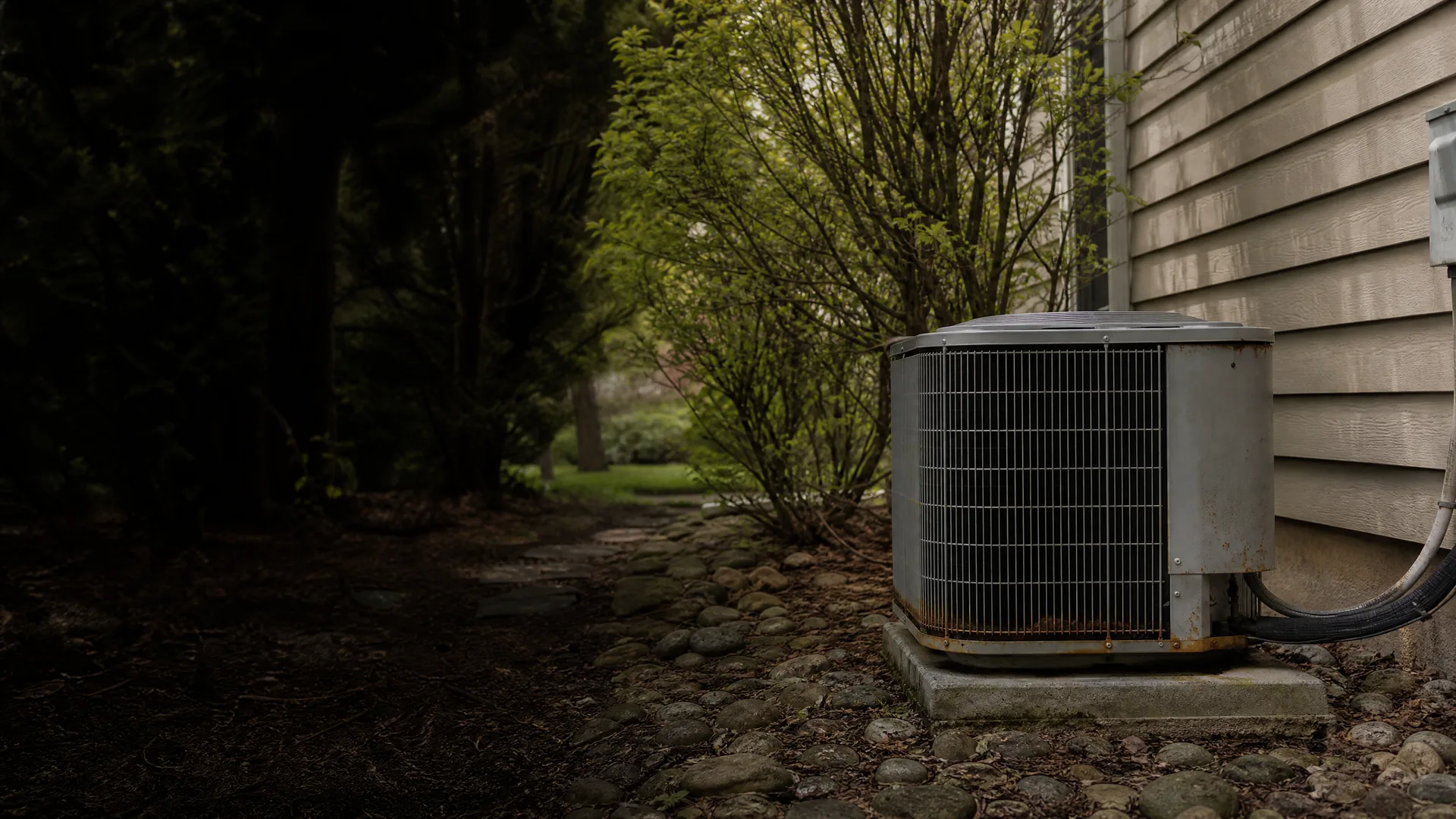
Showing its age

Dust and grime cake the cabinet, and that buildup makes the unit work harder to pull heat from cold air or push it out in summer. Paired with weak airflow, short cycling, or a system past 12 to 15 years old, this is what a heat pump looks like near the end.

A weathered gray outdoor condenser unit sits on a concrete pad beside a house with horizontal siding, with refrigerant lines entering the wall at left and a mulched shrub bed at right.
Before you get your heat pump installation
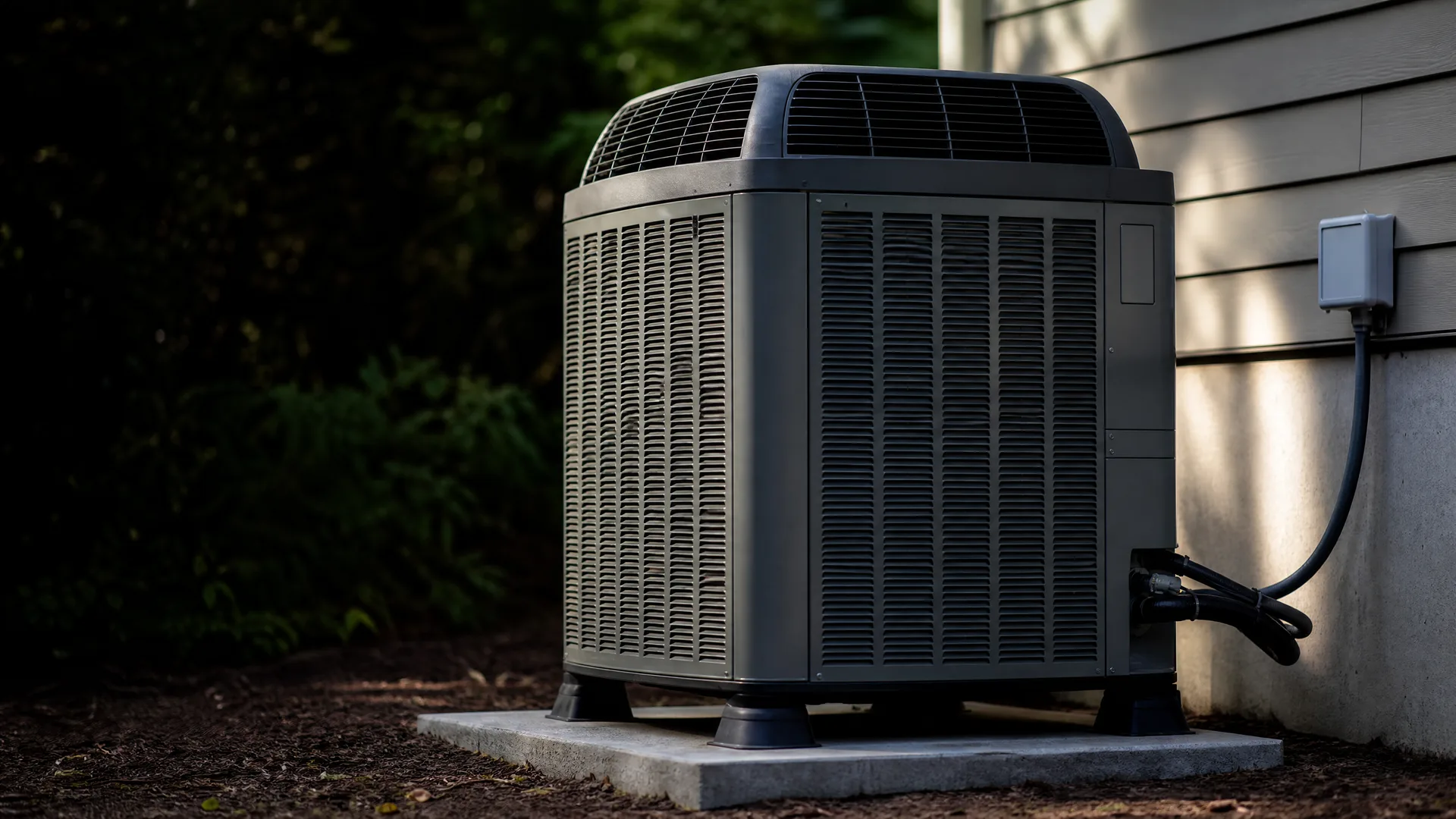
A gray outdoor condenser unit on a concrete pad beside a house with gray lap siding, connected by conduit and refrigerant lines to a wall-mounted disconnect box, with a green shrub and mulch bed at left.
After you get your heat pump installation

How much does a Boise winter really ask of your heat pump?

  • Winter nights average 25°F

    Overnight lows near 25°F mean the unit is pulling heat from air that has almost none to give. That strain adds up over a season.

  • Heat runs October through May

    Eight months of heat a year is most of the calendar. A heat pump here doesn't get much of a break between runs.

  • Cooling runs June through August

    Three months of cooling gives the unit a rest, but it's working the other eight. The wear comes from winter, not summer.

NOAA nClimDiv 1991-2020

An outdoor air conditioning condenser unit on a concrete pad beside a house with horizontal lap siding, surrounded by rocks, shrubs and trees.

You're out back on a mild spring afternoon, coiling up the hose, when you notice the rust along the base of the unit. It's crept up past the bottom seam since last fall. You crouch down and run a finger along it, and a small flake comes off on your hand. The fan is turning fine, air is moving, nothing sounds wrong. But the metal under there is thinner than it was, and you know it didn't get that way overnight. You stand back up, look at the yard, the pad, the rest of the unit, and figure you'll mention it next time someone's out to look at it.

A gray outdoor air conditioner or heat pump unit on a concrete pad beside a house with horizontal lap siding, with conduit and refrigerant lines running up the wall and green shrubs and mulch at left.
The condenser sits clean on its pad, lines running straight into the wall, nothing to question.
An outdoor air conditioning condenser unit sits on a concrete pad beside a white horizontal-siding house, with a gray electrical disconnect box and insulated refrigerant lines on the wall, mulch and green shrubs to the right, and a concrete slab in the foreground.
Rust at the base, conduit and lines showing their age, the kind of wear that signals a decision ahead.

A heat pump doesn't burn fuel. It moves heat from one place to another, and that depends on refrigerant charge and a reversing valve doing their jobs. The reversing valve is what lets the unit switch between heating and cooling. Once it starts sticking, the system has trouble telling which mode it's supposed to be in. Low charge shows up differently. The compressor has to run longer to pull the same heat out of cold outdoor air, and that extra runtime wears on it cycle after cycle. In winter, the outdoor coil frosts over and the unit runs a defrost cycle to clear it. That's normal. A coil that stays iced over past a normal defrost, or a unit that seems to be defrosting constantly, usually means the charge is off or the valve isn't switching right, not something a brush and a garden hose will fix. The compressor itself is the expensive part. When it starts going, most contractors won't recommend repairing it. They'll tell you it's time to replace the system.

How a heat pump actually fails

  • A heat pump moves heat instead of burning fuel, so it relies on refrigerant charge and a reversing valve staying in good shape.
  • The reversing valve switches the unit between heating and cooling, and once it sticks or leaks, the system can't shift modes properly.
  • A low refrigerant charge forces the compressor to run longer to pull the same heat from cold outdoor air, adding wear with every cycle.
  • Defrost cycles clear frost from the outdoor coil in winter, and a unit that defrosts too often or not enough is losing efficiency.
  • The compressor is the most expensive part to replace, and once it's failing, most contractors will tell you it's time for a new system rather than a repair.
  • An outdoor coil caked with ice beyond a normal defrost cycle usually points to a charge or valve problem rather than something you can fix by brushing it off.
A gray-haired bearded man in a dark snow-dusted coat and scarf stands inside a dimly lit home entryway, with a hallway, framed picture, lit table lamp and staircase behind him.
An older man with gray hair and a beard, wearing a dark snow-dusted coat, stands in a warmly lit home entryway with a hallway, console table with lamp, patterned rug, and living room visible behind him.
An older man with gray hair and a beard, wearing a dark coat dusted with snow and a blue plaid scarf, stands smiling in a dimly lit entryway with a window, framed picture, table lamp and staircase behind him.
A gray-haired man in a dark coat dusted with snow stands in a warmly lit home entryway, with a lamp, sofa, window and white staircase banister behind him.

Get matched with a heat pump pro in Ada County

Describe the project once instead of to every installer.

You only hire the pro if you want to.

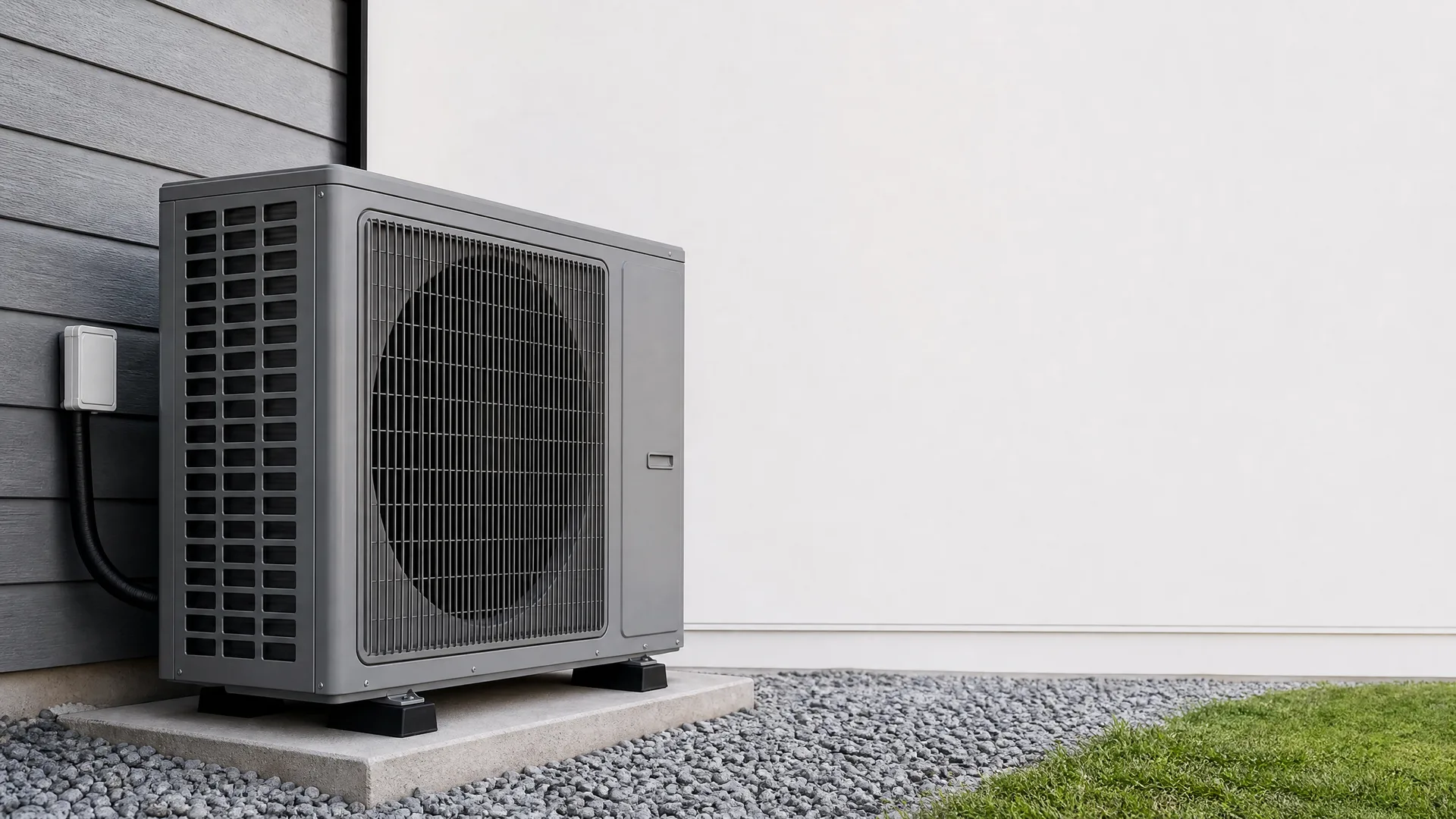
A gray outdoor heat pump unit on a concrete pad beside a house with dark horizontal siding and a plain white wall, surrounded by gray gravel next to a strip of grass.

Defrost cycles add wear in winter

On cold mornings here, frost builds on the outdoor coil and the unit has to pause and run a defrost cycle to clear it. That's normal. But a heat pump running eight months a year goes through this often, and each cycle is extra strain on the reversing valve and the compressor. An older unit that defrosts more than it used to, or takes longer to recover afterward, is telling you something about what's left in it.

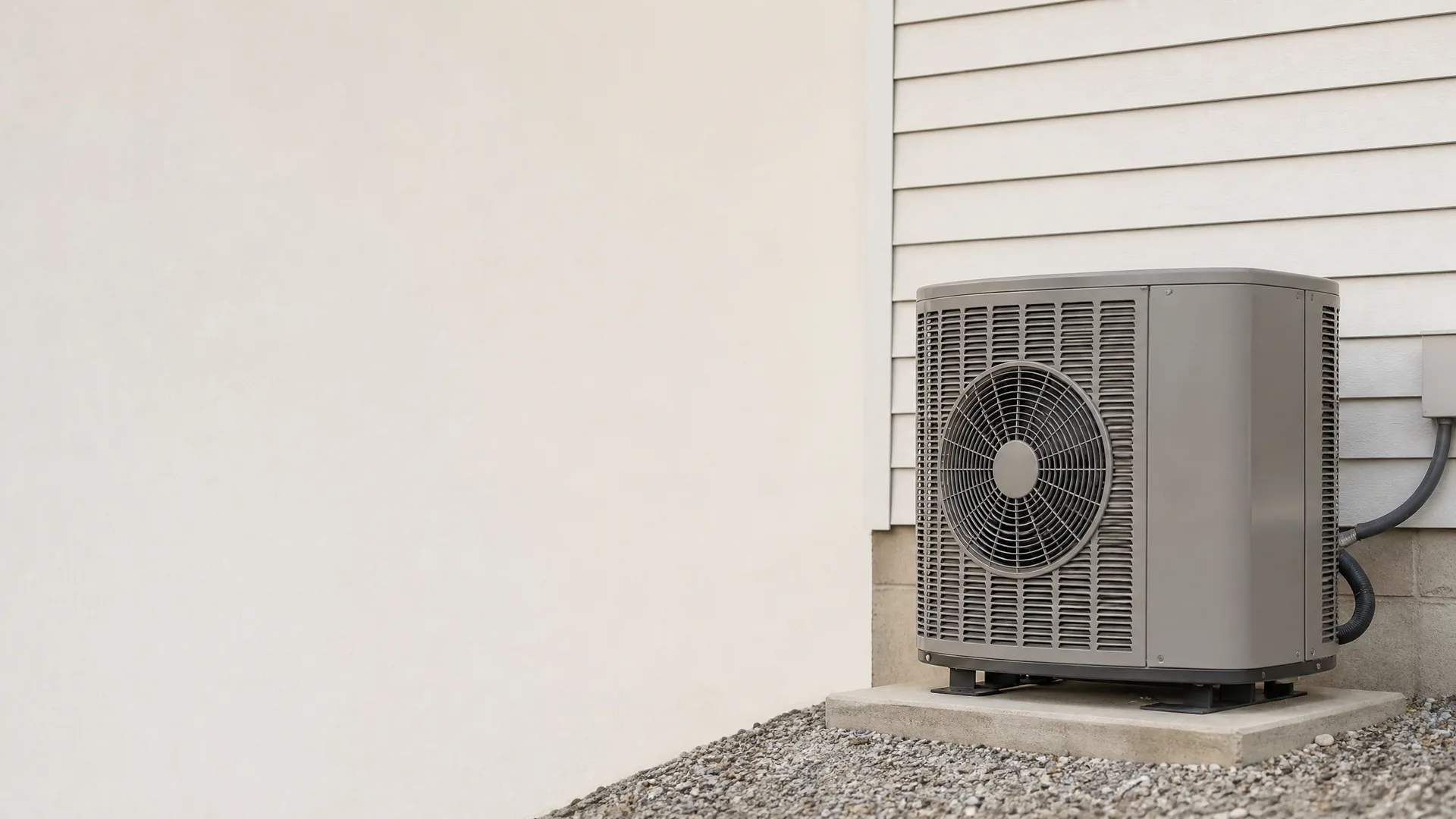
A gray outdoor heat pump unit on a concrete pad over gravel, beside a house with horizontal siding and an adjoining light stucco wall.

The backup heat tells you something

Most heat pumps in Ada County pair with electric backup heat for the coldest stretches of winter. If that backup is kicking in more than it used to, even on days that aren't record cold, the heat pump itself isn't keeping up the way it did. Since power here is cheap, the backup running more won't wreck the bill, but it's a sign the compressor is losing ground against the outdoor air.

A man in a dark blue shirt stands in an open front doorway of a stucco and wood-clad house, facing a blond woman seen from behind in the foreground on a stone walkway.

What an aging heat pump costs you this winter

If your heat pump is in its teens, you're likely already paying for it without seeing where. A unit that has to run longer to hit the same thermostat setting is pulling more power to do it, and with eight months of heat ahead each year, that difference shows up on every bill from October through April. You might notice rooms that used to feel even now have a cold corner, or the system running well past when it used to click off.

There's also the morning it doesn't come back on at all, usually during the coldest stretch of the year, when every other household with an old unit has the same idea at the same time. Finding a contractor who can get to you that week, rather than that month, gets harder the more people are calling. Getting matched with one now, before that morning comes, means the search is already done and someone who knows your situation can reach out on your schedule instead of theirs.

Interior corner of a living room with a sheer-curtained window, a light wood console table holding a vase of greenery and a shallow bowl, a woven basket on the lower shelf, and a blurred upholstered sofa and dark wood table in the foreground.
  1. Refrigerant pulls heat from outdoor air, even when it's cold

  2. The compressor raises that heat to a usable temperature

  3. The reversing valve sends it inside through the indoor coil

  4. Frost on the outdoor coil triggers a defrost cycle to clear it

A woman wrapped in a chunky knit blanket sits in an armchair with an open book on her lap, beside a lit table lamp and a window with frost and snow outside.
An older woman with short gray hair in a cream knit sweater stands smiling and looking to the side behind a wooden counter holding a round loaf of bread, in a warmly lit kitchen with shelves and a window showing snowy trees at dusk.

Repair now, or replace it

A repair makes sense when the unit is a few years into its life and the problem is one part: a capacitor, a contactor, a low charge from a small leak. The fix is specific, the cost is contained, and the rest of the system still has years in it. That math changes once the unit is past 12 years and the failures stop being isolated. A compressor going on a heat pump that age is a different decision than a capacitor, because the compressor is most of what you're paying for in the unit. At that point a repair buys you a season, maybe two, on a machine that's already worked eight months a year for over a decade.

What replacing it settles

A new heat pump sized and installed for your house stops the guessing. No more wondering if this winter is the one it doesn't make it through, no more watching the thermostat and the vents to see if it's keeping up. You also stop doing the legwork that comes with an aging unit failing on its own schedule: finding a contractor on short notice, explaining the same history to three different companies, sorting through quotes that aren't quite comparable. Getting matched with a contractor who knows Ada County installs means that work is handled once, by someone who already knows what a Boise winter asks of the equipment going in.

Power here costs 11.78 cents per kilowatt-hour

At 11.78 cents a kilowatt-hour, power here is cheap compared with most of the country. That matters once your heat pump starts aging, because a unit working harder to hit the same setting still won't spike your bill the way it would somewhere with pricier electricity. The cost shows up more in comfort than in dollars.

EIA-861 2025

Where your heat pump stands now

  • Most heat pumps in Ada County last 12 to 15 years, and Boise winters are the main reason they wear out that fast.
  • A unit still holding its temperature and cycling normally is worth keeping up rather than replacing early.
  • Rust at the base, a struggling reversing valve, or rising power use without a change in habits are signs the decision is ahead.
  • Eight months of heat a year means a failing unit rarely waits for a convenient month to quit.
  • A single bad part on a younger unit is usually worth repairing, but repeated repairs on an older one add up fast.
  • Knowing where your unit stands now means one less decision to make in the middle of a cold snap.

A heat pump in Ada County tells you what it needs, if you know what to look for. One still cycling on and off cleanly, holding the thermostat setting without a fight, has more years in it. One with rust climbing the base, a reversing valve that hesitates, or a power bill that's crept up with no change in how you run the house is further along than the number on the install sticker might suggest. Twelve to fifteen years is the usual range here, and winter is what gets a unit there faster, not age by itself.

None of this tells you the exact month yours will need attention. Eight months of heat a year means that when a unit does fail, it tends to do it on a cold morning, not a convenient afternoon in May. The useful thing is knowing now, before that morning comes, whether you're looking at a repair or a replacement.

That's the part that usually eats the time: finding a contractor who knows heat pumps specifically, not just furnaces, calling around for someone who can look at it this week instead of next month, explaining the rust and the noise and the bill all over again to whoever picks up. Getting matched with someone who already knows your situation and reaches out directly skips that part. What the unit needs doesn't change. How fast you get a straight answer does.

An outdoor air conditioning or heat pump condenser unit on a concrete pad beside a house with horizontal siding, with a wall-mounted disconnect box and refrigerant lines, and dark shrubs to the left.

A local pro for your heat pump installation

New system or replacementHeat PumpAda County, ID
Step 1 of 2

What ZIP code is the job in?