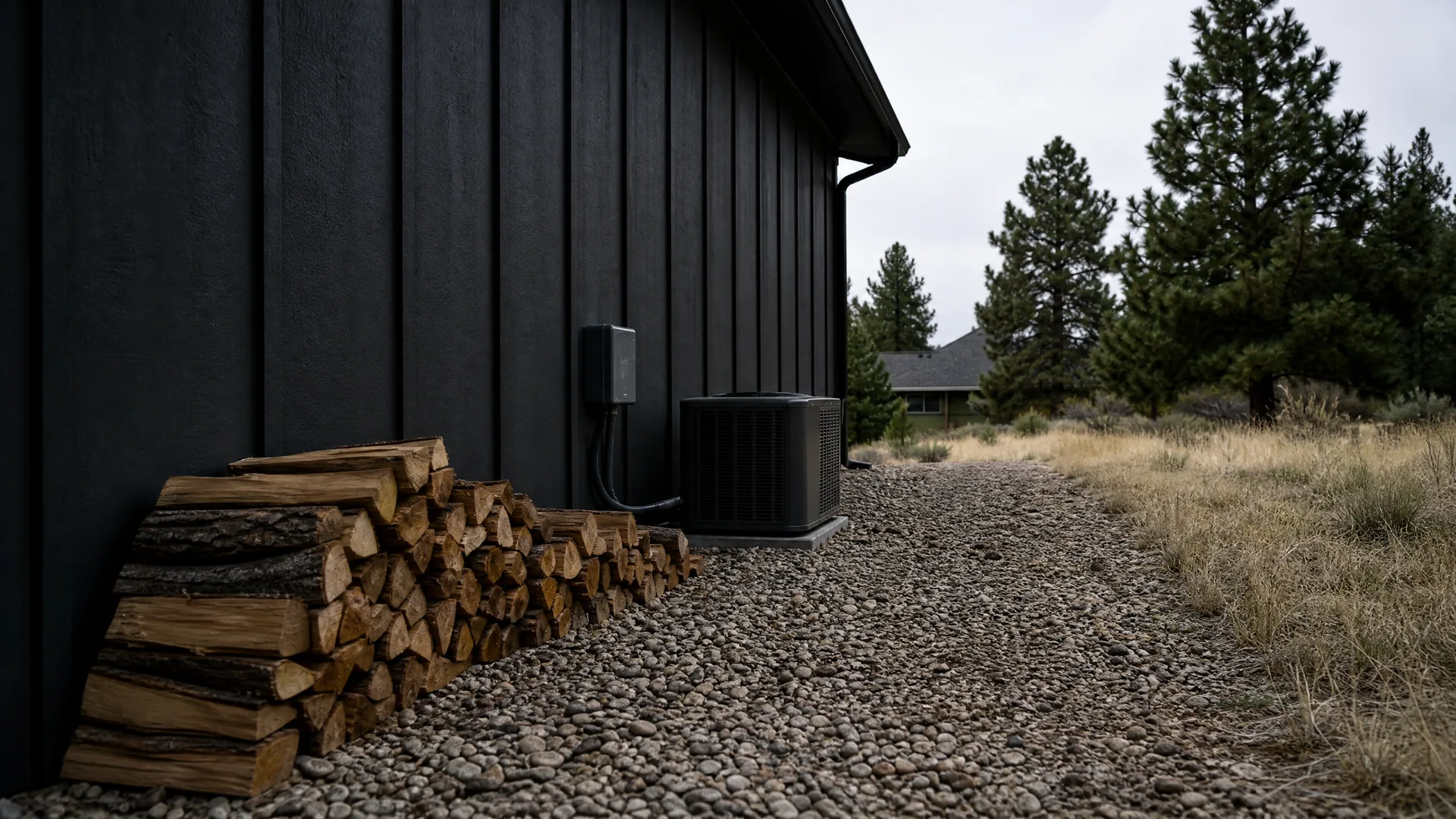






Exterior corner of a dark board-and-batten house with a stacked firewood pile, an electrical box and an outdoor condenser unit on a gravel bed, with dry grass and pine trees under an overcast sky.

AC Installation in Blackfoot, ID

Tell us about the job

Takes about a minute. No obligation.

New system or replacementCentral ACBingham County, ID
Step 1 of 2

What ZIP code is the job in?

Gas heats close to half the homes in Bingham County, electricity heats most of the rest. That split matters for an AC installation because the furnace already in place usually decides how the new air conditioner gets paired in. A gas furnace with a matched coil and outdoor unit is the common setup here, and if that is what the home already has, replacing the AC side alone is often the straightforward route. Homes on electric heat may be working with a heat pump or an air handler instead, which changes what the installer is matching the new unit to. Either way, what is already in place drives the decision more than anything else.

2 months
July through August, your air conditioner is on duty
81°F
the average summer afternoon it cools against
10 hail events
in ten years, and hail bends the fins on outdoor coils
13.4 SEER2
the federal minimum any new unit must meet
Isometric illustration of a cutaway single-story house showing interior rooms, ductwork running from an indoor air handler, and an outdoor condenser unit on a pad beside the building.
Your air conditioner works hardest from July through August.

NOAA nClimDiv, 1991–2020 normals

Half the homes in Bingham County were built in 1978 or earlier, half later.

A standard-size system sized to the house still fits either way.

At 11.52 cents a kWh, the payback on a premium-efficiency unit stretches out here

Power costs 11.52 cents a kWh statewide
Cooling runs July through August
Summer afternoons average 81°F
The weather here tests the install, not the size134 winter storms hit Bingham County between 2015 and 2024

With power this cheap, the case for a top-tier SEER2 unit comes down to more than the utility bill. A mid-efficiency system installed well, matched right to the home's ductwork and sized to the house, will run reliably for years without the premium price tag. Where the higher-efficiency option earns its keep is comfort, steadier temperatures, quieter operation, better humidity control, not a fast payback on the electric bill. If the budget is tight, putting the money into a correct installation and a unit that fits the house matters more here than chasing the highest efficiency number on the sheet.

Cooling starts in July. Install before June runs out.

Cooling in Bingham County runs July through August. Get the new system in during June and it's tested and running before the first hot day, not during one.

Find a contractor
A gray residential air conditioner condenser unit mounted on a concrete pad in an open grass field.

Two months of work a year

Two months a year, July and August, with afternoon highs averaging 81. That's a short season and a mild one for a compressor to work against. A unit sized right for the house will spend most of the year sitting idle. What matters more than top-end capacity is a clean, correct install, since the outdoor unit still has to stand up to the wind and hail this area sees even when it isn't running.

The number is a ratio, not a guarantee

The efficiency rating compares the cooling a unit produces against the power it uses over a season, tested under set lab conditions. A higher rated unit uses less electricity to do the same job than a lower rated one. But that number only holds if the unit is sized right for the house and the ductwork moves enough air. A high-rated system choked by bad duct sizing or a wrong charge can run worse than a lower-rated one installed correctly.

The rating on the box isn't the rating you get

The printed number comes from testing the outdoor unit with a specific matched indoor coil and a set airflow. Pair that same outdoor unit with a different coil, or leave the refrigerant charge off from the start, and the system won't deliver the efficiency on the label. The install decides whether the homeowner actually gets what the paperwork promised, not the equipment alone.

Aerial view of a square outdoor air conditioning condenser unit on a concrete pad beside a house wall with a sliding glass door.

Going above the federal minimum saves little here, about $10 a year.

  • A higher-efficiency unit$80 a year
  • A new unit at the federal minimum, 13.4 SEER2$90 a year

Estimates for a typical Bingham County home, from EIA household energy data, Idaho fuel prices and NOAA climate normals. Your home will differ.

Installation day starts with the old equipment coming out, not the new unit going in. The outdoor unit, the indoor coil, and in some cases the line set all come out before anything new is set. Once the old coil is out, the installer checks the ductwork it was tied to and confirms the new coil and air handler are actually a matched pair, since mismatched equipment is where a lot of efficiency gets lost before the system ever runs. The new line set gets brazed, pressure tested, and pulled into a vacuum to clear out moisture and air, because either one left behind will cause problems with the refrigerant charge later. Only after the vacuum holds does the refrigerant go in, weighed to the amount the equipment calls for rather than guessed at. The last part of the day is running the system, checking airflow at the vents, and confirming the charge is correct, not just that the unit turns on.