July is the only month that matters
Cooling here runs in July and nowhere else on the calendar. A new system has one month to prove itself, not a long season to settle into.
Takes about a minute. No obligation.
Cooling here runs in July and nowhere else on the calendar. A new system has one month to prove itself, not a long season to settle into.
Putting a new AC in during June means it's tested and running before the first hot day, instead of getting picked, delivered, and installed while you're already sweating through it.

NOAA nClimDiv, 1991–2020 normals
One month of cooling a year, with afternoons averaging 78°F, is not much to ask of a system.
An AC sized and installed right here will rarely see a hard day, so the money goes into getting the install right, not into buying more machine than July ever asks for.




Boise County is zone 6B, a cold climate with winter lasting most of the year. That mostly shapes the furnace or heat pump, not the AC. But any split-system central air conditioner going in here, under 45,000 Btu/h, still has to meet a federal floor of 13.4 SEER2. That's not a target, it's the minimum. Nothing built for sale today comes in under it, so the question is never whether a system clears that bar. There's also a federal tax credit available for qualifying equipment, separate from what the installation itself runs.
A system that only has to work one month a year does not need to be oversized or loaded with features it will rarely use. Get a reliable unit sized right for this place, installed well, and let that be enough.
Find a contractorAsk each contractor how they size a system before you ask what it costs. A unit that's too big for the space cools the air fast and shuts off before it pulls the moisture out. It switches back on again soon after. That short cycling wears on the compressor more than a properly sized system running a longer, steady stretch. The tonnage on the brochure matters less than the load calculation behind it. Ask who does the installation too. Some sellers sub out the labor, and if that's the case, find out whether the warranty still holds if something goes wrong with the install itself. Parts and labor are often covered separately, and that's worth knowing before you sign anything.
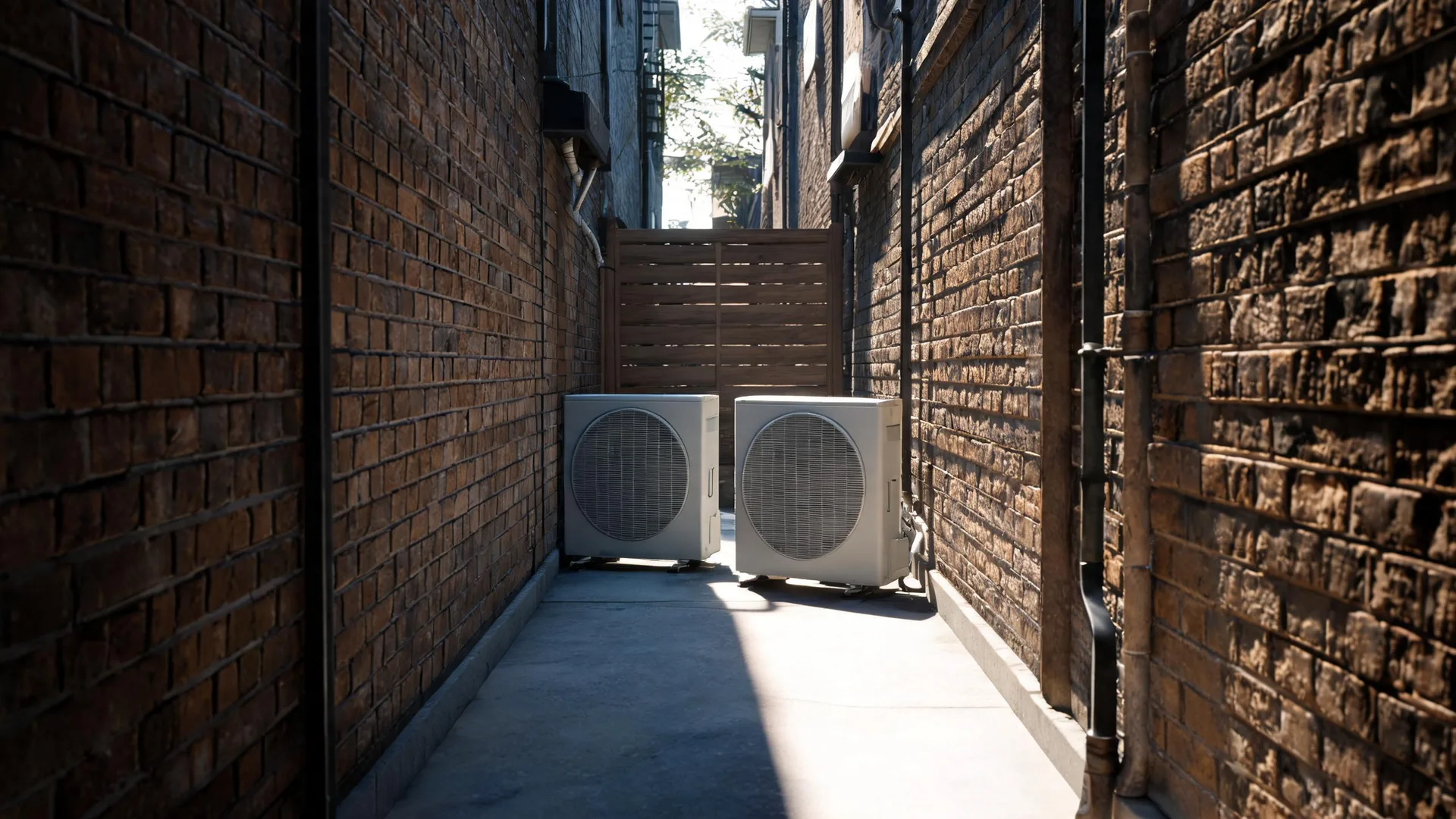
The outdoor condenser holds refrigerant under pressure, and that has to be recovered properly before the lines get cut, not vented into the air. The old unit also needs its power disconnected at the whip or breaker before anyone touches the lines. This is part of swapping a system, not an extra step.
If the concrete pad underneath is still level and sound, a new condenser usually sits right back on it. The copper line set between indoor and outdoor units can sometimes be reused too, but only if it's the right diameter for the new system and free of kinks or corrosion. A contractor checks both before deciding what stays and what gets replaced.
Estimates for a typical Boise County home, from EIA household energy data, Idaho fuel prices and NOAA climate normals. Your home will differ.
Installation day starts with the old system coming out and ends with the new one running a cooling cycle before anyone leaves. In between, the indoor coil and outdoor condenser get set, the line set gets connected or replaced, and the whole system gets evacuated to pull air and moisture out of the lines before refrigerant goes in. That evacuation step matters more than people expect. Any air left in the lines turns into a problem for the compressor down the road. Once the system is charged, a tech checks refrigerant levels against the manufacturer's spec, not by feel, and runs the thermostat through its paces to confirm the system is actually cooling and shutting off the way it should. A duct or airflow check usually happens too, since even a well-matched system struggles if the air can't move through the house.