A multi-story timber-frame and stone house glows with warm interior and exterior lighting on a dark residential street, with mountain peaks and pine trees visible in the background.

AC Installation in Malad City, ID

Tell us about the job

Takes about a minute. No obligation.

New system or replacementCentral ACOneida County, ID
Step 1 of 2

What ZIP code is the job in?

Most homes here run on propane

Propane heats 59.4% of occupied homes in Oneida County, more than any other fuel. Electricity comes next at 22.3%. A furnace burning propane paired with a separate AC unit is the setup most installers here will recognize right away.


Your AC install stands apart from the furnace

If propane heats your home, your air conditioner runs on its own circuit and shares nothing with the furnace but the ductwork and maybe the thermostat. An AC installation here is really about matching a new outdoor unit to the air handler and ducts already in place.

2 months
July through August, your air conditioner is on duty
82°F
the average summer afternoon it cools against
1 hail events
in ten years, and hail bends the fins on outdoor coils
13.4 SEER2
the federal minimum any new unit must meet
Isometric cutaway illustration of a single-story house showing interior rooms with furniture, overhead ductwork, an indoor air handler unit, and an outdoor condenser unit connected by lines at the side of the building.
Your air conditioner works hardest from July through August.

NOAA nClimDiv, 1991–2020 normals

Idaho electricity ran 11.52 cents per kilowatthour in 2024, cheaper than most of the country.

A new AC here earns back a high efficiency rating slowly, so pick the unit that matches your ductwork and will hold up, not just the one with the best rating on paper.

Two months of summer is not much to ask of a new system

Cooling runs July through August
Summer afternoons average 82°F
39 damaging wind events from 2015 to 2024
Have it in before June is outAC runs July through August here, so June is the month to get a new one in.

A system here only has to carry two months of real work, so a mid-range unit will do the job without strain. Afternoons in June, July and August average 82°F, nowhere near the heat that pushes a system to its limit elsewhere. Put the money into a correct match between the outdoor unit and the air handler and ducts already in place, and into a contractor who sizes it right rather than one who sells on efficiency alone. Damaging wind has hit Oneida County 39 times in the past decade, so it's worth asking about a hold-down kit or a well-anchored pad before asking about a higher SEER2 number. That holds up better here than another point of efficiency.

Half these homes were built in 1971 or earlier, and the new system has to fit them

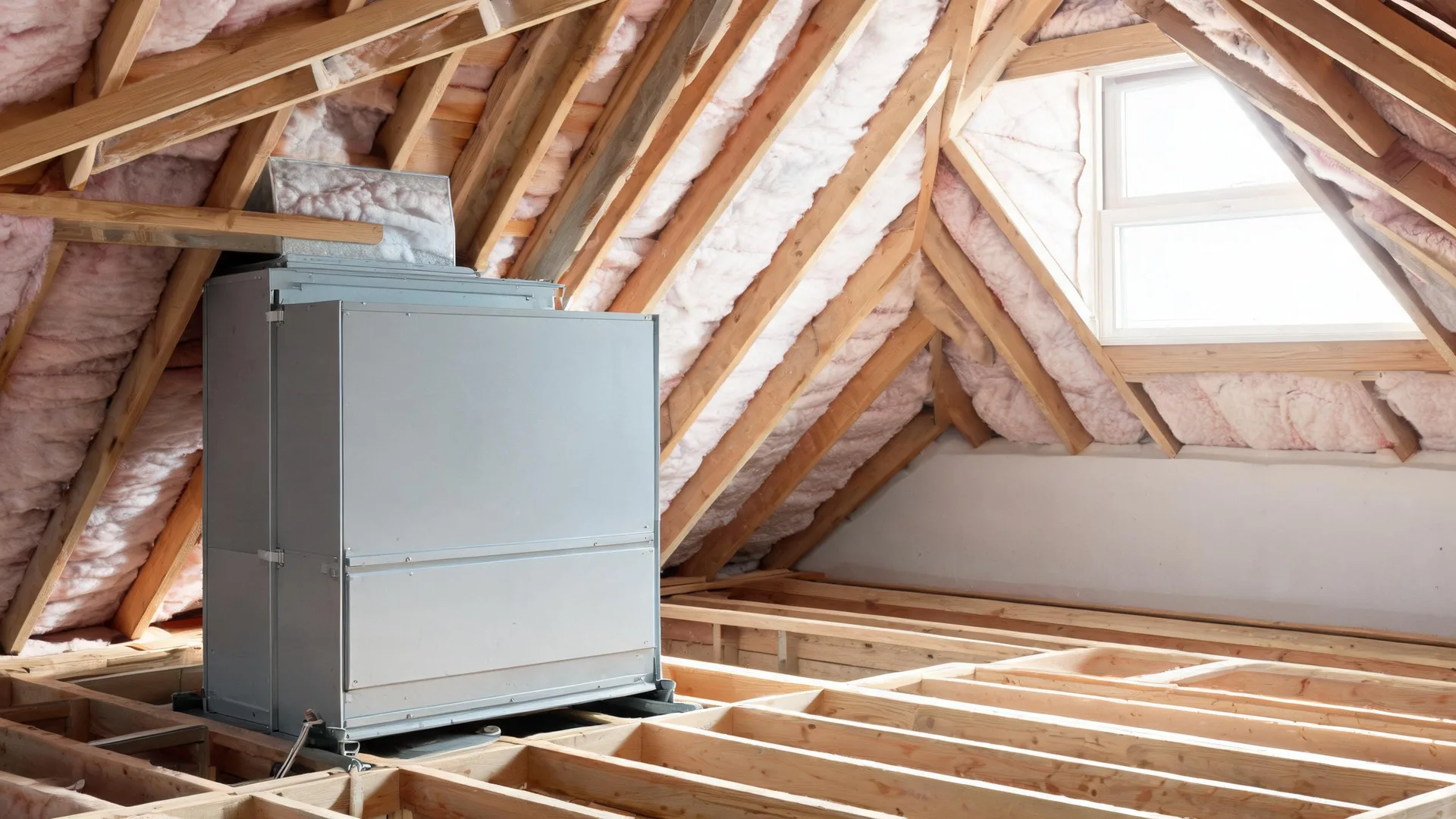
Half the homes in Oneida County were built in 1971 or earlier. A house that old was fitted for whatever ductwork and air handler it already has, and a new outdoor unit has to match that setup, not the other way around.

Find a contractor
A man in a dark jacket, cap and tan work pants, seen from behind, climbs wooden porch steps toward a green front door while carrying a worn canvas duffel bag.
An outdoor air conditioning condenser unit mounted on a concrete pad surrounded by gravel, photographed against a partly cloudy blue sky.

Fit it to the house, not the other way around

Before anything else, have the ducts and air handler checked against what the new unit needs. A system installed to match that existing setup will run fine for years. One sized or matched wrong will run the whole time you own it.

Sizing is a calculation, not a guess from square footage

A contractor works out the right size with a load calculation, weighing window area, insulation, ceiling height and air leakage room by room. Houses the same size can need different sized units if one holds heat better than the other. Matching a new unit to the old one's tonnage just carries forward whatever mistake was made the first time around.

Oversized cools the air but not the house

A unit that's too big chills the air fast and shuts off before it finishes pulling moisture out, so the house feels cool but damp and clammy. It also cycles on and off more often, which wears the compressor harder than a unit sized right that runs longer, steadier stretches. Bigger is not a safety margin here, it's a different problem.

Overhead view of an outdoor AC condenser unit on a concrete pad next to a house with a dark shingle roof.

Going above the federal minimum saves little here, about $10 a year.

  • A higher-efficiency unit$110 a year
  • A new unit at the federal minimum, 13.4 SEER2$120 a year

Estimates for a typical Oneida County home, from EIA household energy data, Idaho fuel prices and NOAA climate normals. Your home will differ.

Install day starts with the old unit coming out, the pad or mounting cleared, and the line set either reused or replaced depending on its condition. The new outdoor unit gets set and leveled before anything is connected, because a unit that sits even won't run right for the life of it. Inside, the air handler or coil gets matched up, and the refrigerant lines get connected, pressure tested, then pulled into a vacuum to clear out any moisture and air before the system is charged. That vacuum step matters more than people expect. Moisture left in the lines turns to acid over time and eats away at the compressor from the inside. Once it's charged, the contractor checks refrigerant levels against the manufacturer's spec, not just by feel, and runs the system through a full cycle to check airflow at the vents and make sure the thermostat is talking to the unit correctly. A clean install ends with the old equipment hauled off and the new one running quiet, not with a unit set down and left to sort itself out.