





A multi-story timber-frame and stone house glows with warm interior and exterior lighting on a dark residential street, with mountain peaks and pine trees visible in the background.

AC Installation in Orofino, ID

Tell us about the job

Takes about a minute. No obligation.

New system or replacementCentral ACClearwater County, ID
Step 1 of 2

What ZIP code is the job in?

Electricity heats 42.8 percent of homes in Clearwater County, more than any other fuel, with LP gas and fuel oil making up most of the rest. That split matters for central air. A lot of homes here already have the electrical setup and the ductwork that central AC installation needs, since electric furnaces and heat pumps share that same ductwork. If your home heats with electric, adding or replacing central air is usually a matter of connecting to what is already there rather than building a new system from scratch.

76°F
the average summer afternoon it cools against
6 hail events
in ten years, and hail bends the fins on outdoor coils
13.4 SEER2
the federal minimum any new unit must meet
Isometric cutaway illustration of a single-story house showing interior rooms with furniture, overhead ductwork, an indoor air handler unit, and an outdoor condenser unit connected by lines at the side of the building.
Your air conditioner works hardest from July through August.

NOAA nClimDiv, 1991–2020 normals

Summers here top out around 76 degrees on an average afternoon.

An AC system in Orofino spends most of its life barely working, so a dependable mid-range unit is enough.

A standard system is plenty for this climate

Half the homes here were built by 1977
Summer afternoons average 76°F
12 damaging wind events from 2015 to 2024
What Orofino pays to run itIdaho electricity ran 11.52 cents per kilowatt-hour in 2024, cheaper than most of the country.

Orofino falls under zone 5B, a cool climate where heating does most of the work over the year. Any split-system central air conditioner installed here still has to meet the federal minimum of 13.4 SEER2, the same floor that applies anywhere in the country. That rating measures efficiency, not how much cooling a unit can deliver, so it won't steer you toward a bigger or smaller system than this house needs. Given how mild the cooling load is here, a unit built to that minimum is already matched well to the job.

Spend on the install, not the efficiency rating

At 11.52 cents a kilowatt-hour, a higher SEER2 unit will take longer to earn back its extra cost here than in most places. Put the money into the install instead, sized right and set up well, and let a mid-range system do the job it's already suited for.

Find a contractor
An outdoor air conditioning condenser unit mounted on a concrete pad surrounded by gravel, photographed against a partly cloudy blue sky.

The install matters more than the label on the box

Ask each contractor for the load calculation on this house, not a guess based on square footage. A unit sized too big cools the air fast and shuts off before it pulls the moisture out, so the house feels clammy even at the right temperature. One sized right runs longer, steadier cycles and actually dries the air while it cools it. Also ask what happens to the indoor coil and refrigerant lines, since a new outdoor unit matched to old, mismatched indoor parts will never hit its rated efficiency. And ask who commissions the system after install, meaning who checks the refrigerant charge and airflow once it's running, because a unit installed correctly but never verified can lose real efficiency over its life without ever throwing an error.

Ductwork decides the easy jobs from the hard ones

Where ducts already run through the house and are sized right, a contractor connects the new coil and lines and moves on. Where ducts are undersized, leaky, or missing from a room, that gets fixed or added before the system can work right, and that work is where the cost moves.

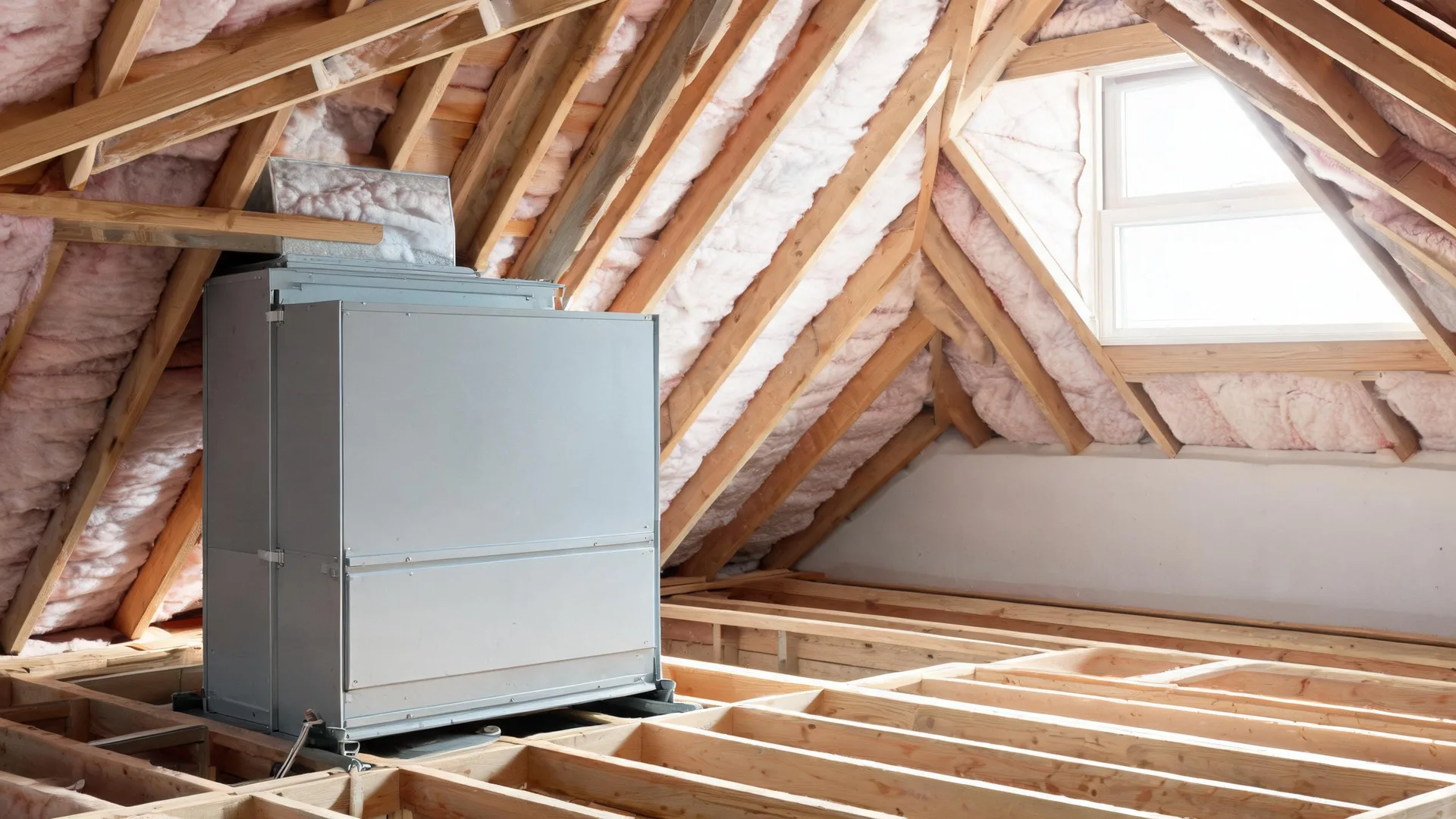
The outdoor unit is one piece of what you're paying for

Labor to set the lines, wire the disconnect, mount the condenser pad, and run a new circuit if the panel needs one adds up alongside the equipment. A straightforward swap with matching parts already in place costs less to install than a system going into a house that needs new line sets or electrical work to support it.

Overhead view of an outdoor AC condenser unit on a concrete pad next to a house with a dark shingle roof.

Going above the federal minimum saves little here, about $0 a year.

  • A new unit at the federal minimum, 13.4 SEER2$40 a year
  • A higher-efficiency unit$40 a year

Estimates for a typical Clearwater County home, from EIA household energy data, Idaho fuel prices and NOAA climate normals. Your home will differ.

Installation day starts with the old equipment coming out, lines disconnected and the condenser pad cleared. The indoor coil gets swapped if it doesn't match the new outdoor unit, since mismatched coils are one of the main reasons a new system never reaches its rated efficiency. Line sets get flushed or replaced, the disconnect box gets wired, and if the panel needs a new circuit for the condenser, that gets run too. Once the new unit is set, a contractor pulls a vacuum on the line set to clear out moisture and air before refrigerant goes in. Trapped moisture left in the lines causes problems down the road that are hard to trace back to the install. The last step is commissioning. That means checking refrigerant charge against the manufacturer's numbers and measuring airflow at the vents, not just confirming the unit powers on. A system that skips that last check can run for years losing efficiency without ever tripping a fault code.