






Illuminated timber-and-stone mountain cabins along a curved road at twilight, with lit trees and mountain peaks in the background.

AC Installation in Preston, ID

Tell us about the job

Takes about a minute. No obligation.

New system or replacementCentral ACFranklin County, ID
Step 1 of 2

What ZIP code is the job in?

Your air conditioner in Preston only has to work two months out of the year, July and August. Afternoon highs through the summer average 80°F, which is not a hard number for a system to meet. A unit here isn't running flat out the way one does in a place with a long, hot summer. That matters when you're choosing what to install. You don't need the highest efficiency model on the lot to stay comfortable here. A dependable, well-installed system sized right for your house will handle what this climate asks of it.

2 months
July through August, your air conditioner is on duty
80°F
the average summer afternoon it cools against
8 hail events
in ten years, and hail bends the fins on outdoor coils
13.4 SEER2
the federal minimum any new unit must meet
Isometric illustration of a cutaway single-story house showing attic ductwork, an indoor air handler, interior rooms with furniture, and an outdoor condenser unit connected by lines, on a white background.
Your air conditioner works hardest from July through August.

NOAA nClimDiv, 1991–2020 normals

Cooling in Preston runs two months a year, July and August.

June is the time to put in a new system, before the first hot day puts it to work.

Cheap power here means payback matters less than picking the right system

Power costs 11.52 cents a kWh statewide
Cooling runs July through August
Summer afternoons average 80°F
Cheap power here means payback matters less than picking the right systemIdaho power ran 11.52 cents a kilowatthour in 2024, among the lowest in the country.

Franklin County sits in zone 6B, the energy code's cold climate band, and it's on the dry side. That classification is about winters here more than summers, but it still sets the floor for what goes into your house. Any split-system air conditioner under 45,000 Btu/h built new has to meet 13.4 SEER2 at minimum, and that rule doesn't change based on how hot or cold the zone is. So the low end of what a contractor can sell you is already fixed by federal rule, not by how often you'll run the system. Ask what SEER2 rating a quoted unit carries, since it won't legally be below that number.

Pick a system that fits two mild months, not a long hot summer

Pick a system built to last through two mild months of cooling, not one loaded with efficiency features you won't get much use from. A dependable unit, sized right for your house, will handle what Preston's summers ask of it.

Find a contractor
A man in a dark T-shirt and tan work pants carries a canvas tool bag up wooden porch steps toward a green panelled front door, with a potted shrub beside the entry.
A gray residential air conditioning condenser unit mounted on a concrete pad outdoors, surrounded by green grass under a partly cloudy blue sky.

What to ask before you sign

Ask how a contractor arrived at the size they're quoting. It should come from a load calculation done on your house, the rooms, the windows, the insulation, not a rule of thumb based on square footage. A system that's too big cools the air fast and shuts off before it pulls the humidity down, so the house feels clammy even at the right temperature. One that's too small runs constantly and never quite catches up. Either way you end up replacing parts sooner than you should, because a system that's fighting its own size cycles more than one that fits. Ask too how long the compressor and coil are warrantied, and whether that warranty needs the unit registered within some window after install. That paperwork is easy to miss and it's the difference between a covered repair and a full-price one down the road.

The old unit comes out first

A straight swap means the old condenser and coil come out before the new ones go in. If the line set or coil is being reused, a contractor has to check it against the new system, since mismatched parts strain a compressor that was never built to handle them. Most of the time it's easier to replace both coil and condenser as a pair.

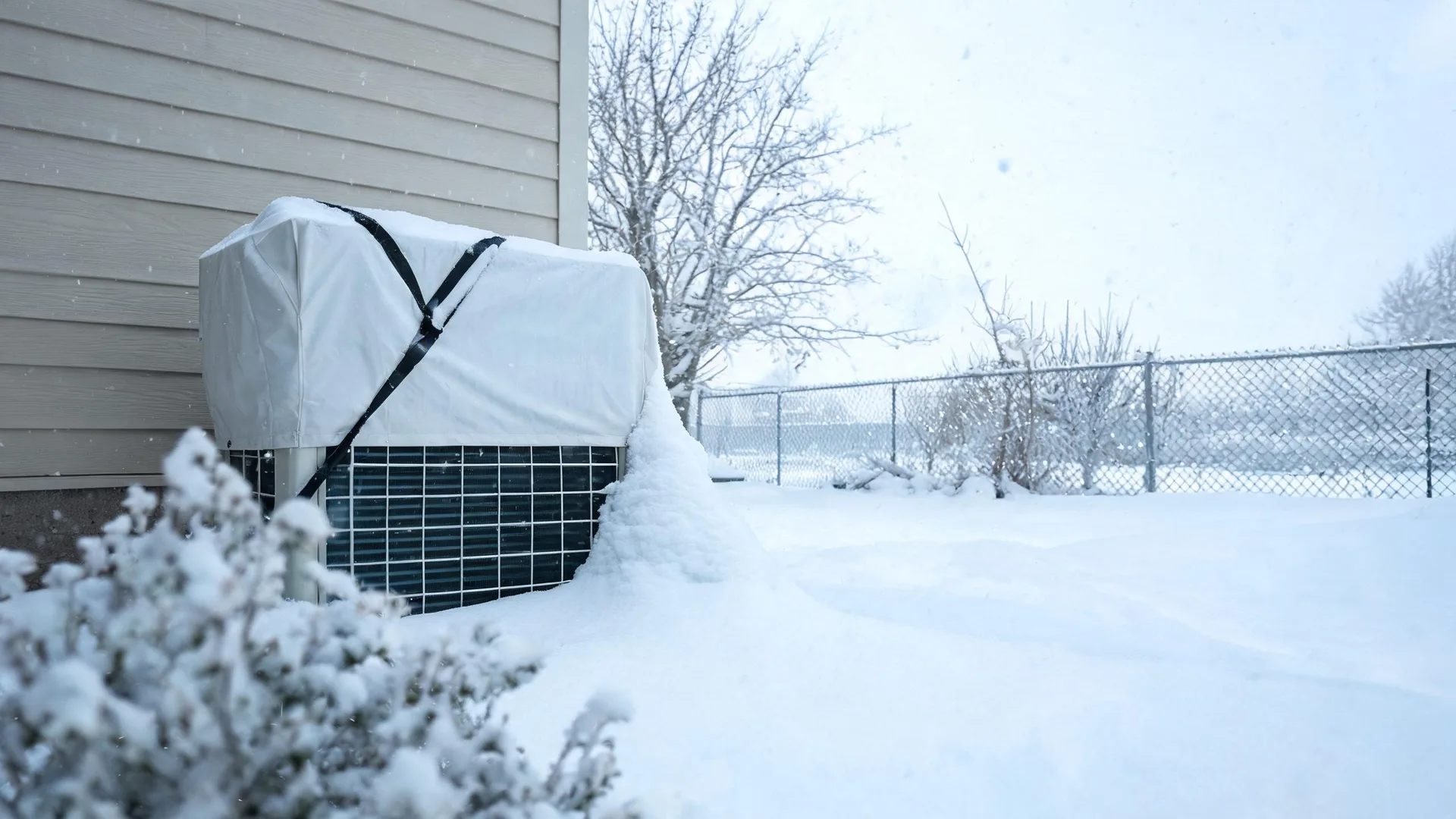
Refrigerant has to be recovered, not vented

Whatever refrigerant is left in the old system gets pulled out with a recovery machine and taken offsite. It can't be released into the air. That's part of why removal takes a licensed contractor rather than a crew just hauling off scrap metal.

An outdoor air conditioning condenser unit positioned beside a blue-sided house at sunset.

Going above the federal minimum saves little here, about $10 a year.

  • A higher-efficiency unit$70 a year
  • A new unit at the federal minimum, 13.4 SEER2$80 a year

Estimates for a typical Franklin County home, from EIA household energy data, Idaho fuel prices and NOAA climate normals. Your home will differ.

Installation day starts with the old system coming apart, not the new one going in. Before any wrench touches a line, the refrigerant gets recovered from the old unit, and the space where the new condenser sits gets leveled and cleared. Then the indoor coil and outdoor condenser go in, the line set gets connected, and the whole system gets pulled down to a vacuum to clear out air and moisture before any refrigerant goes back in. Skipping that step is how a brand new system ends up with a weak compressor a year in. Once it's charged, a contractor checks the airflow at the vents and the temperature split between the air going in and the air coming out, since that split tells you whether the system is actually moving heat the way it should. The thermostat gets wired in and tested last, after the rest of the system proves out.