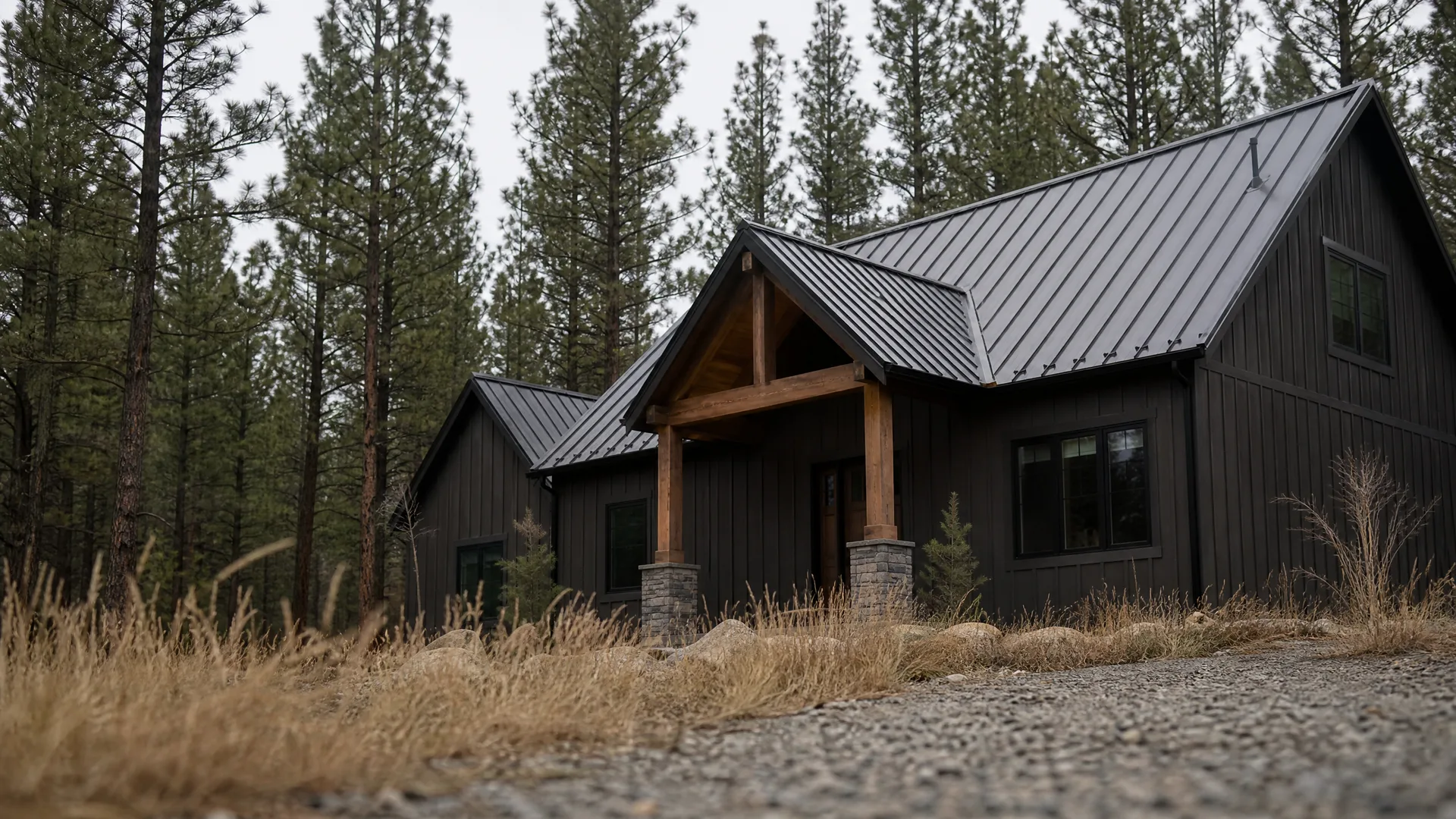


A dark-painted board-and-batten house with a standing-seam metal roof, timber entry porch and stone column bases, set among pine trees behind dry grass and a gravel drive.

AC Installation in Sandpoint, ID

Tell us about the job

Takes about a minute. No obligation.

New system or replacementCentral ACBonner County, ID
Step 1 of 2

What ZIP code is the job in?

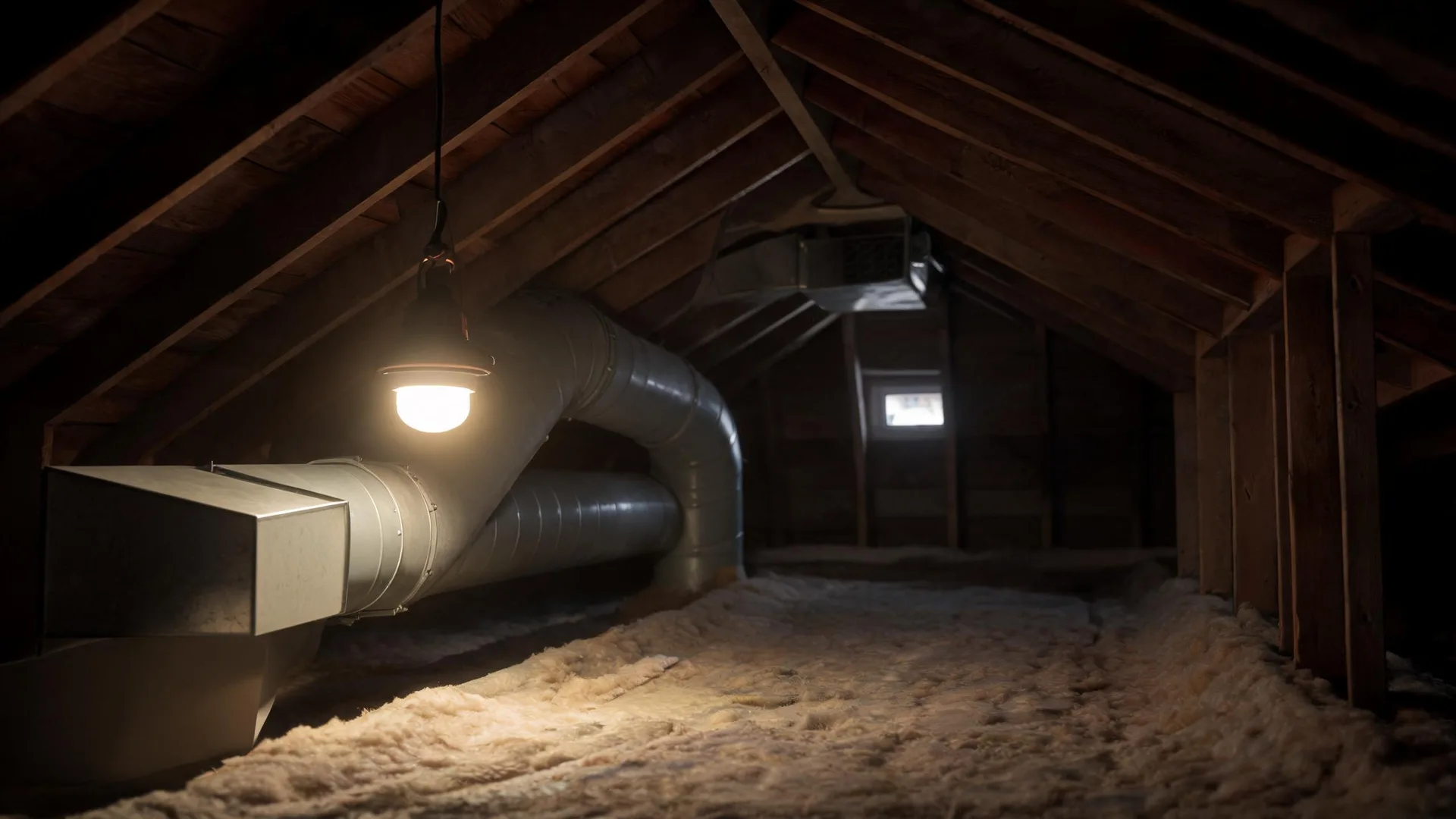
Electric heat leads here, warming 35.8 percent of homes in Bonner County, with utility gas behind it at 22.2 percent and propane at 11.6 percent. If your house already runs on electric heat, central air pairs with it easily, since the ductwork needed for forced air is often already in place. That makes central AC a straightforward add rather than a rework of how the house is set up. Homes on gas or propane furnaces can still run central air through the same ducts the furnace uses. Either way, what matters for installation is whether ductwork is already there to use, not which fuel heats the house.

75°F
the average summer afternoon it cools against
11 hail events
in ten years, and hail bends the fins on outdoor coils
13.4 SEER2
the federal minimum any new unit must meet
Isometric cutaway illustration of a single-story house showing interior rooms with furniture, attic ductwork connected to an indoor air handler, and an outdoor condenser unit on a pad linked by refrigerant lines.
Your air conditioner works hardest from July through August.

NOAA nClimDiv, 1991–2020 normals

The old condenser doesn't get left running once the new one is in.

Swapping the outdoor unit means disconnecting refrigerant lines and electrical whips, so the old one comes out as part of the same job.

Summers here top out at 75, so the AC you need is one that just has to show up

Summer afternoons average 75°F
43 damaging wind events from 2015 to 2024
11 hail events from 2015 to 2024

Bonner County sits in climate zone 6B, a designation built around how cold winters get here, not summer heat. The rule that actually limits your AC choice comes from somewhere else. Any split-system central air conditioner under 45,000 Btu/h has to meet a federal minimum of 13.4 SEER2, the same floor as everywhere else in the country. That number sets the baseline efficiency a new system has to clear here, regardless of what else goes in alongside it.

At 11.52 cents a kilowatt-hour, pick the AC that fits your house, not the one with the highest rating

Idaho's electricity is cheaper than most of the country, so a higher SEER2 rating takes longer to earn back here than it would somewhere with pricier power. That makes the case for choosing a system based on what your ductwork can handle and what holds up through a Sandpoint summer, rather than chasing the top efficiency number on the sticker.

Find a contractor
An outdoor air conditioning condenser unit mounted on a concrete pad surrounded by gravel, photographed against a partly cloudy blue sky.

It's not the heat that wears a condenser down, it's the years of starting and stopping

A condenser that barely works through the summer still logs a full season of starts and stops every year, and that cycling is what ages it, not the running. Each startup is a jolt to the compressor and the capacitor that kicks it on. Sit outside long enough and the cabinet takes its own toll too, with sun breaking down the fan motor's seals and debris working into the coil fins between cleanings. None of that shows up on day one. It shows up as a capacitor that weakens early or a coil that needs clearing well before the compressor itself is anywhere near worn out.

Bigger isn't better, it's worse

An oversized system cools the room fast, shuts off, then starts again a few minutes later. That short cycle never runs long enough to pull humidity out of the air, so the house feels clammy even at the right temperature. Short cycling also puts more wear on the compressor than a long, steady run would.

The number comes from a room-by-room count

Getting the size right means a load calculation, not a guess based on square footage. A contractor measures each room, checks window area and direction, and factors in the attic and the walls before landing on a number. Houses that look alike from the street can still need different sized systems once that work is done.

Aerial view of a gray central air conditioning condenser unit on a concrete pad next to a house with vinyl siding.

Going above the federal minimum saves little here, about $10 a year.

  • A higher-efficiency unit$30 a year
  • A new unit at the federal minimum, 13.4 SEER2$40 a year

Estimates for a typical Bonner County home, from EIA household energy data, Idaho fuel prices and NOAA climate normals. Your home will differ.

Installation day starts with the old system coming out, then the new one goes in piece by piece rather than as one swap. The indoor coil gets matched to the furnace or air handler already there. The line set connecting it to the outdoor unit either gets reused or replaced, depending on what shape it's in. Once the new condenser is set on its pad and the lines are connected, the system gets charged with refrigerant to the exact amount the manufacturer specifies, not just topped off by feel. After that, the contractor checks airflow at the vents, tests the thermostat, and runs the system through a full cycle to see that it holds the temperature it's set to. The line set and ductwork get checked for leaks too, since a small one won't show up as a problem until months later.