







Warmly lit timber-frame and stone houses line a street at dusk, with evergreen trees and a snow-capped mountain range in the background.

AC Maintenance in Sandpoint, ID

Tell us about the job

Takes about a minute. No obligation.

Tune-up, service, or cleaningCentral ACBonner County, ID
Step 1 of 2

What ZIP code is the job in?

Afternoon highs here average 75 degrees in June, July and August, and that's as warm as it gets. An air conditioner working against that kind of mild heat isn't straining the way one does somewhere with long, hot summers. But easy duty still means parts that age. The capacitor weakens over time, the coil collects dust, and the refrigerant charge can drop a little even without a leak. A yearly check catches those things while they're still small.

75°F
the average summer afternoon it cools against
11 hail events
in ten years, and hail bends the fins on outdoor coils
43 wind events
in ten years, and wind drives debris into outdoor units
Isometric 3D cutaway render of a house with dark siding showing interior rooms, ductwork and an air handler, connected by lines to an outdoor condenser unit on a white background.
Your air conditioner works hardest from July through August.

NOAA nClimDiv, 1991–2020 normals

Half the homes in Bonner County were built in 1990 or later.

A system that age is usually still worth a yearly check, not a replacement.

Weather here is the reason once a year is enough

392 severe weather events from 2015 to 2024
11% of homes statewide lost power a day or more in 2024
43 damaging wind events from 2015 to 2024
A once-a-year check is enough to keep it that waySchedule AC maintenance in Sandpoint before the next mild summer

A tune-up starts with the capacitor. A meter tells the tech what your eyes can't catch, whether it's still holding its rated charge or fading toward a hard start. The coil gets pulled apart and checked for dust packed between the fins. That dust cuts airflow long before the system struggles enough for you to notice. The refrigerant charge gets checked against what the system calls for, because a slow leak can leave it running low without ever tripping anything. The contactor gets a look too. Its points pit and burn with age, and that's a common reason a system stops answering the thermostat. None of this shows up from the wall. It shows up as a system that runs longer than it should to do the same job, until the day it doesn't run at all.

Keep up the yearly check

Easy duty still wears parts. A yearly check keeps it going a long time.

Find a contractor
A man seen from behind in a dark shirt and tan work pants carries a canvas tool bag up wooden steps toward a green front door of a shingled house.
A gray residential air conditioner condenser unit mounted on a concrete pad in an open grass field.

Skip it and the system doesn't tell you, until it does

Skip the yearly check and nothing happens right away. That's what makes it easy to skip again next time. The capacitor keeps losing strength quietly, the coil keeps collecting dust nobody sees, and the system just works harder to cover for it. Harder usually means longer run times, not a strange noise or a warning sign. By the time it short cycles or won't start at all, the parts behind it have usually been failing for a while. Catching that early is the whole point of the check. Once a system has gone without one for a while, the check stops being about prevention. It becomes about finding out how bad it got.

Keep the airflow open

The air conditioner needs room to breathe on both ends. Keep plants and debris a couple feet clear of the outdoor unit, and check the indoor filter monthly. A clogged filter starves the coil of airflow, and that makes the whole system work harder to move the same amount of air.
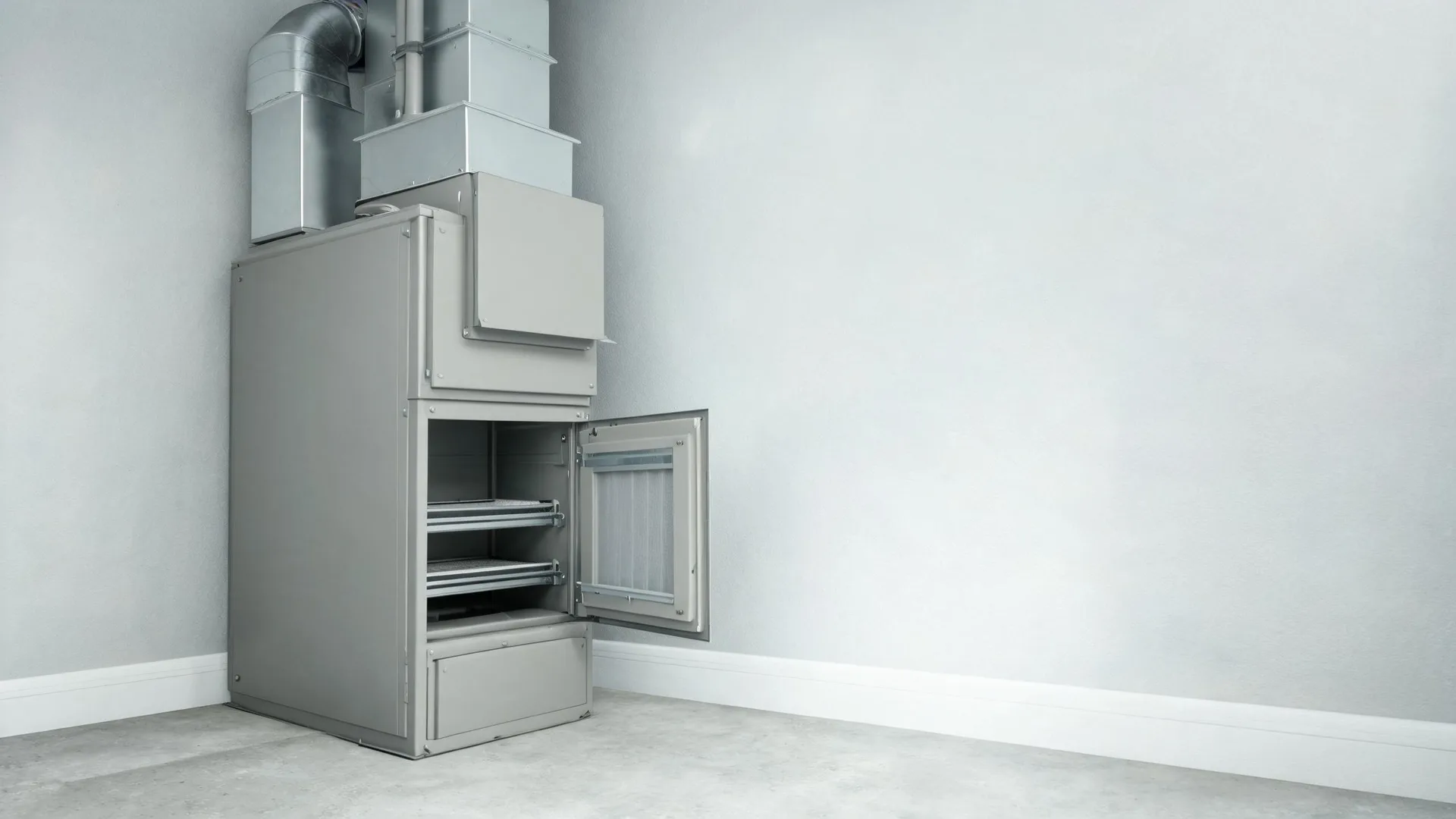
Know what to listen for

Between visits, a change in sound is worth paying attention to. Grinding, squealing, or a new rattle means something has shifted or worn loose. The system running longer than it used to, to reach the same temperature, is also worth noting down. That's useful information for the tech at the next check, even if nothing feels urgent yet.

The filter is the first line of defense, and it protects more than air quality. Every bit of dust it stops never reaches the coil. When the filter loads up, less air moves across the coil, and the coil can get cold enough to grow ice right on the fins. Ice blocks airflow even further, and the system starts losing capacity instead of gaining it. The drain matters just as much, even though nobody thinks about it until it fails. Condensation has to leave the coil somewhere, and it travels through a small drain line to get there. Algae and dust build up in that line over time, and once it clogs, water backs up instead of draining away. A clean filter and an open drain are among the cheapest ways to keep the whole system working the way it was built to.

A tune-up covers more than the capacitor and coil. The blower wheel gets checked for dust buildup on its blades, because a dirty wheel moves less air even when the motor runs fine. The condensate drain gets flushed so it can't back up later in the season. Electrical connections get checked too, since a loose wire at the disconnect or the contactor can cause a system to cut out under load. The outdoor fan motor gets looked at for wear, and its mounts get checked, since a wobbling blade will eventually hit the housing. None of these parts fail on a schedule. A tune-up finds the one that's closest to trouble this year, not the one that failed last year.