A grey heat pump outdoor unit mounted on a concrete pad against the exterior wall of a house with grey siding and stone veneer.

Heat Pump Repair in Arco, ID

Tell us about the job

Takes about a minute. No obligation.

RepairHeat PumpButte County, ID
Step 1 of 2

What ZIP code is the job in?

A small fault turns into a bigger repair

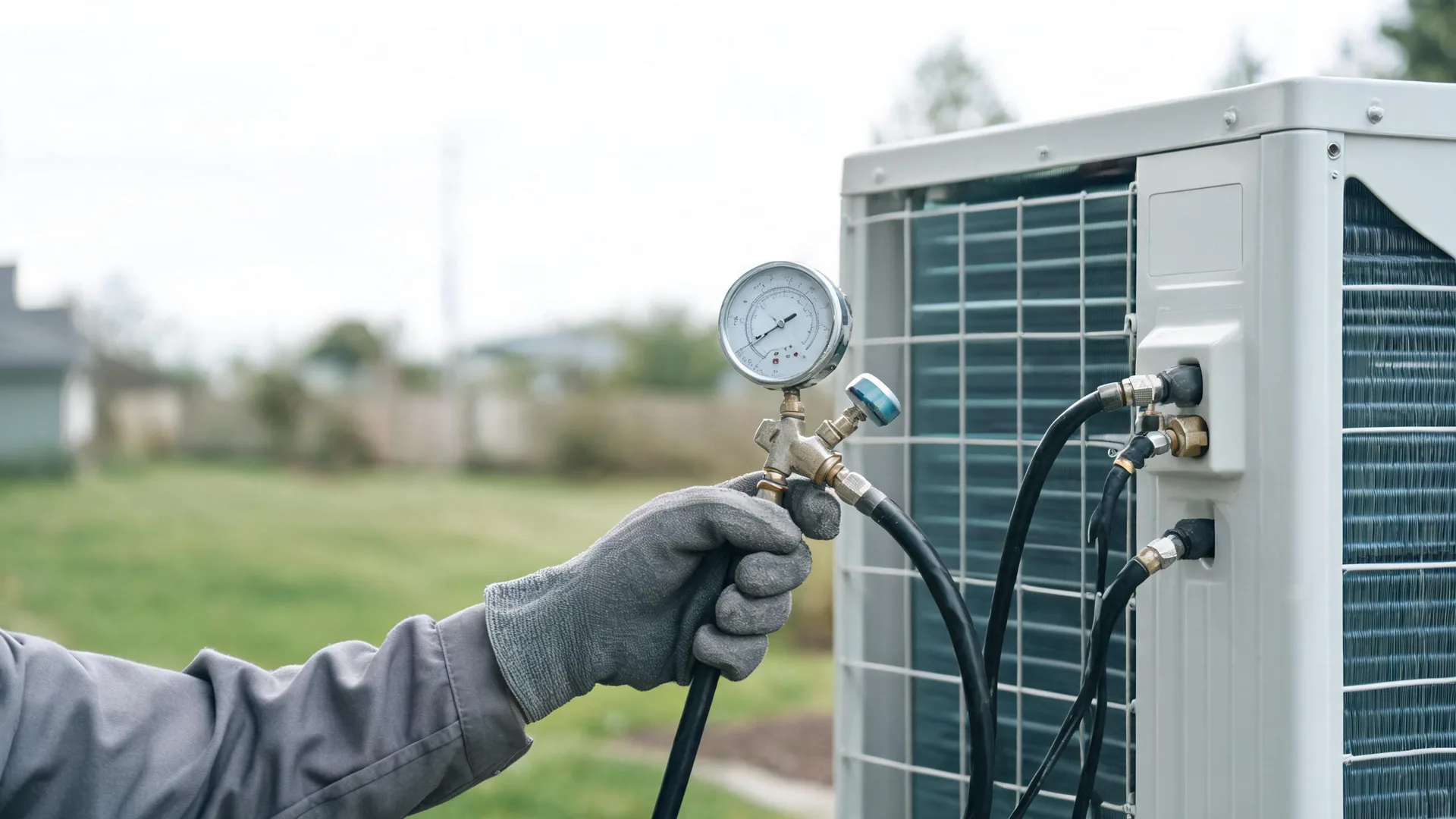
A heat pump that's low on refrigerant will keep running, but the compressor works harder to make up for it and can overheat. Run it long enough in that state and you're replacing a compressor instead of fixing a leak.

The signs usually point to something specific

Ice building up on the outdoor unit, short cycling, or air that's barely warm all mean something different is wrong. Shutting the system off and calling for a look before it runs more hours usually keeps the job smaller than it would otherwise become.

10 months
September through June, your system heats
1 months
July through July, it cools
11°F
the average winter night it heats against
79°F
the average summer afternoon it cools against
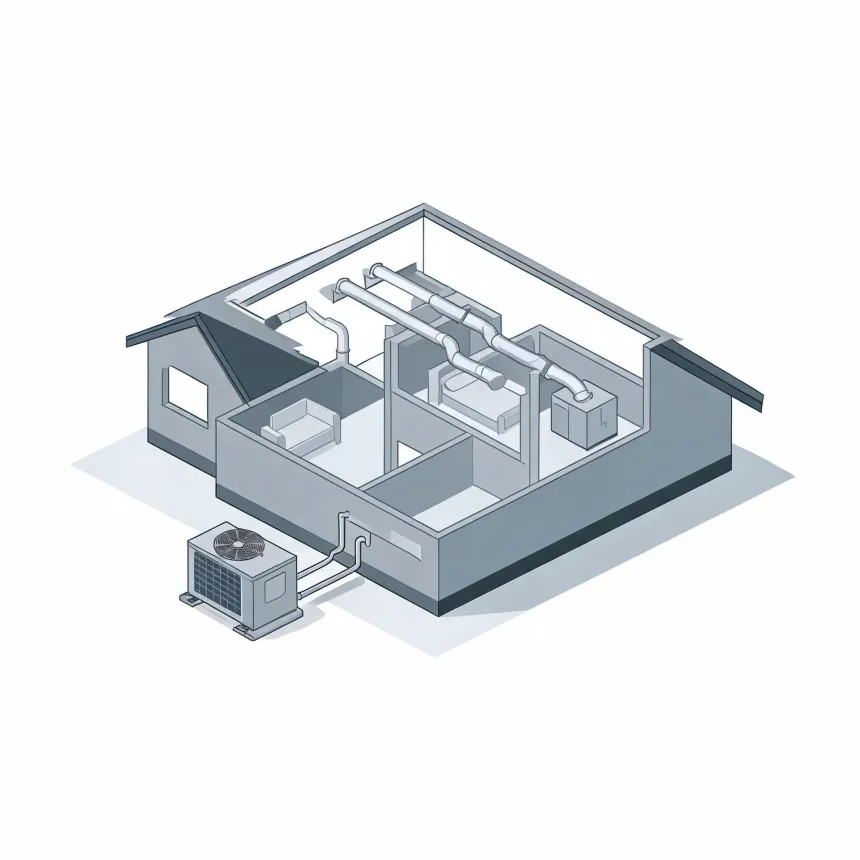
Isometric grayscale illustration of a cutaway house showing interior rooms, ceiling ductwork and an air handler, connected by lines to an outdoor condenser unit on a pad outside.
Your system heats September through June and cools July through July.

NOAA nClimDiv, 1991–2020 normals

Check the thermostat batteries and the breaker before anything else.

A heat pump that won't start at all is sometimes just a dead battery or a tripped switch, not a repair.

Weather here is not pushing this repair

240 severe weather events from 2015 to 2024
11% of homes statewide lost power a day or more in 2024
144 damaging wind events from 2015 to 2024
Nothing unusual going on hereIdaho homes paid 11.52 cents per kilowatt-hour in 2024, close to average.

Heat pumps in Arco run heat from September through June, almost ten months of the year, with July off for cooling. That's a long stretch for one system to carry, and August is when it's worth paying attention. A heat pump that struggled at the end of last winter doesn't fix itself over summer. The same weak part, a failing capacitor or a reversing valve that's starting to stick, is still there when the system switches back over in September and gets asked to run hard again. Having it looked at in August, before that first cold push, catches the problem while it's still a small repair.

If this heat pump came with an older home, repair may not be the right call

Half the homes in Butte County were built in 1971 or earlier. A heat pump that came with a house that age has likely been replaced at least once already, and the current one may be on borrowed time. Before paying for a major repair, it's worth asking the contractor how much life is left in the system.

Find a contractor
A gray heat pump condenser unit mounted on a concrete pad against the gray lap-siding exterior wall of a house.

Cold nights, rough weather, every year

Eleven degrees is a cold draw for any heat pump, night after night, all winter. The colder the air outside, the harder the compressor has to work to pull heat out of it. On top of that, Butte County has seen winter storms, heavy snow, ice, blizzards, 92 times over the past decade, plus damaging wind on top of that. Those aren't ordinary running hours. That's the compressor and the outdoor coil taking a beating on top of an already long winter. Parts built to last years of normal wear don't get normal wear here. They get asked for more, more often, and that's usually what's sitting behind the repair call.

Warm air that isn't warm enough

A heat pump that runs all the time but never quite gets the house to temperature is often low on refrigerant or struggling with a dirty outdoor coil. The air coming out of the vents feels cool rather than warm, and the system just keeps running trying to catch up. Left alone, the compressor is doing extra work every hour it runs that way.

Noises that weren't there before

A clanking, buzzing or grinding sound usually means a part has worn loose or a motor bearing is going. These sounds don't come from the system working hard, they come from something physically failing inside it. Catching it early is the difference between replacing a motor and replacing the whole outdoor unit.

Most heat pump failures trace back to a handful of parts. The reversing valve is one of the first to go, since it's what switches the system between heating and cooling and it's moving every time the system changes modes. A stuck reversing valve means the system blows cold air when it should be heating, or won't switch over at all. The capacitor is another common point of failure. It gives the compressor and fan motors the jolt they need to start, and a weak one causes hard starts, humming, or a unit that won't start at all. Refrigerant leaks show up slowly, usually at a fitting or coil, and they don't get better on their own. The compressor itself is the part nobody wants to hear about, because by the time it fails, something upstream usually caused it, a refrigerant leak, a dirty coil, electrical trouble, that made it work harder than it should have for a long time first.

A diagnostic visit starts with the outdoor unit and the air handler, both sides of the system, before anything gets touched. The contractor checks refrigerant pressure first, since too little or too much points to a different problem. Electrical readings come next. Voltage to the compressor, amp draw on the fan motor, whether the capacitor is still holding a charge. The system gets run in both heating and cooling to see if the reversing valve actually switches when it's told to. A lot of it comes down to watching and listening too, a compressor that hums but won't start, a fan spinning slower than it should, ice where there shouldn't be any. Each of those points to something specific, and that's the job, finding the one part causing the trouble before it drags others down with it.