Illuminated timber-frame and stone houses along a residential street at night, with snow-capped mountains visible in the background.

Heat Pump Repair in Boise City, ID

Tell us about the job

Takes about a minute. No obligation.

RepairHeat PumpAda County, ID
Step 1 of 2

What ZIP code is the job in?

The reversing valve sticks or fails

A heat pump switches between heating and cooling with a reversing valve, and that part takes the most wear because it moves every time the system changes modes. When it sticks, the unit blows cold air when it should heat, or it gets stuck in one mode and won't switch at all. A failing valve usually means a stuck solenoid or a worn valve body, not something you can free up yourself.


The outdoor coil and defrost cycle take the abuse

The outdoor unit works through cold weather that an air conditioner never sees, and that coil collects frost. A working defrost board and sensor clear it off on a schedule. When the sensor reads wrong or the board fails, frost builds up and blocks airflow across the coil, and the system loses capacity or trips off. That's usually an electrical fault, not a sign the coil itself is damaged.

8 months
October through May, your system heats
3 months
June through August, it cools
25°F
the average winter night it heats against
88°F
the average summer afternoon it cools against
Isometric cutaway illustration of a single-story house showing interior rooms with furniture, an attic duct network connected to a furnace or air handler, and an outdoor condenser unit linked by lines outside the wall.
Your system heats October through May and cools June through August.

NOAA nClimDiv, 1991–2020 normals

Boise winters average 25°F at night, nowhere near the extreme cold a heat pump struggles against.

A heat pump here isn't fighting the weather for its life, so a breakdown is more likely a part than a system worn past saving.

September is when a weak heat pump shows it

Cooling runs June through August
Heat runs October through May
41 damaging wind events from 2015 to 2024
Newer house, newer system, worth fixingHalf the homes in Ada County were built in 1997 or later

A diagnostic visit starts outside at the unit, not inside at the thermostat. A tech checks refrigerant pressures. They pull the panel and look at the capacitor and contactor, then watch how the compressor and outdoor fan behave when the system calls for heat or cool. The reversing valve gets checked next, since a heat pump blowing the wrong temperature air or stuck in one mode usually traces back there. Inside, they check the filter and whether airflow across the indoor coil matches what the system expects. Electrical readings tell most of the story. A motor pulling too many amps, a sensor reading wrong, a relay that isn't switching. By the time a tech is ready to explain what's wrong, they can usually point to the one part causing it, not just the symptom you called in about.

It's usually worth repairing

It has an easier job here than in most places, so your heat pump is often in decent shape. Repair is usually worth it.

Find a contractor
A man in a cap, long-sleeve shirt and brown work pants carries a worn canvas tool bag up porch steps toward a green front door, with a potted shrub beside the entry.
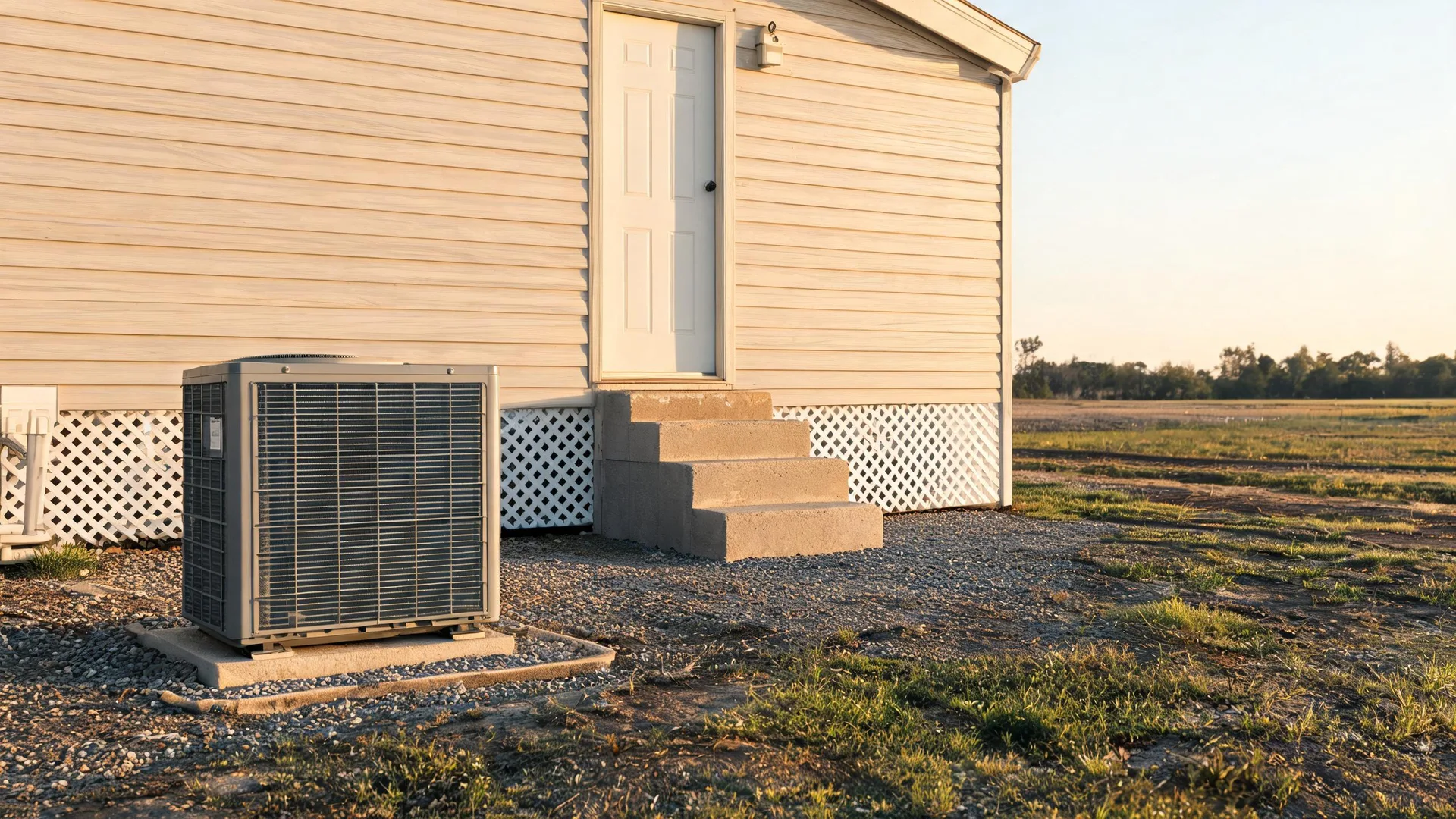
A gray air-source heat pump mounted on a concrete pad next to a house with gray vinyl siding, surrounded by gravel and flanked by green shrubs and white hydrangea flowers.

Running most of the year, the signs show up as symptoms, not shutdowns

A heat pump works through both heating and cooling, so it runs more days of the year than a system that only does one job. That shows up less as sudden failure and more as small symptoms you can actually notice. Short cycling, where it turns on and off in quick bursts instead of running a full cycle, points to a control or sensor issue. Air that never quite reaches the temperature you set, even after it's run a long while, usually means it's lost some capacity somewhere. A hissing or bubbling sound near the outdoor unit can mean a refrigerant leak. None of these mean the system is done. They mean something specific inside it needs a look, and catching it early is what keeps a small fix from turning into a bigger one.

A weak capacitor strains the motor it starts

When a capacitor weakens, the compressor or fan motor draws harder to start and keeps drawing hard every time it cycles. Run it like that long enough and the motor windings take the damage. A part that was a simple swap turns into a motor replacement if it sits too long.

A blocked coil overworks the compressor behind it

A frozen or dirty outdoor coil cuts down the airflow the system needs to move heat in or out. The compressor and fan motor both run longer and hotter trying to make up for it. Left alone, a coil problem stops being a coil problem and starts wearing down the parts around it.

Before you call anyone, a few things are worth checking. Make sure the thermostat is actually set to heat or cool the way you want, and check the batteries if it runs on them, since a dead backup battery can quietly drop a programmable thermostat back to a factory setting. Walk outside and look at the unit. If the coil is caked in ice, shut the system off at the thermostat and leave it off, because running a compressor against a frozen coil turns a simple fix into a damaged one. Check that nothing is pressed up against the outdoor unit, no leaves packed against the side, no panel knocked loose. Inside, pull the filter and hold it to the light. If you can't see through it, swap it, since a clogged filter starves the whole system of airflow and can look like a much bigger problem than it is. If the outdoor fan sits still while the indoor side keeps running, turn the system off and leave it off until someone takes a look.

A repair decision usually comes down to what part failed and what it's connected to. A failed capacitor, a bad sensor, a stuck relay. Each one sits on its own, and swapping it out doesn't put anything else at risk. The compressor is different. It sits in the middle of the refrigerant circuit, and replacing it means opening that circuit back up, which carries its own risk even when the part itself is available. Age matters less than what's already been replaced. A system that's had a few small parts swapped over the years is usually still worth fixing. One that's already lost a compressor or a reversing valve and is now failing again is telling you something different.