A rustic log rail fence beside a gravel verge and paved road, with dark-sided cabins with metal roofs among tall pine trees under an overcast sky.

Heat Pump Repair in Bonners Ferry, ID

Tell us about the job

Takes about a minute. No obligation.

RepairHeat PumpBoundary County, ID
Step 1 of 2

What ZIP code is the job in?

Winter here is routine for a heat pump

Boundary County sees heavy snow and ice most winters, and nights average 20°F in December, January and February. A heat pump built for this climate handles that kind of cold every season. That cold is not a reason for a breakdown by itself.


So the cause is usually a specific part

When a heat pump in Bonners Ferry stops heating or starts short cycling, the fix is almost always one of the usual ones. A failing defrost control. A low refrigerant charge. A worn contactor. Finding which one it is matters more than guessing at the weather.

10 months
September through June, your system heats
20°F
the average winter night it heats against
71°F
the average summer afternoon it cools against
Isometric grey-toned illustration of a cutaway house showing interior rooms, ceiling ductwork and an air handler, connected by lines to an outdoor condenser unit beside the building.

Heat pumps here start running in September and keep going through June.

A part that was already weak tends to fail in September's first cold snap, once the heat pump has to work for real.

Boundary County winters are routine, not rare

381 severe weather events from 2015 to 2024
11% of homes statewide lost power a day or more in 2024
41 damaging wind events from 2015 to 2024
A repair that fixes the real problem pays you back every monthIdaho homes paid 11.52 cents per kilowatt-hour in 2024, so a heat pump that's losing efficiency shows up on the bill fast.

Half the homes in Boundary County were built in 1991 or later. If yours is one of them, check the paperwork before you assume the worst about your heat pump. A system installed with a newer house is often newer itself, and one that's only a few years or a couple decades old still has working life in it. A breakdown doesn't mean it's finished. It usually means one part gave out, and that's worth fixing on a system with life left ahead of it.

Get the part fixed, not the system replaced

A heat pump with life left in it is worth repairing. Get a tech out to find the failed part and fix that.

Find a contractor
A man seen from behind in a backward cap, dark jacket and tan work pants carries a waxed canvas tote bag up steps toward a green front door, with a potted shrub beside the entry.
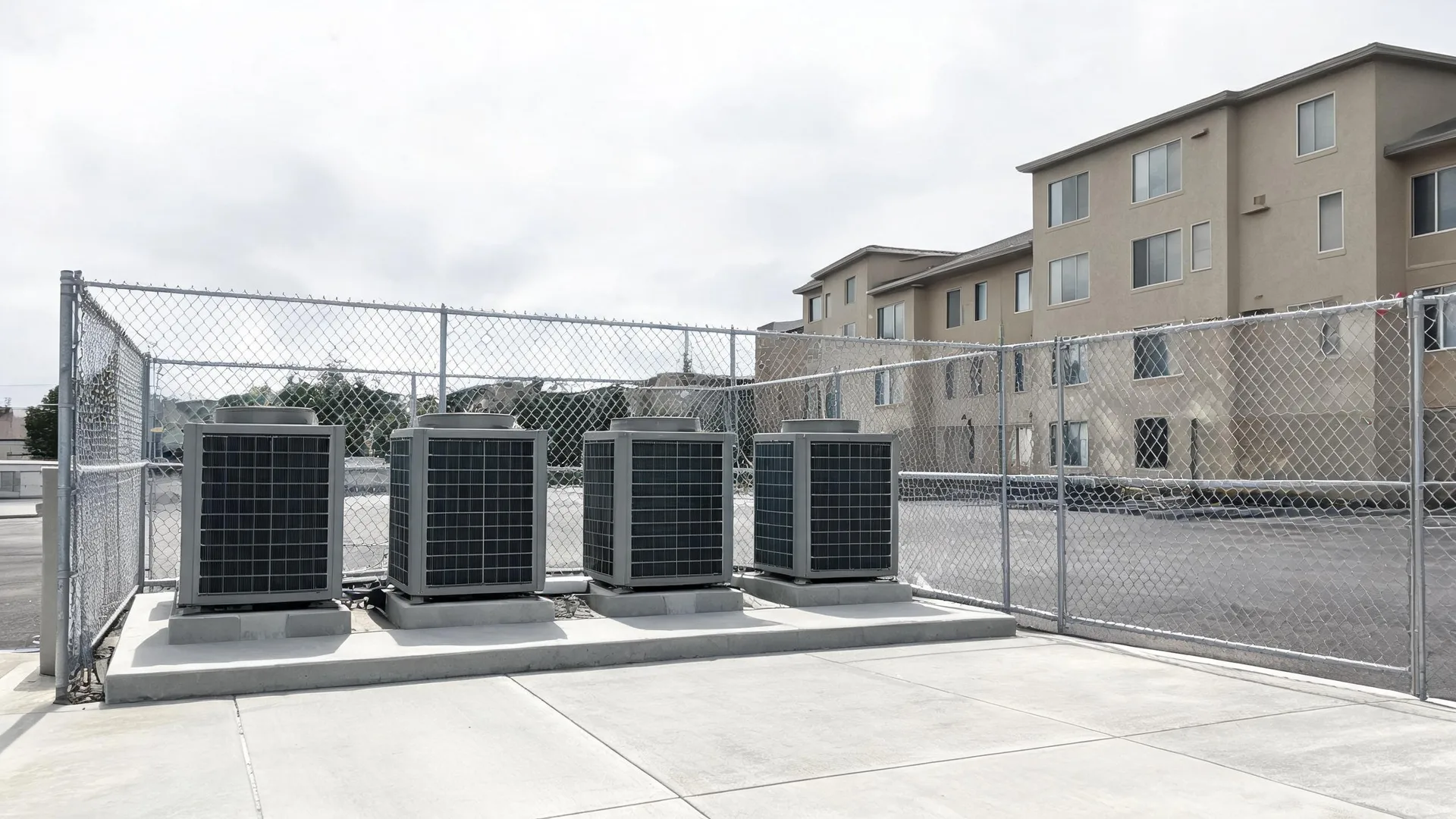
A residential heat pump outdoor unit mounted on a concrete pad next to a house with gray vinyl siding.

The signs show up before the breakdown does

A heat pump in trouble usually tells you before it quits outright. It starts blowing air that doesn't feel warm, because it's stuck in defrost or losing its charge and can't move enough heat. It cycles on and off faster than it used to, short runs that don't give the house time to warm up. Ice builds up on the outdoor unit and doesn't clear on its own, which points to a bad defrost board or a sensor that's failing. You hear it straining, a hard start, a clunk, a hum that doesn't turn into a run. Or the outdoor fan isn't spinning at all while the indoor side keeps blowing. None of these mean the whole system is shot. They mean a specific part is wearing out and still works well enough to show you where to look before it fails completely.

What you can check yourself

Look at the thermostat first. Make sure it's set to heat and the set point is above room temperature. Check the circuit breaker for both the indoor air handler and the outdoor unit, since a tripped breaker on either side will stop the system cold. Look at the outdoor unit and clear away any leaves, snow or ice blocking the coil, and make sure nothing is piled against it restricting airflow. Pull the air filter and hold it up to a light. If you can't see light through it, swap it or clean it. These take a few minutes and rule out the simplest causes before anyone comes out.

What to leave alone

Don't open the outdoor unit's cabinet or touch the wiring inside it. Don't try to chip ice off the coil or pour water on it to melt it. Don't add refrigerant or touch the lines, even if you have a gauge set, because the charge has to be exact and the lines carry high pressure. If the outdoor fan isn't turning while the indoor side keeps blowing, resist the urge to spin it by hand or spray anything on the motor. These need a meter, a gauge set and training to do safely, and getting them wrong can turn a small repair into a much bigger one.

A heat pump that keeps running with a failing part doesn't just struggle, it makes the failure worse. A low refrigerant charge is a good example. The system keeps trying to move the same amount of heat with less to work with, so the compressor runs longer and harder to make up the difference. That strain is what burns out a compressor that otherwise had years left. Ice on the coil works the same way. If the defrost cycle isn't clearing it and the system keeps running, the ice builds thicker, airflow drops further, and the unit works even harder to do even less. A hard start or a clunk on startup is the motor or compressor fighting a worn part every single cycle, and every cycle it runs that way is wear it doesn't get back. Shutting it off and getting the part diagnosed stops that cycle before it takes down a second part along with the first.

A diagnostic visit starts with questions, not tools. A tech wants to know what the system is doing, when it started, and whether it happens on a schedule or at random. Then comes the gauge set on the refrigerant lines and a meter on the electrical components, checking the charge, the pressures, and whether the contactor, the capacitor and the defrost board are doing what they're supposed to. The outdoor unit gets opened up and looked over for ice, for a fan that isn't spinning freely, for a compressor that's hot to the touch when it shouldn't be. Airflow gets checked on the indoor side too, since a return that isn't pulling enough air can mimic a refrigerant problem. The readings usually point clearly at one failed part rather than leave the tech guessing.