August is when heat pumps here get tested
Heat in Burley starts up in September, so August is when a weak heat pump gets found out. A system that struggled last season and was never looked at is the one most likely to fail right when you need it.
Takes about a minute. No obligation.
Heat in Burley starts up in September, so August is when a weak heat pump gets found out. A system that struggled last season and was never looked at is the one most likely to fail right when you need it.
A heat pump here spends ten months on heat and two on cooling, and switching modes puts a load on parts that have been sitting idle. A reversing valve or a sensor that was already marginal tends to fail right at that changeover, not in the middle of a run.

NOAA nClimDiv, 1991–2020 normals
A reversing valve that's sticking won't fix itself by running more cycles.
The compressor keeps pushing against a part that's already failing, and that's how a stuck valve turns into a burned-out compressor.



Half the homes in Cassia County were built in 1975 or earlier, and half in 1975 or later. That split doesn't point to any one cause here. A house from before that line isn't more likely to have a failing heat pump than one built after, and a newer house isn't protected from it either. What fails is whatever part was already weak. If your heat pump is acting up, the age of the house won't tell you why. The age and condition of the system will.
A part failing is usually worth fixing on a machine that hasn't been run hard. Get the cause found and that part replaced.
Find a contractorMost heat pump failures trace back to one part, not the whole system wearing out. The reversing valve sticks or fails to shift, so the system blows cold air when it should heat or won't switch into defrost. The capacitor that starts and runs the compressor weakens over time and eventually can't get it going. A sensor or control board drifts out of calibration and the system short cycles or won't respond to the thermostat. Low refrigerant from a slow leak makes the compressor work harder than it should, and that shortens its life. The defrost thermostat or board fails and ice builds up on the outdoor coil until the system can't pull heat from the air at all. None of these happen because a machine got old on its own. Each one is a specific part reaching the end of what it could do.
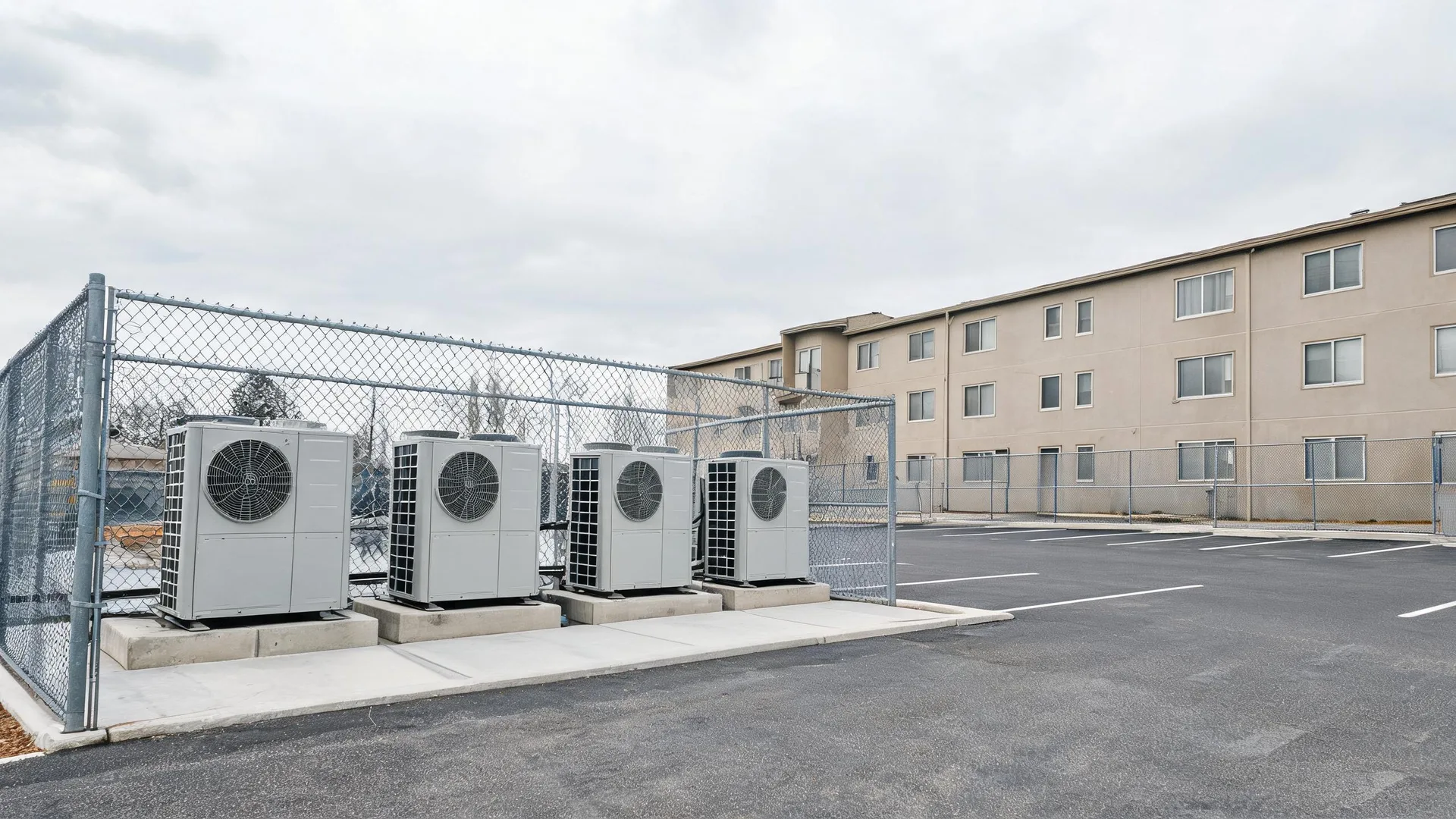
Look at the outdoor unit and clear away anything piled against it, leaves, snow, a grown-in shrub. Check that the filter inside isn't clogged, since restricted airflow can mimic a bigger failure. Look at the outdoor coil for a heavy coat of ice that doesn't clear on its own. Check the thermostat has power and is actually set to call for heat. None of this fixes a bad part, but it rules out the simple stuff first.
If the outdoor fan isn't turning, if you hear the compressor humming but it never starts, or if the system is blowing air that's colder than the room when it's set to heat, that's a part failing, not a setting issue. Leave the panels closed and get someone out rather than resetting the breaker over and over, which can stress a compressor that's already struggling to start.
A heat pump that needs repair rarely goes quiet. It tells on itself. You'll hear the outdoor fan rattle or not spin at all, or the compressor hum for a second and then give up trying to start. You'll feel air coming out of the vents that's cooler than the room, when the thing is set to heat. You'll notice the system running and running without the house ever catching up, because it's short cycling instead of holding a cycle through. Ice on the outdoor coil that doesn't melt off on its own is another one, especially if it keeps building after you've cleared it by hand. Any of these is a part asking to be looked at, not a machine that just needs a reset.
A diagnostic visit starts outside, at the unit itself, before any panel comes off. A tech checks amp draw on the compressor and refrigerant pressure, because those readings point to a specific part rather than a vague problem. Thermostat signals get checked against what the system is actually doing, since a call for heat that never reaches the reversing valve tells you where to look next. The defrost cycle gets tested directly, forcing it if needed, because a board that won't initiate defrost looks the same from inside the house as several other faults. Most of this takes longer than the fix that follows it. Finding the part that quit is the job. Replacing it is usually the easy part.