






Stone and timber luxury homes with glowing windows line a mountain street at dusk, with evergreen trees and a rocky mountain range in the background.

Heat Pump Repair in Hailey, ID

Tell us about the job

Takes about a minute. No obligation.

RepairHeat PumpBlaine County, ID
Step 1 of 2

What ZIP code is the job in?

Heat pumps here work almost the whole year, heat from September through June, cooling for July. That one cooling month still matters. A heat pump that sat fine all spring can trip up the first hot week in July if the capacitor or refrigerant charge was already marginal. Come September it has to switch over and start pulling heat out of cold air, and a weak reversing valve or low charge that got by during mild weather will show itself fast. If yours is acting up right as the season turns, that timing is usually the clue, not a coincidence.

10 months
September through June, your system heats
1 months
July through July, it cools
14°F
the average winter night it heats against
78°F
the average summer afternoon it cools against
Isometric line illustration of a cutaway single-story house showing interior ductwork, an indoor air handler unit, and an outdoor condenser connected by refrigerant lines, with a dark shingled roof.
Your system heats September through June and cools July through July.

NOAA nClimDiv, 1991–2020 normals

A heat pump runs the reversing valve every time it switches between heat and cool, and that valve is usually the first thing to stick or leak.

A heat pump that won't switch modes needs that valve looked at, not a thermostat reset.

Hailey's climate doesn't push a heat pump any harder than usual, it's the same parts that give out

Power costs 11.52 cents a kWh statewide
Climate zone 6B
Cooling runs July through July

Winter storms have hit Blaine County 142 times over the past decade, and damaging wind another 38 times. That sounds like a lot, but it is weather a heat pump here is built to handle. The overnight low averages 14°F across December, January and February, and the system is sized to run in that kind of cold. What a storm can do is knock out power or ice over the outdoor unit, and either one will stop a heat pump that was otherwise working fine. If yours quit during or right after a storm, check the breaker and look for ice on the outdoor coil before assuming something failed inside the unit.

Half the homes here were built in 1987 or later

Half the homes in Blaine County were built in 1987 or later. If yours is one of them, the heat pump likely came with the house or close to it, which puts it well within its working life. Fixing the real problem is usually the right call before anyone talks about replacing it.

Find a contractor
A man in a cap, dark jacket and brown pants, seen from behind, climbs stone steps toward a green front door while carrying a worn canvas tool bag.
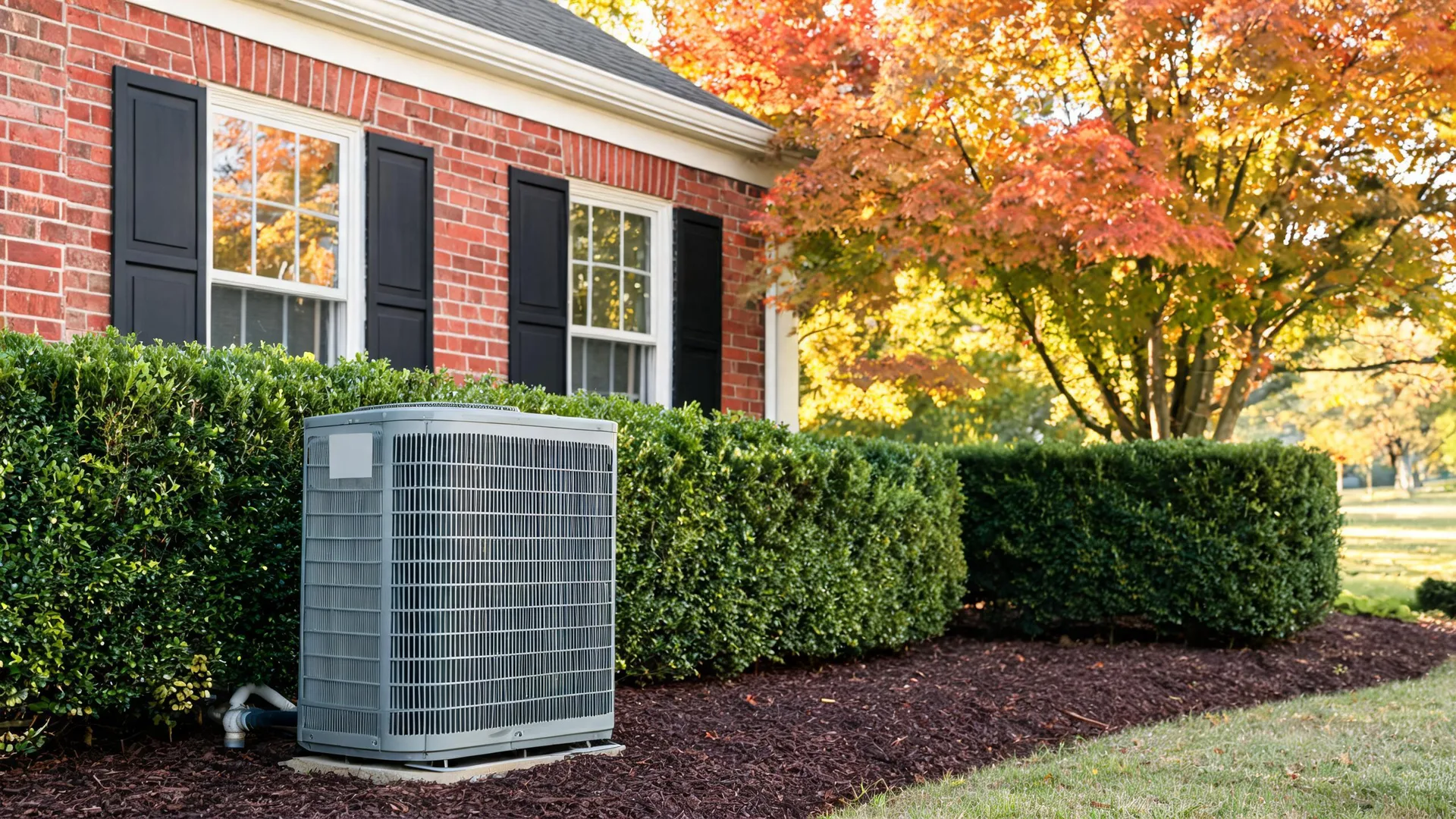
A gray heat pump outdoor unit mounted on a concrete pad next to a residential house with lap siding and stone accents.

Fix the cause, keep the system

A heat pump from that era is still a candidate for repair, not replacement. Have the actual cause found and fixed, whether it's the reversing valve, a capacitor, or a low charge, before anyone brings up a new system.

A struggling compressor keeps drawing current

A compressor that's starting hard or running low on charge still pulls power every cycle it runs. Left alone, that strain carries over into the motor windings. A repair that started at the reversing valve or a capacitor can end at the compressor itself if the system keeps running on it.
Ice on the outdoor coil spreads if it's not caught

A heat pump sheds frost on its own through normal defrost cycles. If the defrost board or sensor has failed, ice keeps building instead, and it can block the coil enough that the system can't pull heat from the air at all. The longer it runs like that, the more the fan motor and coil fins take the damage.

A few things are worth checking before anyone comes out. Look at the thermostat first. Make sure it's set to heat or cool as you expect, and that the batteries aren't dying, since a dim or blank display can look like a dead system when it's really just a dead battery. Check the breaker panel for a tripped switch, especially after a storm. Go outside and look at the outdoor unit. If it's buried in snow or caked in ice, that alone can stop it from running right, and clearing it off is safe to do yourself. Inside, check that the air filter isn't clogged, since a blocked filter chokes airflow and can make a working system seem broken. If the outdoor fan isn't spinning at all while the indoor side runs, or you hear the system trying to start and failing, that's past what you can fix at home and it's time to call someone.

Age by itself doesn't tell you whether to repair a heat pump. What matters is whether the failure is in a part that wears on its own, like a capacitor or a contactor, or whether it's hit the compressor. A capacitor or a reversing valve can be swapped without touching the rest of the system, and the heat pump runs like new afterward. A compressor is a different story. It's sealed inside the unit, it's the most expensive single part in the system, and replacing just the compressor often costs close to what a new system would. If a tech tells you the compressor has failed or is grounded out, that's the point where repair stops making sense even if everything else on the unit is fine. Ask what actually failed before deciding anything.