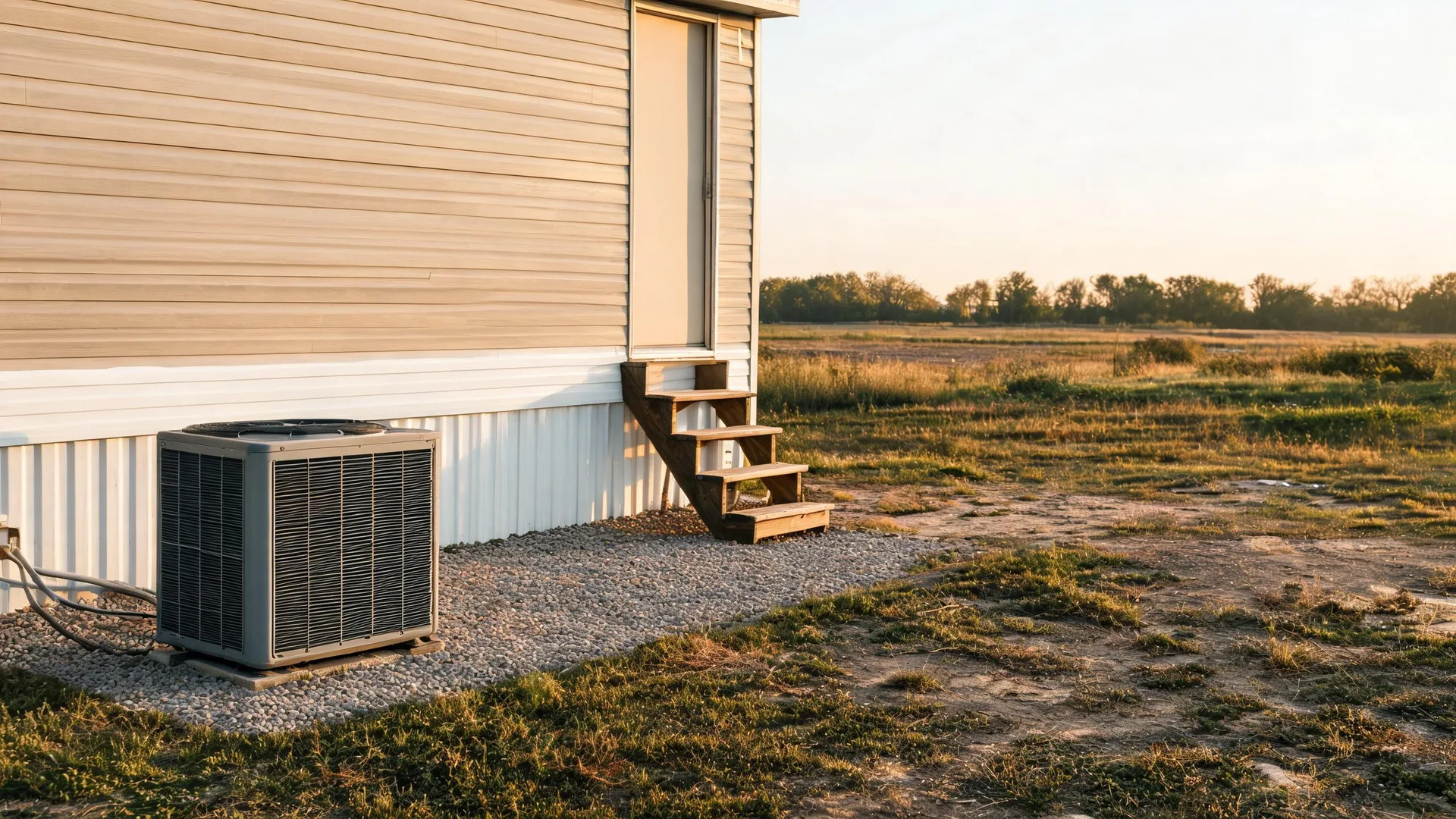
An outdoor heat pump unit mounted on a concrete pad in front of a single-story suburban house with beige siding.

Heat Pump Repair in Homedale, ID

Tell us about the job

Takes about a minute. No obligation.

RepairHeat PumpOwyhee County, ID
Step 1 of 2

What ZIP code is the job in?

August is when heat pumps here get tested

Homes in Owyhee County switch over to heat in September, which means August is when a heat pump has to prove it can still handle the load. A weak part that got by all summer running cooling often won't get by this.


A breakdown now points to something specific

If your heat pump is struggling as the switch to heat approaches, that's worth tracking down rather than waiting out. The cause is usually one part that was already marginal, not the system as a whole, and a contractor can find it and fix it before the cold settles in.

10 months
September through June, your system heats
2 months
July through August, it cools
21°F
the average winter night it heats against
83°F
the average summer afternoon it cools against
Isometric cutaway illustration of a small house showing interior ductwork and an air handler connected by lines to an outdoor condenser unit on a pad beside the building.
Your system heats September through June and cools July through August.

NOAA nClimDiv, 1991–2020 normals

A heat pump that runs but doesn't warm the house the way it used to is usually losing refrigerant or losing its defrost cycle, not losing its mind.

Short cycling, ice that won't clear off the outdoor unit, or air that feels barely warm are the signs worth a call before they turn into no heat at all.

Wind and hail aren't what wears a heat pump out here

28 damaging wind events from 2015 to 2024
6 hail events from 2015 to 2024
72 winter storms from 2015 to 2024
Half the homes here were built in 1984 or earlierThat doesn't make a heat pump fail any faster. It just means it's worth checking if yours came with the house.

If your heat pump is acting up now, that points toward a repair rather than a system that's worn out. A unit here hasn't spent years taking hits from wind-driven debris or hail, so whatever's wrong is more likely one failed part than general wear. Winter nights average 21°F in Owyhee County, a steady load the equipment is built to handle, not something that beats it down over time. Ask a contractor to find the actual cause before the cold sets in. Naming the part that failed is the way to know the repair will hold.

Get it looked at early

Problems tend to show up in the first weeks of the season, when the load hits a part that was already weak.

Find a contractor
A man in a cap, dark jacket and tan work pants, seen from behind, carries a canvas tool bag up porch steps toward a green front door beside a potted shrub.
A gray heat pump outdoor unit mounted on a concrete pad next to a residential house with lap siding and stone accents.

Running it longer doesn't buy you time

A heat pump that's struggling still moves some heat, so it's tempting to let it ride. Running it that way puts more strain on whatever's already failing. A compressor working against a low refrigerant charge runs hotter than it should, and heat does it no favors. Ice that isn't clearing in the defrost cycle keeps building, and a coil that stays iced over blocks more airflow each cycle, which makes the compressor work harder to move the same heat. A capacitor that's weak but still kicking the unit on will keep drawing down until it doesn't. None of this fixes itself by running longer. The part that's marginal now is the part that quits, usually at the point the system needs it most.

What a contractor checks first

A diagnostic starts with gauges and a meter, not guesswork. Gauges on the refrigerant lines show whether the charge is right. A clamp meter on the compressor and fan motor shows whether they're drawing the current they should. Those readings point to a failing part faster than taking the unit apart ever would.

Why they watch a full cycle before touching anything

Some failures only show up in motion. A reversing valve that sticks, a defrost cycle that won't trigger, a capacitor that's weak but still kicking the compressor on, these need the system running to catch. A contractor will let the heat pump cycle through before deciding what to replace, because swapping a part that wasn't the problem doesn't fix anything.

Before calling anyone, look at the outdoor unit itself. If the coil is caked in ice and it isn't clearing between cycles, that's worth noting, not chipping off. Check that the outdoor fan is actually spinning when the system is running. A unit that hums but the fan doesn't turn is a different problem than one that's silent altogether. Inside, check the filter. A clogged filter starves the system of airflow and can mimic a much bigger problem. Walk the vents and feel whether air is actually coming out warm, or just moving. Check the thermostat batteries and settings too. A thermostat stuck in the wrong mode or with a dead backup battery can look exactly like a failed system when it isn't one at all.

A failed part is worth fixing on almost any heat pump, because the compressor is the expensive piece and it usually outlasts the smaller parts around it. A capacitor, a contactor, a defrost board, a reversing valve, these fail one at a time, and swapping the one that failed is cheaper than it sounds. What changes the math is the compressor itself. If that's what's failing, a contractor will tell you, because replacing a compressor costs enough that a new system is worth comparing against it. Age matters less than you'd think. A heat pump that's been maintained can take a repair at almost any point in its life and keep going. One that's been ignored, skipped filters, low refrigerant left unaddressed, tends to fail in a cluster, one part after another, and that pattern is the real sign it's done. Ask the contractor what failed and why, not just what it costs to fix.