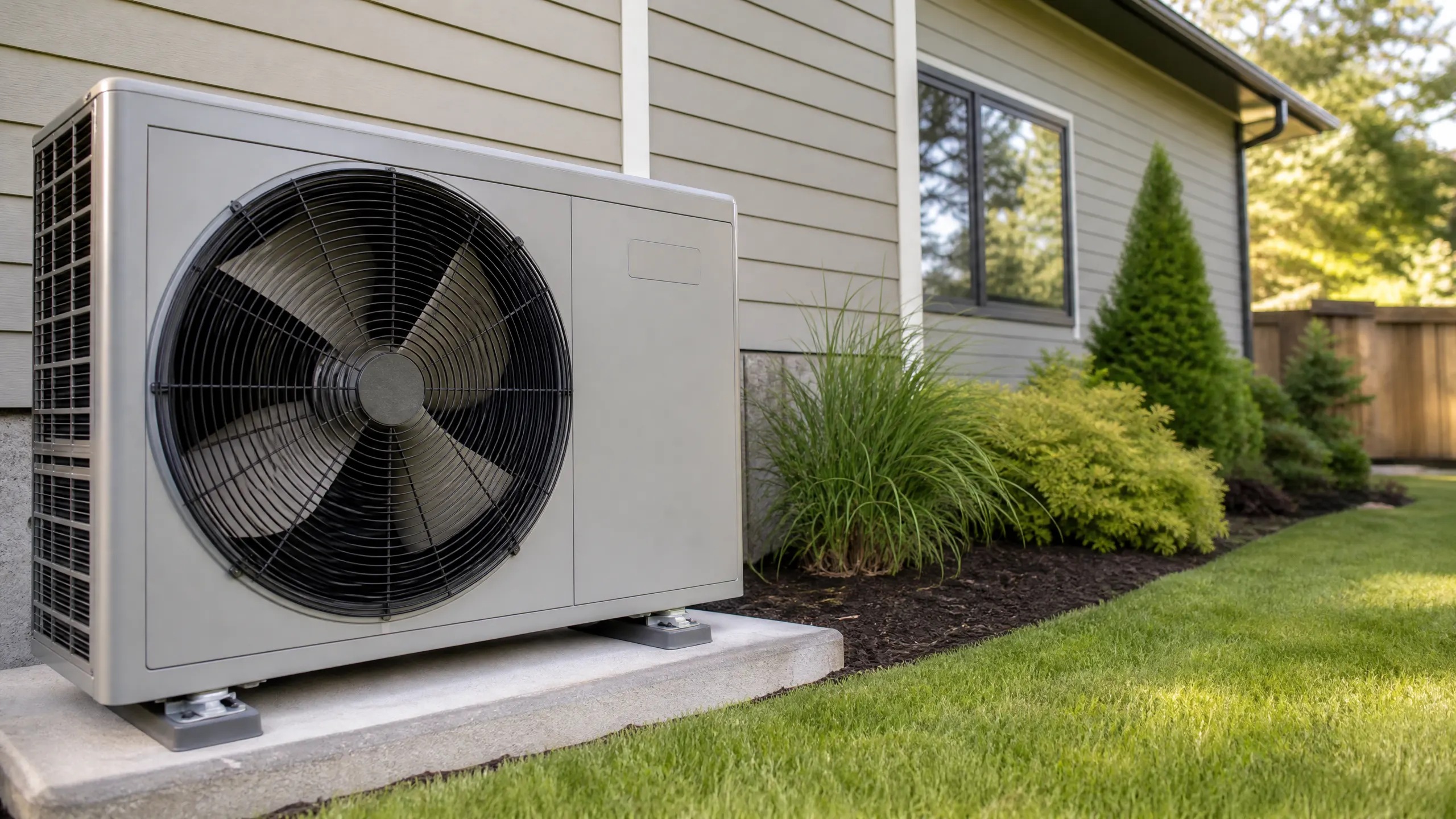






An outdoor heat pump unit mounted on a concrete pad beside a house with beige siding and a landscaped garden bed.

Heat Pump Repair in Kamiah, ID

Tell us about the job

Takes about a minute. No obligation.

RepairHeat PumpLewis County, ID
Step 1 of 2

What ZIP code is the job in?

Heat pumps here run nearly ten months a year, September through June. August is the one real stretch of rest before the system has to switch over and start heating again. Whatever was already weak, a worn contactor, a low charge, a sensor out of calibration, tends to give out in those first cold weeks when the system runs long and hard to catch up. That first failure of the season is usually not a new problem. It is an old one finally getting tested.

10 months
September through June, your system heats
23°F
the average winter night it heats against
78°F
the average summer afternoon it cools against
Isometric line illustration of a cutaway house showing interior rooms with furniture, ceiling ductwork, and an outdoor condenser unit connected by lines along the exterior wall.

A refrigerant leak never heals on its own, and the compressor keeps working harder against the lower charge.

Run it long enough in that state and the fix changes from a leak patch to a compressor replacement.

Half the homes in Lewis County were built by 1965, and a heat pump doesn't last that long

Half the homes here were built by 1965
19 damaging wind events from 2015 to 2024
10 hail events from 2015 to 2024

Kamiah doesn't do anything strange to a heat pump. The usual breakdowns show up here the same as anywhere. A capacitor weakens, a contactor's contacts pit, a thermostat sensor drifts off, a charge slips low from a slow leak. None of that comes from the climate or the house. It comes from parts wearing the way parts wear. Idaho runs power at 11.52 cents a kilowatt-hour, cheap enough that a heat pump working harder than it should doesn't always show up fast on the bill. The first sign is usually the system acting up, not the cost of running it. That's why the fix starts with finding which part actually failed, not guessing at the system as a whole.

A heat pump here fails from age, not from the weather

Cold is what this system fights here, not storms. Winter nights average 23°F, steady work a heat pump is built for. Wind and hail show up most years too, but neither one is what wears out a contactor or lets a charge slip low. If yours is acting up now, the parts inside are the more likely reason, and most of what fails is worth fixing.

Find a contractor
A man in a cap, dark jacket and tan work pants carries a canvas tool bag up porch steps toward a green front door, with a potted shrub beside the entrance.
A gray heat pump outdoor unit mounted on a concrete pad next to the stone-accented exterior wall of a house.

Ask the age before you pay for the repair

If your heat pump came with the house, ask the technician how old it is before paying for a big repair. A unit that's been running since the house was built has had a long run already, and that changes whether a major part is worth replacing. A new compressor or coil on a system near the end of its life is money spent on a machine that may not outlast the part. The same repair on a newer unit is a different call.

The reversing valve is the part unique to this machine

A heat pump has a reversing valve that a straight air conditioner never needs, the part that switches it between heating and cooling. When it sticks, the system keeps running but stops switching modes, or it gets stuck blowing cold air during a heating cycle. A stuck reversing valve is a common reason a heat pump suddenly seems to quit heating even though the outdoor unit is still running.
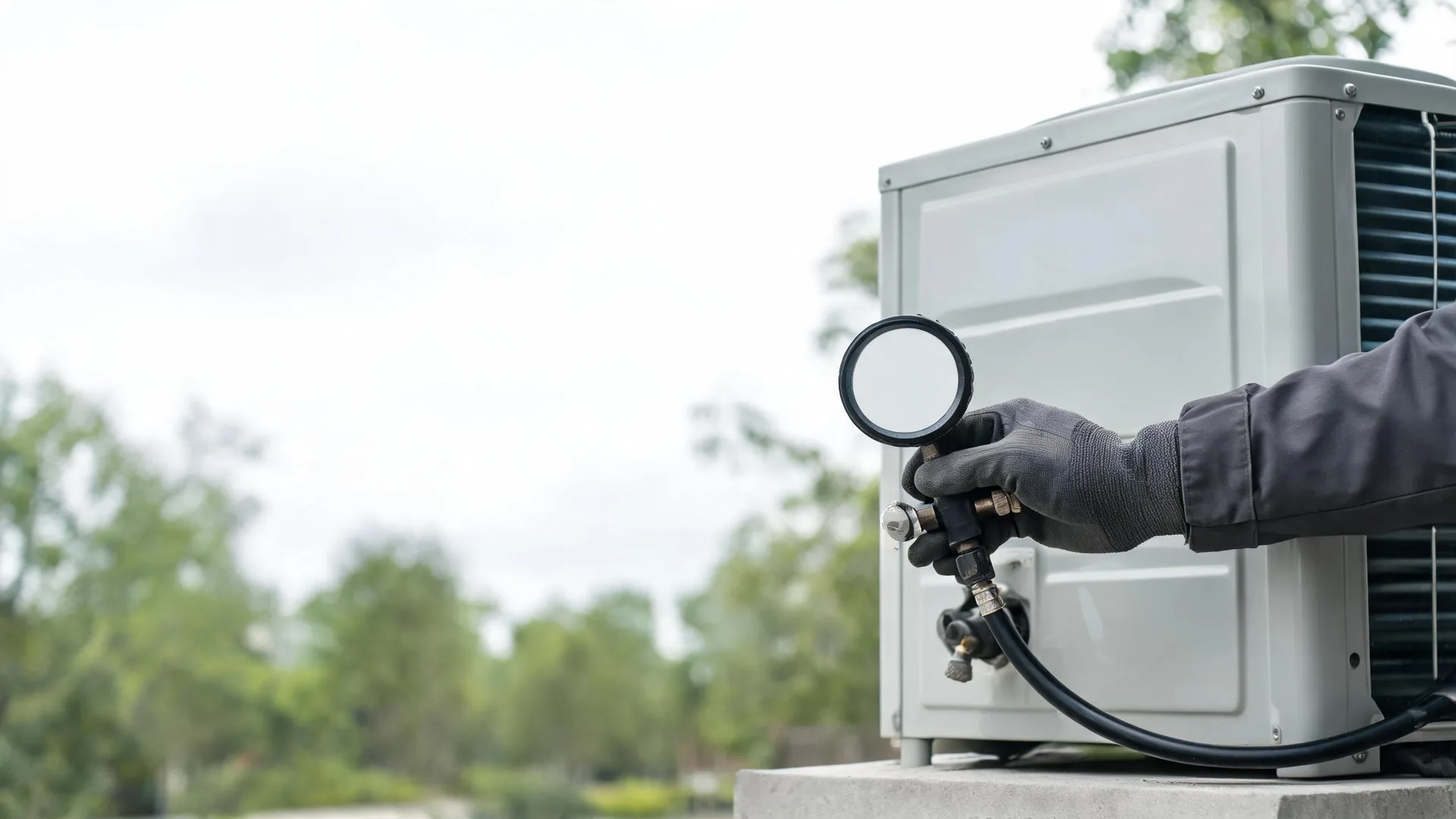
The defrost cycle is where failures show up first

In cold weather a heat pump has to defrost itself, reversing briefly to melt frost off the outdoor coil. That cycle depends on a defrost sensor and a control board timing it correctly. When the sensor drifts or the board misreads it, frost builds up on the coil and the system loses capacity or stops heating altogether. A coil caked in ice is usually a sign of that control failing, not a sign the unit is simply overmatched by the cold.

Most people notice a heat pump failing before they notice why. Warm air turns lukewarm, or the system runs constantly without catching up to the thermostat setting. Sometimes it blows cold air when it should be heating, which usually points to that reversing valve stuck in the wrong position. A hissing or bubbling sound near the indoor coil is often refrigerant escaping through a leak, not just the system cycling normally. Ice building up on the outdoor unit during a stretch of heating means the defrost cycle isn't doing its job. A clicking sound at startup that doesn't resolve into the compressor kicking on points to a failing contactor or capacitor. Any of these is worth a call before the system stops working altogether.

A repair is worth doing when the part that failed is small next to the machine as a whole. A capacitor, a contactor, a defrost sensor, a control board, these cost little to replace and don't say anything about the rest of the system's health. A failed compressor is a different question. It sits at the center of the system, and replacing one costs close to what a new outdoor unit costs, so a tech will often price both and let you weigh them side by side. Age matters more than people expect. A unit past the point where most of its kind have already failed is a worse bet for a major repair, even if that particular part is fixable, because the next failure is never far off. A system calling for repeat repairs in a short stretch is telling you something the first one didn't fix, usually that the unit is wearing down generally rather than failing in one isolated spot. None of that means replace it automatically. It means ask what failed, ask what it would cost against a new unit, and let that comparison decide it rather than guessing.