A multi-story timber-frame and stone house glows with warm interior and exterior lighting on a dark residential street, with mountain peaks and pine trees visible in the background.

Heat Pump Repair in Kellogg, ID

Tell us about the job

Takes about a minute. No obligation.

RepairHeat PumpShoshone County, ID
Step 1 of 2

What ZIP code is the job in?

Cold nights, normal job

Overnight lows average 22°F through December, January and February here. A heat pump works harder on nights like that. A system that's losing ground now is usually showing a problem that was already there, not something the cold caused.

What that means for the repair

A tech working on your heat pump in Kellogg checks the same things they'd check anywhere. Refrigerant charge. The defrost cycle. The reversing valve. Find the actual cause and the fix holds through the rest of winter.

10 months
September through June, your system heats
22°F
the average winter night it heats against
73°F
the average summer afternoon it cools against
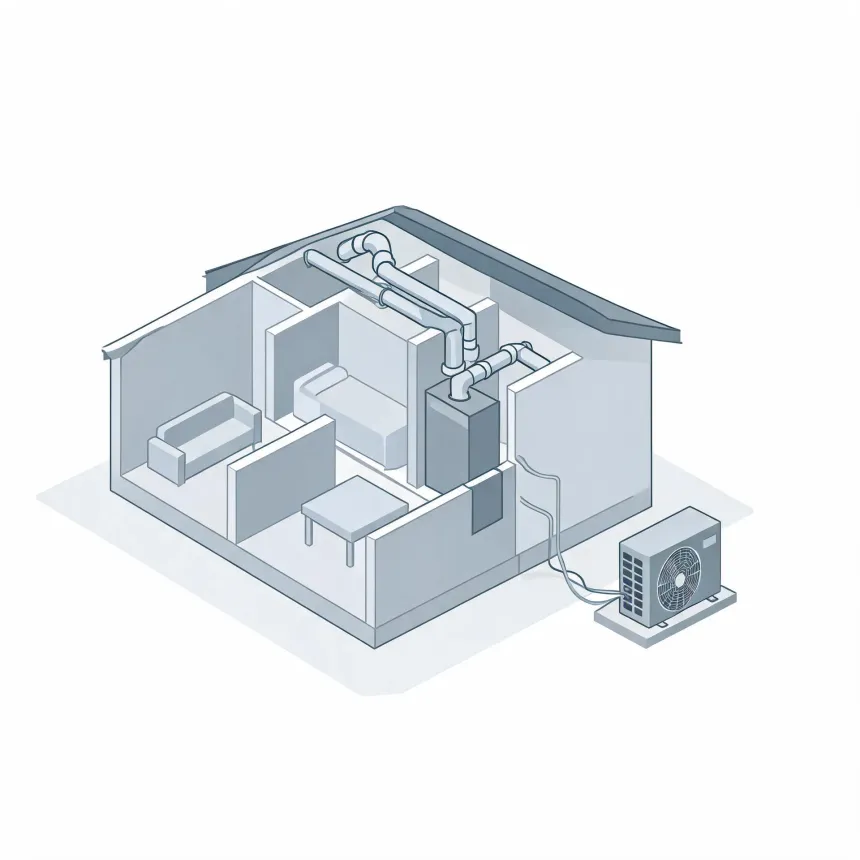
Isometric line illustration of a cutaway house showing interior rooms with furniture, ceiling ductwork connected to an indoor air handler, and a line running outside to an outdoor condenser unit.

Heat here starts in September and runs through June.

A heat pump that struggles in the first cold weeks is usually telling you about a part that was already worn, not about this September's weather.

Half the homes in Shoshone County date to 1959 or earlier, so a lot of heat pumps are working through an aging system

Half the homes here were built by 1959
189 winter storms from 2015 to 2024
Winter nights average 22°F
Electricity here runs 11.52 cents a kilowatt-hourThat's the 2024 Idaho average, and it's what a heat pump's repair bill or its monthly run cost comes back to.

Shoshone County logs a lot of winter weather. 189 snow, ice and blizzard events between 2015 and 2024, plus some damaging wind along the way. A heat pump sitting outside through that doesn't get hurt by it the way you'd think. Wind and snow don't reach the refrigerant lines or the control board, and they don't wear out a capacitor. A unit cycling wrong or blowing cold air now is almost always dealing with a problem that was already there before this storm season started. The fix is the same one a tech would make on a calm day. Find what actually failed and replace it.

Ask how much life is left before you fix it

If your heat pump came with the house, ask the tech how many years it has left in it before deciding on the repair. A system installed decades ago may be due for more than one fix this year.

Find a contractor
A man in a cap, dark jacket and brown pants, seen from behind, climbs stone steps toward a green front door while carrying a worn canvas tool bag.
A dark gray heat pump unit mounted on a concrete pad next to a house with gray siding and a stone veneer wall.

What a heat pump tells you before it quits

Short cycles of heat, then nothing, then heat again usually point to the defrost cycle or a failing sensor rather than the thermostat. Ice building up on the outdoor coil and not clearing on its own is another one worth paying attention to. So is a unit blowing air that is noticeably cooler than it should be on the heat setting. If the outdoor fan is running but the compressor sounds like it is laboring or cycling off on its own, that is often a capacitor losing its charge or a compressor under strain. A heat pump that runs long stretches without ever seeming to catch up is working against something, whether that is low refrigerant or a reversing valve stuck partway. None of these get better by waiting them out.

A weak compressor gets weaker

A compressor straining to keep up pulls harder on every cycle to make up the difference. That extra strain is what burns it out early. Shut the system down and get it looked at while there's still a compressor worth repairing.

Low refrigerant wears on the compressor

Refrigerant doesn't just carry heat into the house, it cools the compressor as it moves through. A system low on charge runs that compressor hotter than it should ever run. Keep it going like that and the leak is no longer the only problem.

A reversing valve is behind a lot of heat pump trouble that looks like something else. It's what switches the system between heat and cooling, and when it sticks, the unit can blow the wrong temperature or struggle to switch modes at all. Dirty coils cause a different kind of strain. Airflow drops, the system runs longer to do the same job, and the compressor takes the hit over time. Sensors drift out of calibration too, and that alone can throw off the defrost cycle without any other part failing. A lot of these start small and quiet, which is why they usually show up as a system that's working harder, not one that's stopped working.

A tech starts outside at the unit. They check refrigerant pressure, look over the coil, and listen to the compressor while it runs. Inside, they check static pressure at the air handler and run the system through a full cycle, heat and defrost both, watching for where it hesitates or loses ground. Gauges and a multimeter confirm what that points to. The aim by the end is one answer. Which part failed, not a list of things that might be wearing out.