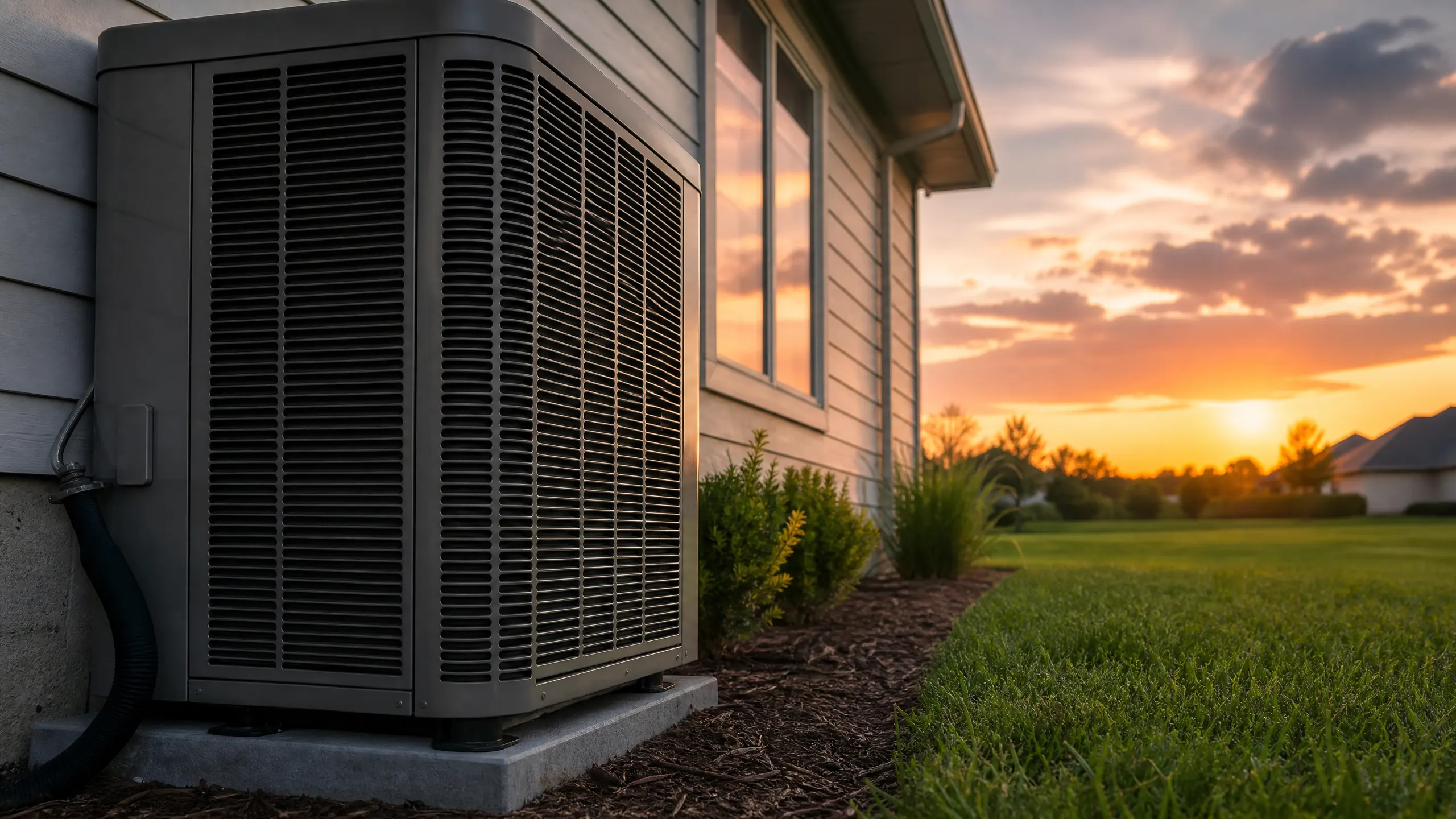






An outdoor air conditioning condenser unit mounted on a concrete pad beside a house at sunset.

Heat Pump Repair in Lewiston, ID

Tell us about the job

Takes about a minute. No obligation.

RepairHeat PumpNez Perce County, ID
Step 1 of 2

What ZIP code is the job in?

Heat pumps here run heat from September through June and cooling in July and August, so there's almost no real break between seasons. Most problems show up right at the switch, in August when the system has to start cooling, or in June when it has to go back to heat. If something was already weak, that's when it gives out. A part limping along under one mode often can't handle being asked to do the other job. If yours started acting up right around one of those changeovers, that timing is probably the reason, not a coincidence.

10 months
September through June, your system heats
2 months
July through August, it cools
26°F
the average winter night it heats against
82°F
the average summer afternoon it cools against
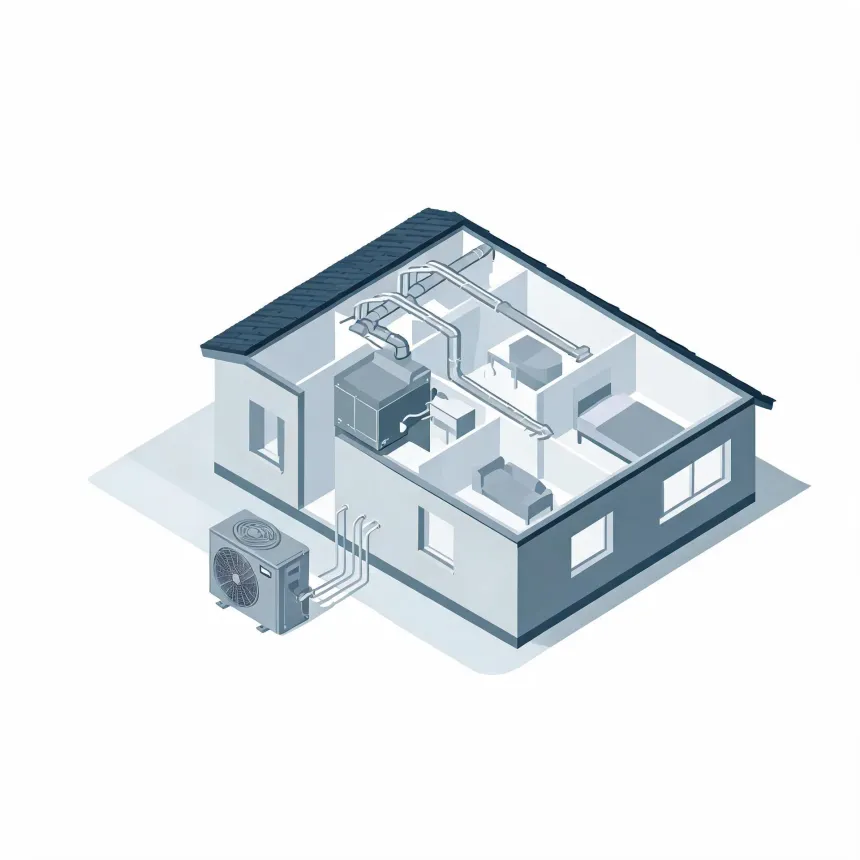
Isometric cutaway illustration of a single-story house showing interior rooms with ductwork, an indoor air handler unit, and an outdoor condenser unit connected by lines along the exterior wall.
Your system heats September through June and cools July through August.

NOAA nClimDiv, 1991–2020 normals

Winter nights in Nez Perce County average 26°F, not deep cold.

A heat pump here isn't fighting extreme temperatures, so when one fails it's usually a worn part, not a system that got overmatched.

Half the homes here were built by 1973, old enough that the heat pump is on its second or third unit

Half the homes here were built by 1973
37 damaging wind events from 2015 to 2024
29 winter storms from 2015 to 2024
A heat pump that hasn't been pushed hardNights here average 26°F all winter, not the extreme cold that wears a system out early.

If your heat pump came with the house, ask the contractor straight out how much life it has left before you commit to a major repair. A compressor or coil failure on a unit that old is a different decision than the same failure on a five-year-old system. A technician can give you a real answer during the same visit that diagnoses the problem, by checking the age and condition of the unit against what's actually broken. That answer should decide what happens next, not just whether the part is available this week.

Get it looked at early

Problems tend to show up in the first weeks of the season, when the load hits a part that was already weak.

Find a contractor
A man in a dark T-shirt and brown work pants carries a canvas tool bag up wooden porch steps toward a green front door, beside a potted shrub.
A white mini-split heat pump outdoor unit mounted on a concrete pad beside a gray-sided house, surrounded by gravel and green shrubs.

What a struggling heat pump sounds and feels like

A failing heat pump usually tells you through how it runs, not with a single clear breakdown. Air coming out lukewarm instead of hot often means the reversing valve isn't fully switching, or the charge is low. Short cycling, where it kicks on and off every few minutes, usually points to a failing capacitor or a sensor sending bad readings. Ice on the outdoor coil that doesn't clear during the defrost cycle means the defrost board or the reversing valve isn't doing its job. A unit that runs and runs without reaching the temperature you set is moving less heat per hour than it should, even if nothing has quit outright. None of these clear up on their own, and whatever is already weak is what gives out first when the system switches modes.

What you can check yourself

Look at the outdoor unit and make sure nothing is blocking it, no leaves packed against the coil, no snow piled against the side. Check the air filter and swap it if it's gray or clogged. Go to the thermostat and confirm it's set to the mode you want and the batteries aren't low. Check the breaker box for a tripped switch, since a heat pump that won't start at all sometimes just lost power. These take a few minutes and rule out the easy causes before anyone comes out.
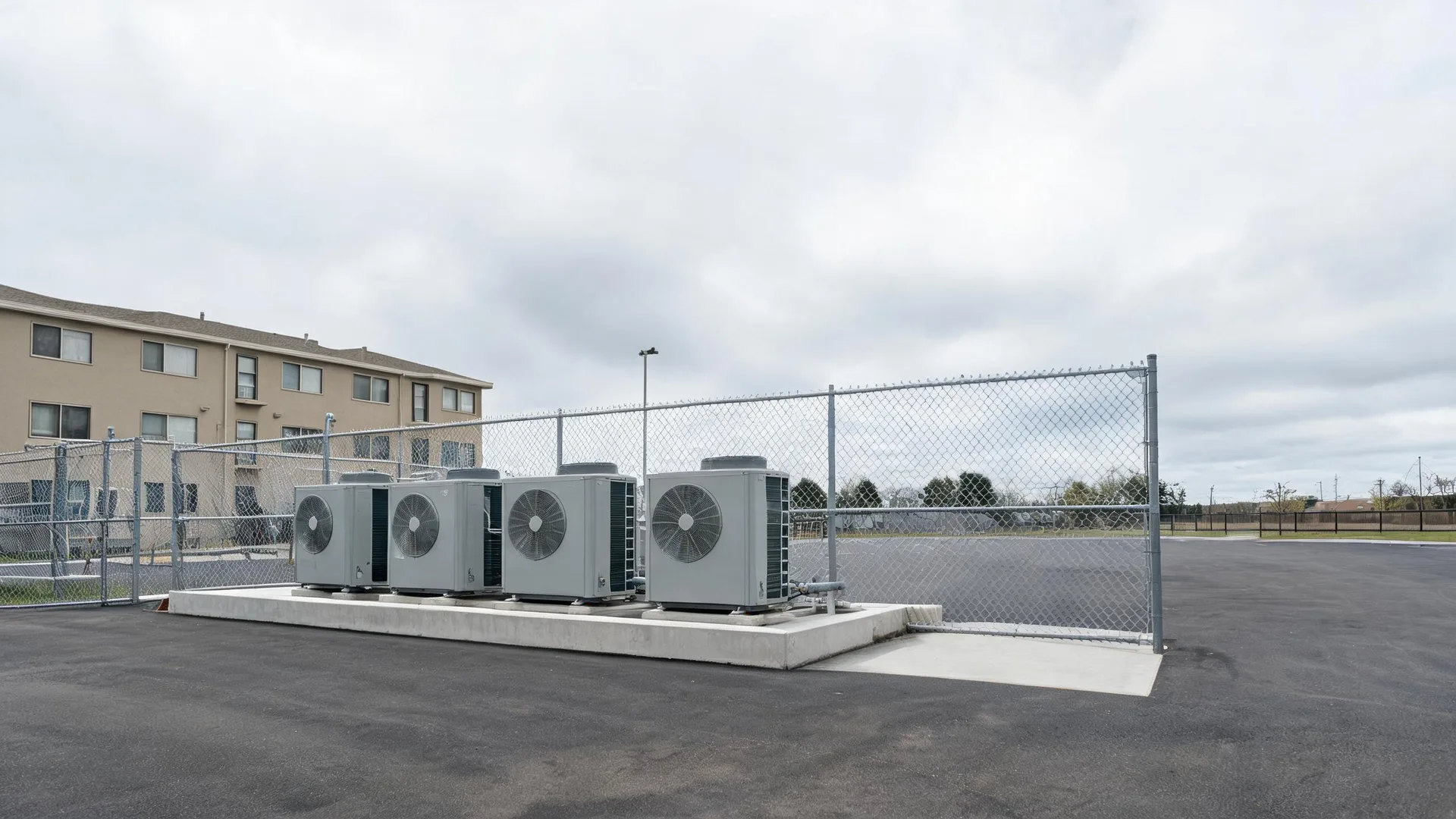
What to leave alone

Don't open the outdoor unit's cabinet or touch the refrigerant lines. Don't pour water or anything else on a coil that's iced over, and don't try to chip the ice off. If the unit is making a grinding or screeching noise, turn it off at the thermostat and leave it off rather than letting it keep running. These point to problems inside the system that need the right tools and training to touch safely.

A refrigerant leak is the clearest case of this. A unit running low on charge can't hit the setpoint, so it just keeps running, and a compressor pumping refrigerant that's too low wears in a way it wouldn't if someone caught the leak early and shut it down. Ice on the outdoor coil works the same way. If the defrost cycle isn't clearing it, every extra hour of runtime packs more ice onto the coil, which blocks airflow and can push the compressor toward overheating. Short cycling adds its own wear on top of whatever's already wrong, since each restart puts a jolt through the compressor and the parts that start it. None of these get smaller or easier by waiting. A problem that would have been a single part today can turn into a failed compressor next week, just from being left running.

A capacitor or a contactor is a small, contained fix. Swapping it brings a heat pump back to normal no matter how old the unit is otherwise. A compressor is a different kind of question. It's the most expensive part in the system, and a failing one is often a sign the rest of the unit isn't far behind it. A reversing valve sits somewhere in between. It's a harder repair, but on its own it doesn't mean the rest of the system is wearing out too. The honest way to think about it is by the part that broke, not the unit as a whole. A technician should be able to tell you not just what failed, but whether that failure says anything about what's coming next.