



A twilight street scene featuring illuminated timber-frame and stone houses with a mountain range visible in the background.

Heat Pump Repair in Malad City, ID

Tell us about the job

Takes about a minute. No obligation.

RepairHeat PumpOneida County, ID
Step 1 of 2

What ZIP code is the job in?

Winter here gets cold, with overnight lows averaging 18°F through December, January and February, so your heat pump earns its keep in that stretch. Outside of that, Malad City doesn't ask much of it. Wind and winter storms show up in Oneida County most years, but neither one works the unit itself the way constant heat or cold would elsewhere. A heat pump here isn't fighting extreme loads most of the year. So when one starts short cycling or blowing air that isn't warm enough, the cause is usually something specific that wore out or came loose, not a system worn down from years of strain.

10 months
September through June, your system heats
2 months
July through August, it cools
18°F
the average winter night it heats against
82°F
the average summer afternoon it cools against
Isometric cutaway illustration of a single-story house with a dark gabled roof, showing interior rooms with ductwork leading to an indoor air handler and an outdoor condenser unit connected by lines on the ground outside.
Your system heats September through June and cools July through August.

NOAA nClimDiv, 1991–2020 normals

Heat here starts up in September, and August is when a weak part finally gets found out.

Have a heat pump looked at before August ends, and it won't be the cold that finds the problem first.

Half the homes in Oneida County were built in 1971 or earlier. If your heat pump came with a house that old, it's probably not the original unit, but it's worth finding out which one you have. A heat pump that's been through a few replacements already, or one that's never been swapped, gets to a point where the compressor is worn and parts are harder to source. Before paying for a repair on a system that old, ask how much life it likely has left in it.

A specific part failed. The system around it is probably fine.

A heat pump that isn't fighting extreme loads most of the year usually fails because one part gave out, not because the whole system is worn down. That's worth confirming before you decide whether to repair it.

Find a contractor
A man in a dark cap, gray long-sleeved shirt and tan work pants, seen from behind, carries a worn canvas tool bag up wooden steps toward a green front door flanked by white columns and a potted shrub.
A gray air-source heat pump mounted on a concrete pad next to a house with gray vinyl siding, surrounded by gravel and flanked by green shrubs and white hydrangea flowers.

Ask its age before you fix it

Find out which one you've got before paying for a repair. A contractor can check the age and condition against what's failing, and tell you whether it's worth fixing or close to done. That's the question to ask before the work starts, not after.

The reversing valve sticks

The reversing valve switches a heat pump between heating and cooling. When it sticks, the system keeps running but blows air at the wrong temperature, or it tries to do both at once. It's one of the more common reasons a heat pump stops heating properly without shutting down entirely.
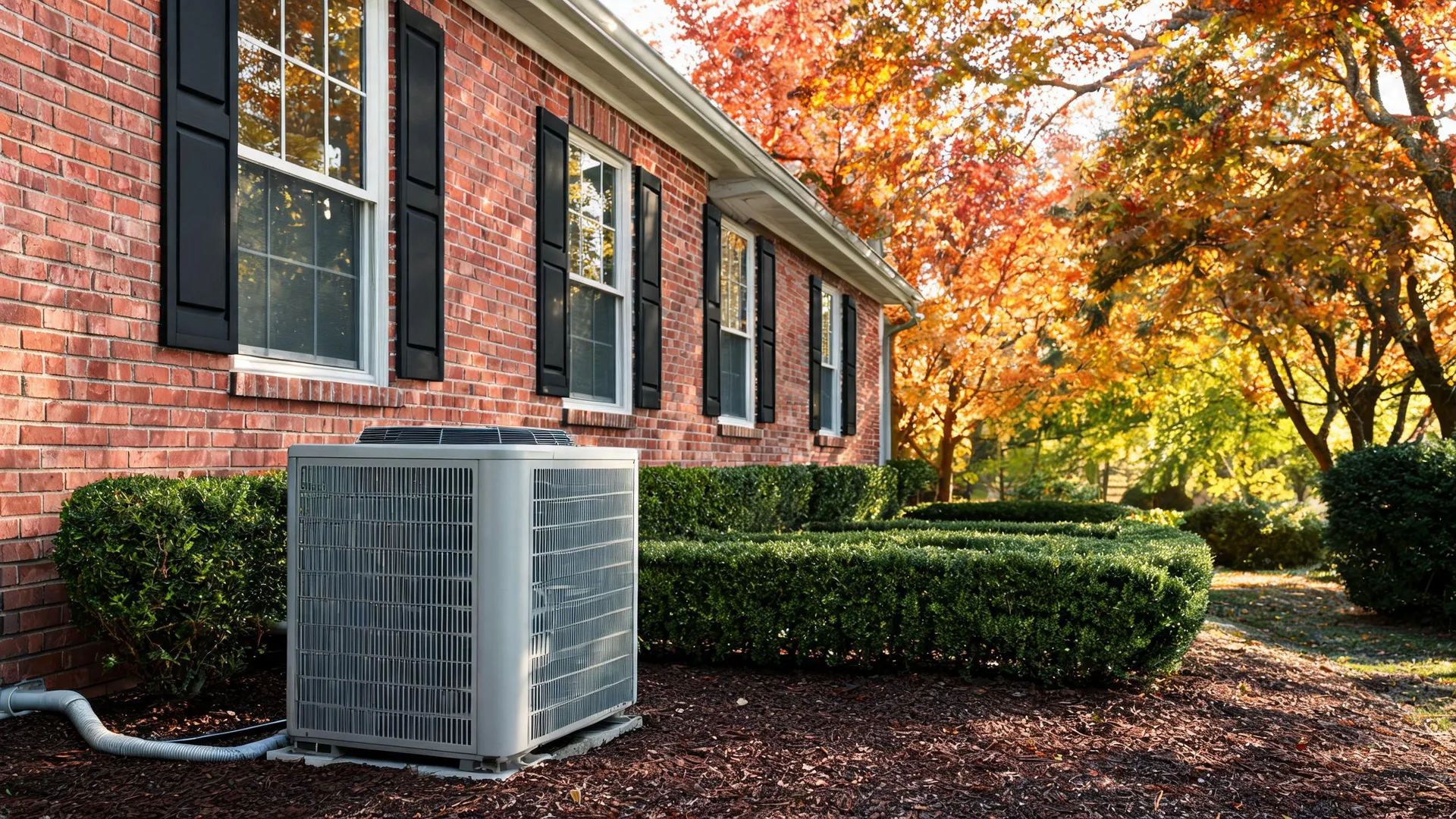
The defrost cycle fails

A heat pump sheds the frost that builds up on its outdoor coil by running a defrost cycle on a timer, triggered by a sensor and a control board. If either one fails, frost keeps building until the coil is blocked and the unit can't pull heat from the outside air anymore.

A heat pump that's struggling still runs, which is what makes it easy to put off. A frozen outdoor coil forces the compressor to work against the blockage instead of just moving heat. A refrigerant leak lowers pressure in the system, and the compressor keeps trying to do its job with less to work with. Both wear the compressor down faster the longer they go unaddressed, and the compressor is the part most worth protecting. Once it fails, you're not looking at a repair anymore. A noise or a weak spot in the heat is the system telling you something specific is wrong, not something to wait out.

A diagnostic starts outside at the unit itself, before anyone touches a gauge. A tech checks the reversing valve, the defrost board, the contactor, and looks at what the coil is doing. From there it's gauges on the refrigerant lines, because pressure tells you things the thermostat never will. Low pressure points to a leak. High pressure with weak heat points somewhere else, often the compressor itself. Airflow gets checked too, since a blocked return or a packed filter can mimic a failing part that's actually fine. By the end you should get a straight answer. This part failed, and here's why.