Cold nights, normal work
Overnight lows in Valley County average 13°F through December, January and February. A heat pump is built to run against that kind of cold, so a system that stops keeping up isn't being asked to do anything unusual.
Takes about a minute. No obligation.
Overnight lows in Valley County average 13°F through December, January and February. A heat pump is built to run against that kind of cold, so a system that stops keeping up isn't being asked to do anything unusual.
If your heat pump isn't holding temperature or the outdoor unit is icing over and not clearing, that points to a specific part not doing its job, like the defrost control or the reversing valve. The fix is finding which one, not working around the weather.

McCall doesn't put any unusual strain on a heat pump.
A system that's short cycling or running constantly most likely has a worn part behind it, not the cold.



If your heat pump came with the house, there's a decent chance it's not old enough to be failing from age alone. That matters for what you decide to do when something goes wrong with it. A newer system that's short cycling or not holding temperature has a specific part behind it worth tracking down and fixing, not a system worth writing off. Worn parts get replaced on their own. The compressor or the control board around them usually has plenty of life left to run.
Nothing about this area is especially hard on it. It's most likely the usual problem with the usual fix.
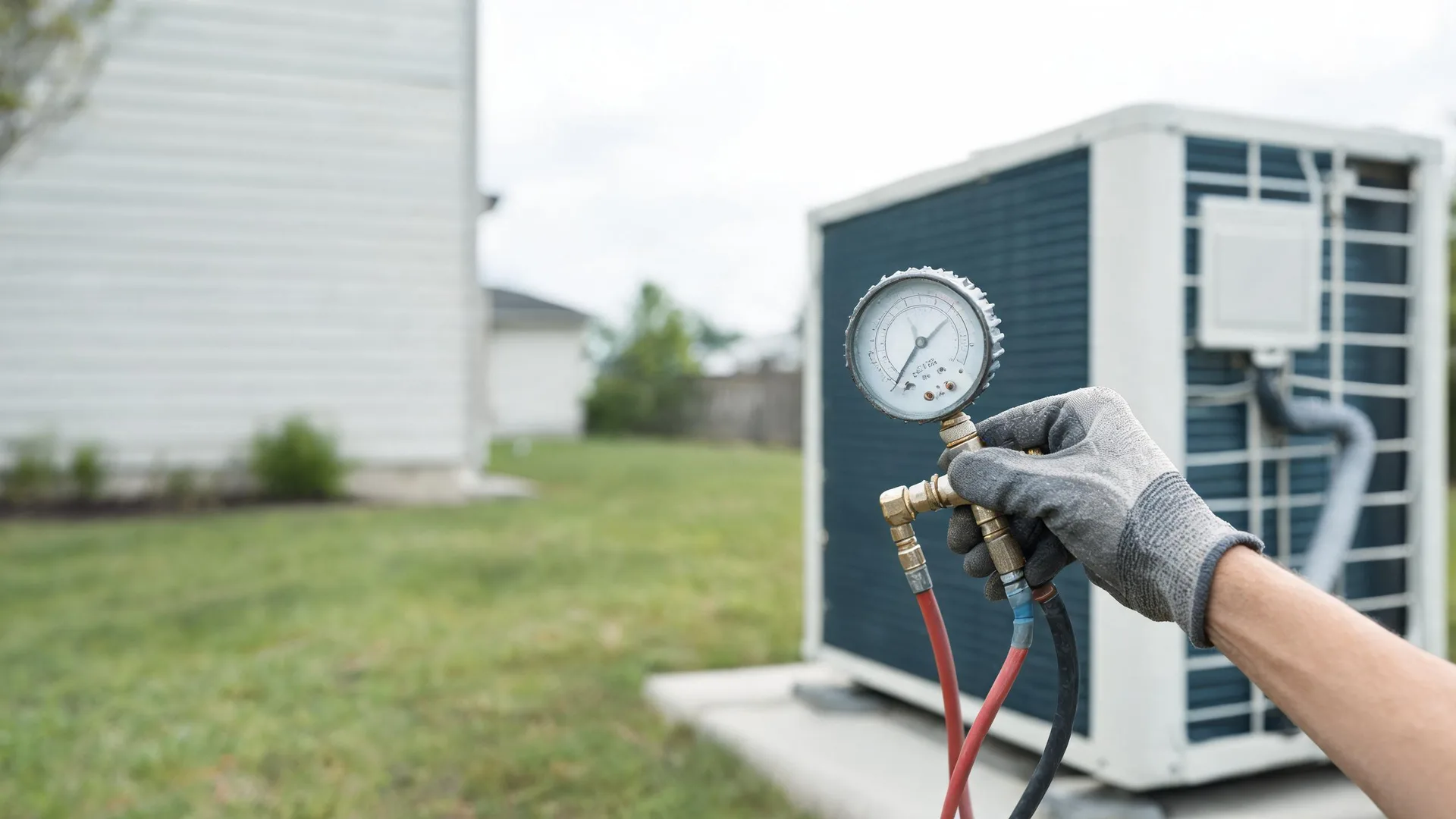
Find a contractorBefore anyone comes out, check the thermostat batteries and make sure it's set to heat, not auto in a way that's confusing it. Go outside and look at the unit. If the coil is covered in ice or snow is blocking the sides, that's worth noting but don't chip at it yourself. Check that the indoor filter isn't clogged. A dirty filter can starve the system of airflow and make it seem like something bigger is wrong. Walk through the house and check if every vent is open and nothing is blocking them, like furniture or curtains. Look at the circuit breaker for the outdoor unit and make sure it hasn't tripped. None of this fixes a bad reversing valve or a failing defrost control, but it rules out the simple stuff before someone has to come take the cover off.
The reversing valve and the defrost control see the most cycles in a heat pump, since they're what let it switch between heating and cooling and clear ice off the outdoor coil. A capacitor weakening or a contactor pitting will show up as a system that struggles to start or runs rough. These are wear items on any heat pump, not signs of a bad unit.
A heat pump low on refrigerant won't heat well and may ice over even when it's cycling through defrost correctly. Refrigerant doesn't get used up, so a system that's low has a leak somewhere in the line set or the coil. That's a repair that needs finding the leak itself, not just adding refrigerant back in.
A heat pump usually tells you something's wrong before it quits outright. Warm air turning cool, or the system blowing room-temperature air instead of heat, often means it's stuck between modes or losing the fight against a failing part. A clicking or buzzing sound when it tries to start is usually a contactor or capacitor having trouble doing its job. Short cycling, where it kicks on and off every few minutes instead of running a full cycle, wears on the compressor every time it happens. A hissing sound near the lines or frost in a spot that isn't normal both point to refrigerant escaping somewhere. If the outdoor unit is running constantly and the house still isn't warming up, that's a system working hard without getting anywhere, and it's worth having someone look at it rather than letting it keep straining.
Most heat pump problems don't mean the whole system is done. A failed capacitor, a stuck reversing valve, a dirty coil, these get replaced or cleaned and the unit runs like normal again. What actually ends a heat pump's life is the compressor going out, and that's usually the last thing to fail, not the first. If a contractor is recommending replacement over repair, it should be because the compressor is shot or because several big parts are failing at once, not because the system is making an odd noise or tripping its breaker. Ask what part is actually bad before deciding the whole unit needs to go. A repair that fixes the one thing wrong is almost always the cheaper and faster path back to a warm house.