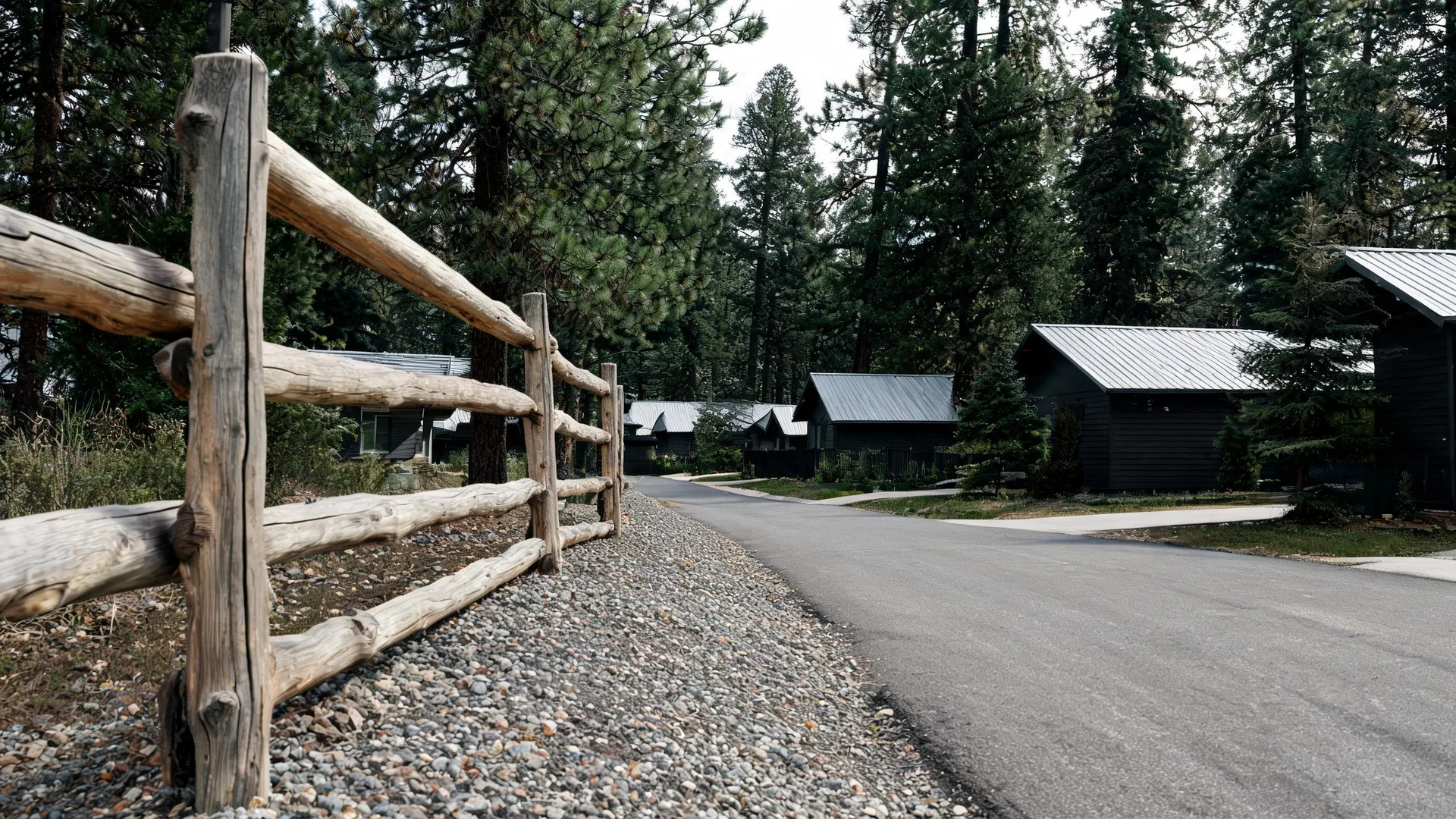





A paved road bordered by gravel and a weathered split-rail log fence curves past dark-sided cabins with metal roofs among tall conifer trees.

Heat Pump Repair in Pocatello, ID

Tell us about the job

Takes about a minute. No obligation.

RepairHeat PumpBannock County, ID
Step 1 of 2

What ZIP code is the job in?

Heat pumps in Pocatello run heat from September through June, almost ten months of the year. August is when a weak part usually gets found, right as the system switches over and starts working harder. A capacitor or contactor that was barely getting by in August cooling often won't make it through the first cold mornings in September. If your heat pump is struggling to keep up or short cycling as the weather turns, that's the usual pattern, not a sign of anything unusual about your home. Getting it looked at before the season fully sets in means a small fix now instead of a no-heat call later.

10 months
September through June, your system heats
2 months
July through August, it cools
18°F
the average winter night it heats against
81°F
the average summer afternoon it cools against
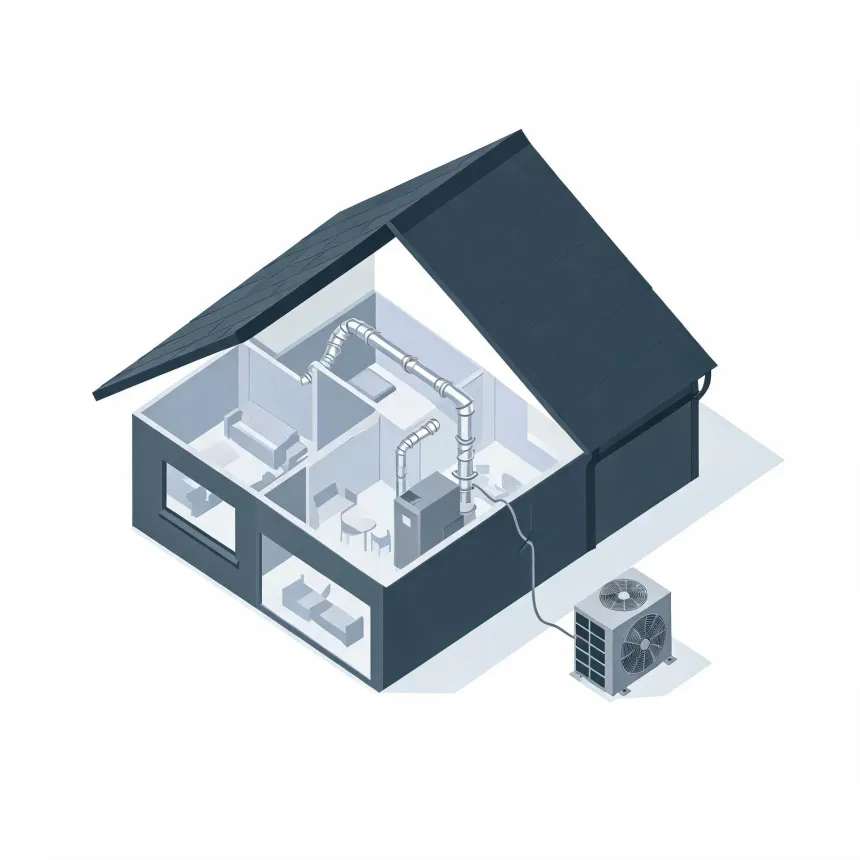
Isometric illustration of a cutaway house showing interior rooms with furniture, a furnace and ductwork, connected by a line to an outdoor condenser unit on the ground outside.
Your system heats September through June and cools July through August.

NOAA nClimDiv, 1991–2020 normals

A technician checks the reversing valve before touching anything else, since that's what tells heating and cooling apart.

If it's stuck, the system can blow cold air when you've called for heat, which looks like a much bigger problem than it is.

Wind and hail don't single out your heat pump. Electric rates don't either.

Power costs 11.52 cents a kWh statewide
46 damaging wind events from 2015 to 2024
21 hail events from 2015 to 2024

Half the homes in Bannock County were built in 1976 or earlier, half in 1976 or later. A heat pump failure doesn't care which side of that line your house falls on. The same handful of parts cause most problems, a capacitor, a contactor, a reversing valve, a low charge. What matters more than the age of the house is whether the system has been checked recently, or whether it's been running with a problem that kept getting put off. A repair call is usually about catching one of those common failures before it turns into a system that won't run at all.

Get it looked at early

Problems tend to show up in the first weeks of the season, when the load hits a part that was already weak.

Find a contractor
A man in a cap, dark long-sleeve shirt and tan work pants carries a leather tool bag up porch steps toward a green front door, with a potted flowering plant beside him.
A gray heat pump outdoor unit mounted on a concrete pad next to the stone-accented exterior wall of a house.

What you can check before anyone comes out

Check the thermostat first. Set it to heat and bump the temperature up past room level. You should hear the system kick on within a minute or so. If nothing happens, check the breaker, a heat pump trips breakers like anything else, and a flipped switch looks exactly like a dead system from the thermostat. Next look at the outdoor unit. If the coil is covered in ice or buried in leaves and debris, airflow is blocked and the system can't do its job. Clear what you can reach by hand. Inside, pull the air filter and hold it up to a light. If you can't see light through it, that's choking the system too. Walk the vents in each room and make sure none are closed or blocked by furniture. If the outdoor fan isn't spinning at all while the indoor side is running, or if you hear it humming without turning, that's a capacitor or a motor, not something to take apart yourself. Running it like that can do more damage. The same goes for a burning smell or a breaker that trips again right after you reset it. Shut it off and wait for a tech rather than keep trying.

The capacitor goes first, most often

The capacitor charges the motors that spin the outdoor fan and run the compressor. Heat and constant cycling wear it down until it can't deliver that initial kick anymore. A fan that hums but won't spin, or a compressor that tries and gives up, usually points here.
A low charge means something is leaking

A heat pump doesn't use up refrigerant over time. If the level is low, it's escaping somewhere, usually a slow leak at a fitting or coil joint. Topping it off without finding the leak just means another no-heat call down the road.

Most calls start with something simple. The system runs but the air coming out doesn't feel warm, or it feels only a little warm, not enough to keep up. Sometimes it short cycles, kicking on and off every few minutes instead of running a full cycle. Sometimes the outdoor unit is frosted over in a way that doesn't clear on its own. A hissing or clicking sound that wasn't there before is also worth paying attention to, especially right around the reversing valve or the outdoor unit. None of these mean the system is done. They mean a part is failing and the sooner it gets checked, the fewer parts it takes down with it.

An old heat pump that needs a compressor is a different call than a newer one that needs a capacitor. The compressor and the reversing valve are the expensive parts to replace, and once one of those fails on a system that's already had a long run, the rest of it tends to follow. A tech can tell you what the failed part would cost to replace against what a new system runs, and past a certain point that math stops favoring the repair. It also matters how the system has been running overall, not just what broke this time. One failure on a unit that's kept up with its filters and its yearly check is usually worth fixing. A system that keeps sending different parts out in close succession is telling you something a single repair can't fix.