A single-story black board-and-batten house with a standing-seam metal roof and timber-post covered entry, surrounded by pine trees, dry grasses and a gravel foreground.

Heat Pump Repair in Rupert, ID

Tell us about the job

Takes about a minute. No obligation.

RepairHeat PumpMinidoka County, ID
Step 1 of 2

What ZIP code is the job in?

Cold is the main stress here

Winters average 18°F overnight through December, January and February. That is steady cold a heat pump has to work against, not the kind of wind and hail damage that tears up equipment. Storms pass through, but what wears on a heat pump in Rupert is the long stretch of cold nights, not the weather events themselves.


That points away from storm damage

When a heat pump here is acting up, the cause is rarely a bent fan blade or hail-dented cabinet. It's more often a worn part doing its job one winter too many, like a failing defrost board or a low refrigerant charge. That kind of problem is usually worth fixing rather than a sign the whole unit is done.

9 months
September through May, your system heats
2 months
July through August, it cools
18°F
the average winter night it heats against
84°F
the average summer afternoon it cools against
Isometric line illustration of a cutaway single-story house showing interior rooms, ceiling ductwork, an indoor air handler unit, and an outdoor condenser connected by a line set.
Your system heats September through May and cools July through August.

NOAA nClimDiv, 1991–2020 normals

Heat here starts in September, so August is the month a weak part gets found out.

Rupert heat pumps earn their keep from September through May, nine months of work a year.

Rupert doesn't beat up a heat pump. Age does.

Power costs 11.52 cents a kWh statewide
42 damaging wind events from 2015 to 2024
7 hail events from 2015 to 2024

Half the homes in Minidoka County were built in 1976 or earlier, half later. A heat pump doesn't know or care which kind of house it's bolted to. What matters is how many winters the unit itself has been through, not the wall behind it. An old house with a system put in five years ago is in better shape than a new house still running what it was built with. If you don't know how old your heat pump is, that's the number worth finding, more than the age of the house around it.

A heat pump acting up in Rupert is usually worth repairing

Nothing about winters here tears up a heat pump. The cold wears parts down slowly, which is a different thing than damage. If yours is struggling, get the actual cause found before you think about replacing it.

Find a contractor
A gray heat pump outdoor unit mounted on a concrete pad next to a residential house with lap siding and stone accents.

What a failing heat pump sounds and feels like before it quits

A heat pump that's struggling gives you clues before it quits outright. It runs longer than it used to, cycling on and on without the house ever feeling warm. It blows air that feels cool instead of warm, especially right after defrost, when it should snap back to heating fast. Frost builds up on the outdoor coil and stays there instead of clearing on its own. You hear it clicking on and off more than it should, a sign the defrost board or a sensor is telling it to do something it shouldn't. None of these mean the unit is finished. They mean a part is failing and still fixable, but the longer it runs like that, the harder the rest of the system works to cover for it.

Most failures are one part, not the whole system

A heat pump has a short list of parts that actually wear out. The reversing valve switches it between heating and cooling. The defrost board tells it when to clear the outdoor coil. The run capacitor gets the compressor and fans started. The contactor feeds them power. Any one of these can fail while the rest of the unit is fine. A stuck reversing valve leaves you with cool air no matter what the thermostat is set to. A bad capacitor shows up as a fan or compressor that hums but won't start, or a unit that short cycles instead of running a full cycle.

Low refrigerant charge is a leak, not a usage problem

A heat pump doesn't use up refrigerant the way a car uses gas. If the charge is low, it's low because it's leaking out somewhere, usually at a fitting, a coil, or a joint in the line set. Low charge makes the system run long cycles without catching up, and it makes the compressor work harder than it should. Topping off the charge without finding the leak just means doing it again later. Running a compressor low on refrigerant for long stretches is one of the more common ways a repair turns into a full replacement.

A heat pump rarely fails all at once. It starts with one part struggling to do its job, and the rest of the system compensates by working harder to cover the gap. A weak capacitor makes the compressor strain every time it starts, which heats it up more than it should. A low charge makes the compressor run long and hot trying to reach a temperature it can't hit. A stuck reversing valve won't fix itself by running longer, it just keeps the system heating or cooling wrong while everything downstream pays for it. The compressor is the part that absorbs that strain when something upstream is off, and it's the hardest part to replace on its own. Let a small problem run long enough and it stops being a small problem.

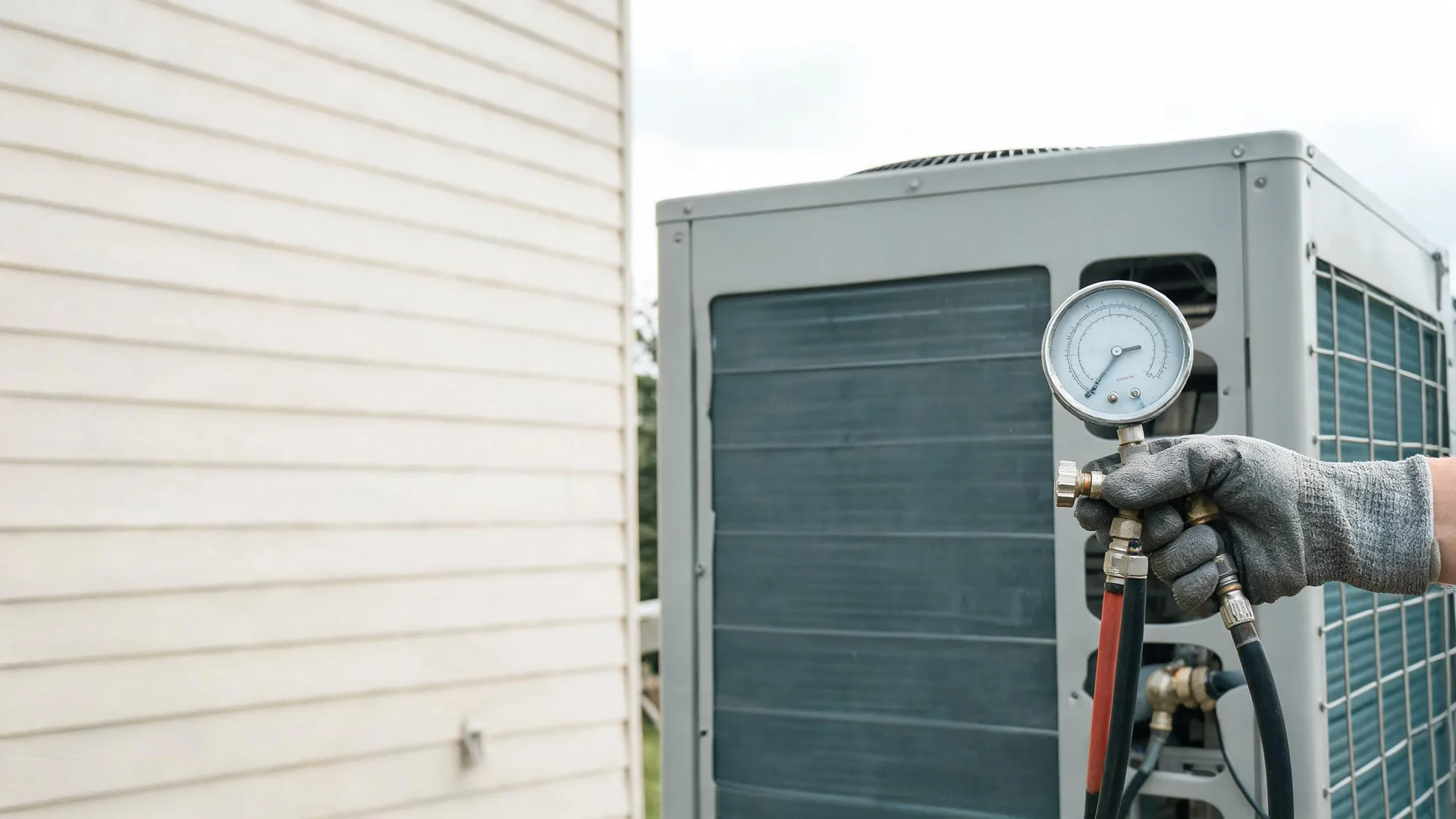
A diagnostic visit starts with questions, not tools. What's the system doing, when did it start, does it happen in heating mode, cooling mode, or both. Then comes the gauge set on the refrigerant lines and a meter on the electrical components, checking the capacitor, the contactor, and the readings at the compressor itself. A good tech watches a full defrost cycle if that's the complaint, because some problems only show up when the board tells the system to switch modes. Airflow gets checked too, since a weak signal at the outdoor coil can look like a refrigerant problem when it isn't. By the end, the point isn't just naming the failed part. It's knowing why that part failed, so the same thing doesn't happen again in a year.