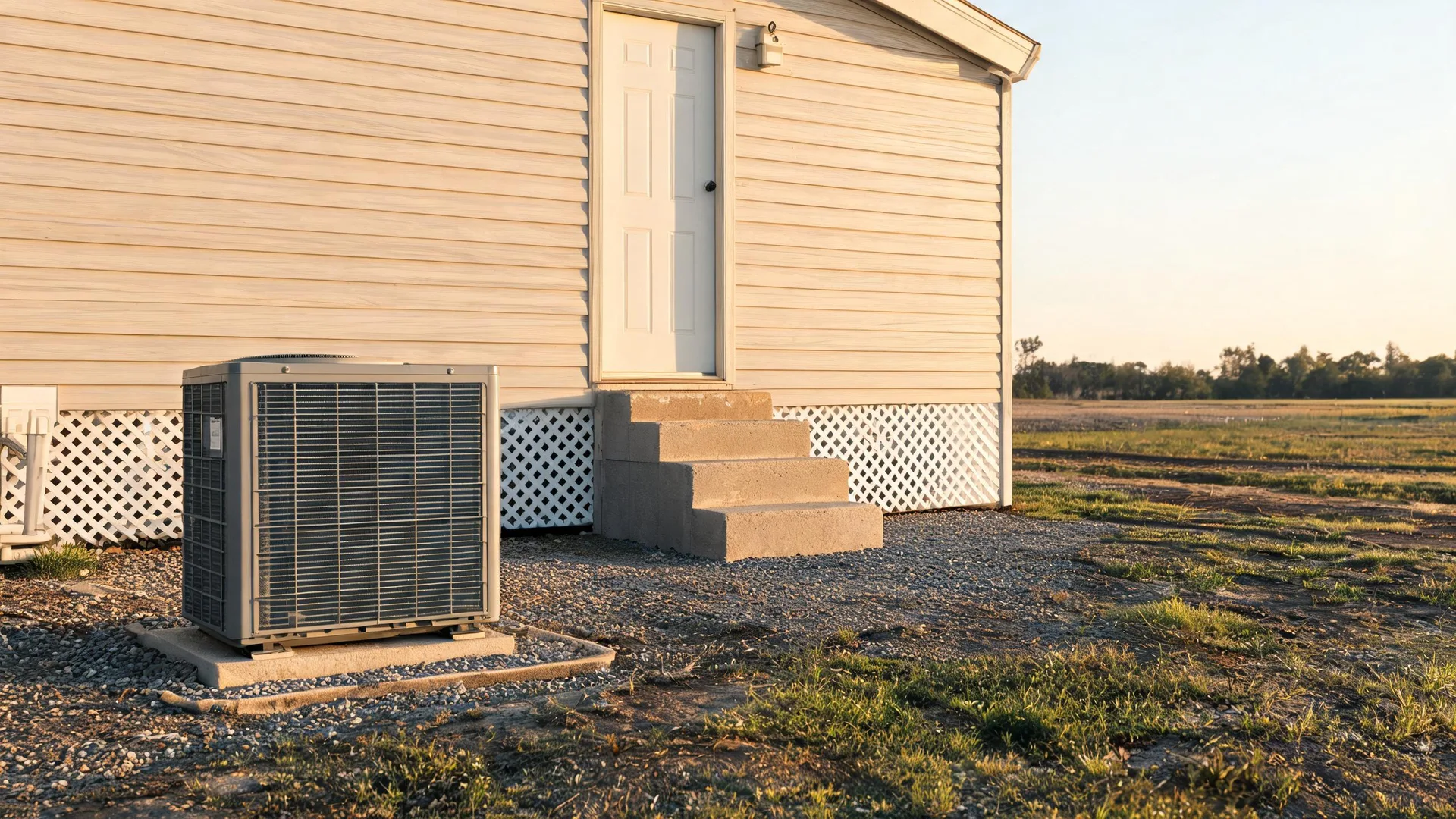
Cold mornings put a heat pump to work
Overnight lows around Salmon average 13°F through December, January and February. A heat pump leans hardest on its defrost cycle and backup heat in that range. That's when a weak component finally gives out.
Takes about a minute. No obligation.
Overnight lows around Salmon average 13°F through December, January and February. A heat pump leans hardest on its defrost cycle and backup heat in that range. That's when a weak component finally gives out.
None of that points to anything unusual going on inside the unit. It points to the same handful of causes any technician checks first. A failing defrost control, a low refrigerant charge, a stuck reversing valve. Find which one it is and the fix is straightforward.

Heat here starts in August, a month earlier than most places plan for.
A heat pump that was already struggling in July usually fails in its first weeks of real work.



Half the homes around Salmon were built in 1979 or earlier, half in 1979 or later. That split doesn't change what's wrong with a heat pump. An older place might run original ductwork or an older thermostat setup, a newer one won't, but the unit itself fails the same way either age brings it in. Mobile homes make up a real share of the housing here too, and those often run a heat pump sized and installed a specific way at the factory. Worth telling the technician if that's your setup. Past that, the age of the house isn't what points to the problem. What's actually failing inside the unit is.
Nothing about this area is especially hard on it. It's most likely the usual problem with the usual fix.
Find a contractorA heat pump that's struggling doesn't fail cleanly. It fails slower, and it drags other parts down with it. A reversing valve that's not sealing right makes the compressor work through every cycle, hot gas going places it shouldn't. A refrigerant leak that's ignored means the compressor runs low on charge for days or weeks, and a compressor starved of refrigerant is also starved of the oil that moves with it. That's how a simple leak turns into a seized compressor, and a seized compressor is a different repair than a top-off and a patch. Ice on the outdoor coil behaves the same way. A unit stuck defrosting too little just keeps building ice over the coil, airflow drops, and the compressor starts pulling in liquid refrigerant instead of gas. None of these start as big problems. They get big because the unit kept running while something underneath it was already wrong.
A heat pump has a compressor and refrigerant side, and it has controls that tell it when to heat, when to defrost, when to switch to backup. Most failures sit in the controls. A defrost thermostat, a reversing valve solenoid, a relay on the circuit board. Those get swapped out and the unit runs right again. A compressor that's failed internally is a different situation. That usually comes from a slow leak or strain that built up over time, and it's the case where replacement gets talked about, because the compressor is most of what the unit is worth.
A heat pump stuck in defrost, or one that's leaning on backup heat and won't come off it, is still keeping the house warm while something underneath it is wrong. That can wait for a scheduled visit. A unit iced over solid on the outdoor coil, or short cycling on and off, is doing damage every hour it keeps running that way. That one should get looked at right away.
Before anyone comes out, a few things are worth checking yourself. Look at the thermostat first. Make sure it's set to heat and not accidentally switched to fan only or cool. Check the circuit breaker for the outdoor unit and the indoor air handler, since a tripped breaker will shut the whole system down with no other symptoms. Walk outside and look at the outdoor unit itself. If it's buried in snow or ice, or leaves and debris are packed against the coil, airflow can't get through and the unit will struggle no matter what else is right. Check your air filter too. A filter clogged with dust chokes off airflow on the indoor side the same way ice chokes it outside. None of this fixes a bad reversing valve or a refrigerant leak, but it rules out the simple stuff before anyone pays a visit.
A diagnostic visit starts outside, at the unit itself. A technician hooks up gauges and checks refrigerant pressure, because that number says whether the charge is right, low, or overfilled, and each one points a different direction. They'll run the system in heat and watch whether defrost kicks in and ends the way it should. A cycle that starts late or never ends usually means a bad sensor or a stuck reversing valve, not a mechanical failure. Electrical readings come next. Amp draw on the compressor, voltage to the control board, continuity through the relays that tell the unit when to switch modes. Most of this gets done with the panels off and the unit running, because a problem that only shows up under load won't show up sitting still. By the end, the technician isn't guessing which part failed. They've measured it.