




A rustic log rail fence in the foreground beside a gravel shoulder and paved lane lined with dark-clad cabins with metal gabled roofs, surrounded by tall pine trees under an overcast sky.

Heat Pump Repair in Shoshone, ID

Tell us about the job

Takes about a minute. No obligation.

RepairHeat PumpLincoln County, ID
Step 1 of 2

What ZIP code is the job in?

Heat pumps here work hardest right at the start of each season, when they switch jobs after months of sitting idle one way. August is the month to get a repair looked at before heat season starts in September, the same way June matters before cooling starts in July. A weak part can coast while the system is barely running, then fail the first cold week it has to carry real load. If your heat pump struggled last spring or is short-cycling now, that same issue will likely show up again once it switches over for heat. Getting it diagnosed before September means a tech can fix it on their schedule, not yours.

9 months
September through May, your system heats
2 months
July through August, it cools
18°F
the average winter night it heats against
84°F
the average summer afternoon it cools against
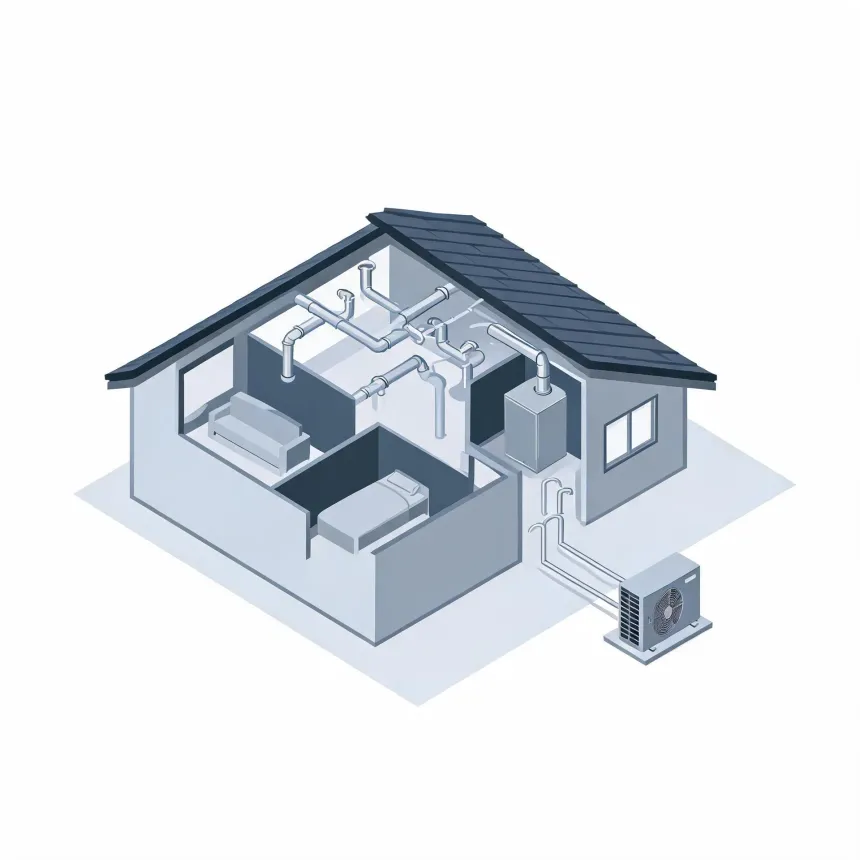
Isometric cutaway illustration of a small house showing ducted air distribution, an indoor air handler, and an outdoor condenser unit connected by lines, with a sofa and bed in the rooms.
Your system heats September through May and cools July through August.

NOAA nClimDiv, 1991–2020 normals

A heat pump fails the same handful of ways whether it's new or old.

So the tech checks the usual parts first instead of guessing at something rare.

Shoshone's winters don't push a heat pump past what it's built for

Power costs 11.52 cents a kWh statewide
13 winter storms from 2015 to 2024
Winter nights average 18°F

Half the homes in Lincoln County were built in 1985 or earlier, half in 1985 or later. That split doesn't point to anything. A heat pump failing in an older home or a newer one usually comes down to the same handful of parts. Mobile homes make up close to a fifth of the housing here, and if yours is one, it's worth mentioning to the tech, since the ductwork or setup can differ enough from a site-built home to matter. Outside of that, there's nothing about the housing stock working against the system. Whatever's wrong is likely a contactor, a capacitor, or a low charge, the same things a tech checks on any heat pump anywhere.

Get it fixed. The cold isn't what broke it

Eighteen degrees overnight is manageable for a heat pump, nowhere near the load that wears one down fast. So when something's off, it's usually one part acting up, not a system worn out by the climate. Worth fixing.

Find a contractor
A man seen from behind in a backward cap, dark jacket and tan work pants carries a waxed canvas tote bag up steps toward a green front door, with a potted shrub beside the entry.
A dark gray heat pump unit mounted on a concrete pad next to a house with gray siding and a stone veneer wall.

What to check before the tech shows up

Before anyone comes out, there are a few things worth checking yourself. Look at the outdoor unit first. If it's caked in ice or buried in leaves and debris, airflow is blocked and that alone can cause the system to struggle. Check your thermostat is set to heat and the temperature is actually set above room temperature, not sitting at a setpoint it already reached. Go to your breaker panel and check the breakers for both the indoor air handler and the outdoor unit haven't tripped. If you have a filter, pull it and look at it. A filter clogged with dust and pet hair chokes airflow and can cause the whole system to shut down to protect itself. Listen for what the system is doing when it fails. A unit that hums but the fan doesn't spin points to one kind of problem. A unit that trips the breaker right when it kicks on points to another. A system that runs but blows air that isn't warm might be stuck in defrost or might have lost refrigerant charge. None of these are things to open up and fix yourself, but telling the tech exactly what you saw and heard before they arrive gets them to the real problem faster.

What the tech checks first

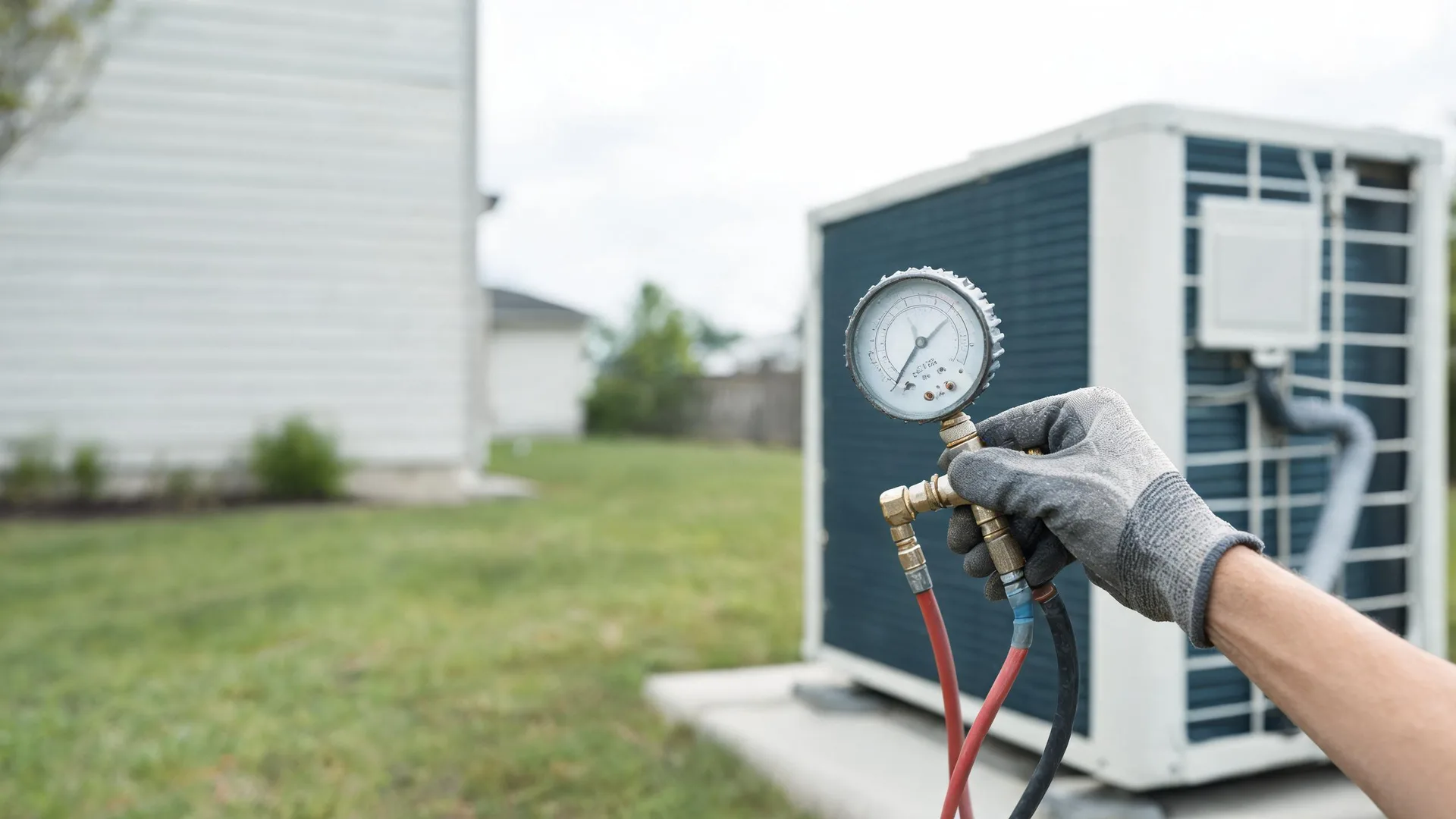
A tech starts outside at the unit itself, checking the contactor and capacitor and reading the refrigerant charge with gauges. Inside, they check the air handler, the reversing valve that switches the system between heat and cool, and the defrost board that tells the unit when to clear ice off the outdoor coil. Most heat pump failures trace back to one of these.
Why the visit comes before the fix

A heat pump can fail for reasons that look the same from the thermostat but aren't the same problem. Weak airflow, a bad capacitor, and a low charge can all end with the system blowing cold air or not running at all. The diagnostic is what tells the tech which one it actually is, so the repair goes after the right part the first time.

Running a heat pump with a problem already showing doesn't give it a chance to rest and fix itself. A system low on refrigerant charge will keep pulling liquid refrigerant back into the compressor instead of vapor, and that wears the compressor down with every cycle it runs. A clogged filter starves the system of airflow, and the longer it runs that way, the more the coil behind it can ice up, which blocks airflow further and makes the icing worse. A failing capacitor makes the compressor or fan motor draw harder to start each cycle, and that extra strain is what finally burns the motor out. None of these fix themselves by running longer. The part doing the extra work now is the part that fails completely later, so the sooner the system stops running on a bad part, the less gets damaged behind it.

Most heat pump problems are worth fixing, because most of what fails is small. A contactor, a capacitor, a sensor, a bit of refrigerant. These are parts a tech replaces in one visit, and the rest of the system, the compressor, the coils, the ductwork, keeps going like nothing happened. Replacement starts to make sense when the compressor itself is the problem, since that part alone drives most of what a system costs, and a system running old refrigerant can be hard to find parts for. Age matters too, but less than how the system was looked after. A heat pump that's had its filter changed and its coils kept clean can outlast one that's been ignored, no matter which one is older. If a tech tells you the compressor is going or the refrigerant type is obsolete, that's the conversation worth having. Short of that, you're almost always looking at a repair, not a decision.