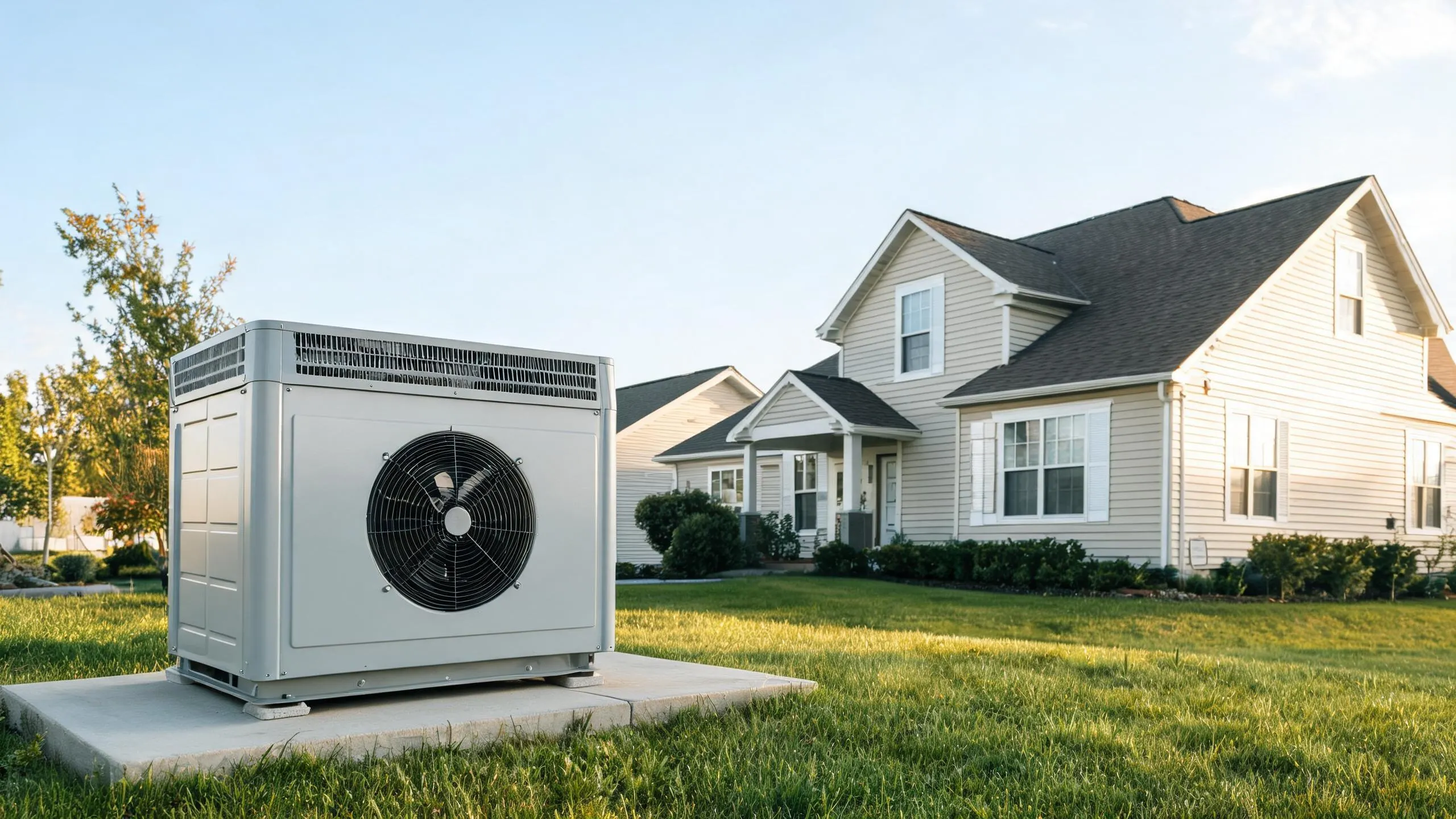





An outdoor heat pump unit mounted on a concrete pad in the front yard of a gray suburban house.

Heat Pump Repair in Victor, ID

Tell us about the job

Takes about a minute. No obligation.

RepairHeat PumpTeton County, ID
Step 1 of 2

What ZIP code is the job in?

Winter nights here average 12°F, and a heat pump has to work for every degree of that. Winter storms have hit the county 118 times over the past ten years, often enough that a system can lose power or take a hit during a cold snap. That's usually when a homeowner notices something is actually wrong, not just the cold being hard to keep up with. None of this means the unit is worn out or wrong for this area. When it stops keeping the house warm, the cause is usually something a tech sees all the time, like a failing defrost control, low refrigerant, or a reversing valve stuck in one position. Find the real cause and fix it, and it goes back to running the way it should.

10 months
September through June, your system heats
12°F
the average winter night it heats against
75°F
the average summer afternoon it cools against
Isometric grayscale illustration of a cutaway single-story house showing interior rooms, ductwork and an air handler, an exterior condenser unit connected by lines, and dark solar panels on the roof.

Heat pumps in Teton County run September through June.

August is when to get a heat pump looked at, before the first cold snap finds the weak part.

Half the homes here were built since 2001, so a lot of heat pumps still have years left

Half the homes here were built by 2001
45 damaging wind events from 2015 to 2024
118 winter storms from 2015 to 2024

A heat pump here isn't fighting anything unusual once it's running. The repairs are the same ones a tech sees anywhere cold winters put a heat pump to work all season. Electricity in Idaho ran 11.52 cents per kilowatt-hour in 2024, so when a heat pump starts short cycling or running constantly to hold the temperature, it shows up on the bill fast. That's often the first sign something needs attention, before the house actually feels cold. A stuck reversing valve or a low charge will make the system work harder for the same result, and the fix is usually straightforward once a tech finds which part is causing it.

Get the usual fix

Nothing about this area is especially hard on it. It's most likely the usual problem with the usual fix.

Find a contractor
A gray heat pump outdoor unit mounted on a concrete pad next to the stone-accented exterior wall of a house.

What to check before the tech gets there

Before calling anyone, look at the outdoor unit. If it's caked in ice or snow past the base, that's worth noting, a heat pump should shed frost on its own through normal defrost cycles. Check that nothing is blocking airflow around it, no stacked firewood, no drifted snow against the sides. Inside, check the thermostat is actually set to heat and not fan only, and listen for whether the system is running constantly without the house warming up. Check your breaker panel if the unit isn't turning on at all. Replace the air filter if you haven't in a while, a clogged one can make the system struggle in ways that look like bigger problems. None of this fixes a stuck reversing valve or a low charge, but it tells the tech what the system was doing before they arrive, and it rules out the easy stuff first.

Wear hits the moving parts first

The reversing valve, the defrost control board, and the compressor take the most cycles of anything in the system. A reversing valve can stick from a worn coil or from carbon buildup inside it, leaving the system stuck heating or stuck cooling. The defrost board can fail outright, or it can start misreading the sensor, so the unit never defrosts or defrosts when it doesn't need to. Both show up as the same complaint. The house won't hold temperature.
Low refrigerant always has a cause

A heat pump doesn't use up refrigerant over time. If the charge is low, it's leaking out somewhere, usually at a fitting, a coil, or a line set connection that's worked itself loose. Topping off the charge without finding the leak just means doing it again later. A tech checking a low charge complaint is looking for where it's getting out, not just refilling it.

Short cycling, where the system kicks on and off every few minutes, usually points to a thermostat sensor gone bad or airflow that's restricted somewhere in the duct run. A heat pump that runs constantly but never quite gets the house to temperature is a different problem, often a charge issue or a compressor losing its ability to move refrigerant the way it used to. Listen for the outdoor unit too. A clicking reversing valve, a grinding or screeching compressor, or a fan motor that hums without turning are all things worth calling in before they get worse. Ice that builds up and doesn't melt off during the defrost cycle means the defrost board or the sensor telling it when to defrost isn't doing its job. Warm air that isn't actually warm, just less cold than the room, can mean the system is stuck between heating and cooling modes because the reversing valve isn't fully shifting. None of these fix themselves, and running the system while they're happening usually just adds wear to parts already struggling.

Age isn't what decides this, wear on specific parts is. A compressor is the expensive part, and it's also the part that tends to go all at once rather than give warning. If a tech finds the compressor itself is failing, that's usually the point where replacement makes more sense than repair, since it's the heart of the system and the costliest piece to swap on its own. A bad reversing valve, a failed defrost board, a leak at a fitting, those are repairs on parts that don't take the rest of the system down with them. Fixing one doesn't tell you anything about how close the compressor is to failing too. What matters is whether the problem is in a part that fails on its own, or in the one part that usually means the unit is done.