

Two kinds of heat, one thermostat
Your heat pump moves heat from outside air. Aux heat is electric resistance heat, built into the air handler as backup when the heat pump can't keep up alone.
Tell a local repair pro what your heat pump is doing.
You saw "aux heat" light up on your thermostat and want to know what it's telling you. It's not an error message, but it is worth understanding, especially since most homes in Idaho heat with gas and a lot of these thermostats are set up to call on a backup heat source when the heat pump alone can't keep up.
A heat pump pulls warmth from the outside air, and the colder it gets outdoors, the harder that job becomes. Below a certain outdoor temperature, usually somewhere in the 30s, the heat pump can't pull enough heat on its own, so the system brings in a second heat source to cover the difference. That backup is what "aux heat" refers to. On a lot of Idaho systems that backup is a gas furnace, since gas heat is common here. Seeing the light during a cold snap is normal. Seeing it come on when it's 50 degrees outside usually means the heat pump itself isn't keeping up the way it should.
Outdoor temperature drops low enough that the heat pump struggles to pull heat from the air.
The heat pump's output can no longer keep up with heat loss in the house.
The thermostat calls for backup heat to make up the difference.
Electric resistance coils or a gas furnace switch on to help.




Aux heat running now and then on a hard freeze is normal and nothing to chase down. What matters is how often you see that light and how cold it actually is outside when it comes on. If it's lighting up on a mild evening, something's off with either the heat pump or the thermostat, not the weather. A fan stuck in the on position, a thermostat set too aggressively, or a heat pump that's lost some of its capacity can all call for backup heat long before it's actually needed. Since resistance heat draws a lot more power than the compressor does, a heat pump leaning on aux heat more than it should will show up on your power bill before it shows up anywhere else. Left alone, that pattern tends to get worse, not better. A heat pump that's quietly losing its ability to pull heat from the outside air will keep calling for backup more and more, and the compressor or coil behind that slide usually isn't cheap to fix once it fails outright. Instead of tracking down a contractor yourself, calling around, and explaining the same problem to each one, you can get matched with a contractor who handles heat pump issues like this and let them reach out to you. Catching it while it's still a small adjustment is a lot less disruptive than catching it after the heat pump has stopped doing its job.


Your heat pump moves heat from outside air. Aux heat is electric resistance heat, built into the air handler as backup when the heat pump can't keep up alone.
Aux heat kicking on for a few minutes during a cold snap or after you bump the thermostat up is normal. Aux heat running for hours points to a heat pump that needs a look.
If the aux light comes on for a few minutes during defrost, that's normal. If it stays lit for hours, or the air handler runs loud and constant while the house still feels cool, the heat pump isn't carrying its share of the load. You might notice the outdoor unit barely running, or frost that doesn't clear on its own. Since most homes here heat with gas, aux heat on a heat pump is pulling from the electric strips in the air handler, and leaning on those night after night adds up on the power bill even with power priced the way it is here. Left alone, the underlying problem with the heat pump usually doesn't fix itself.
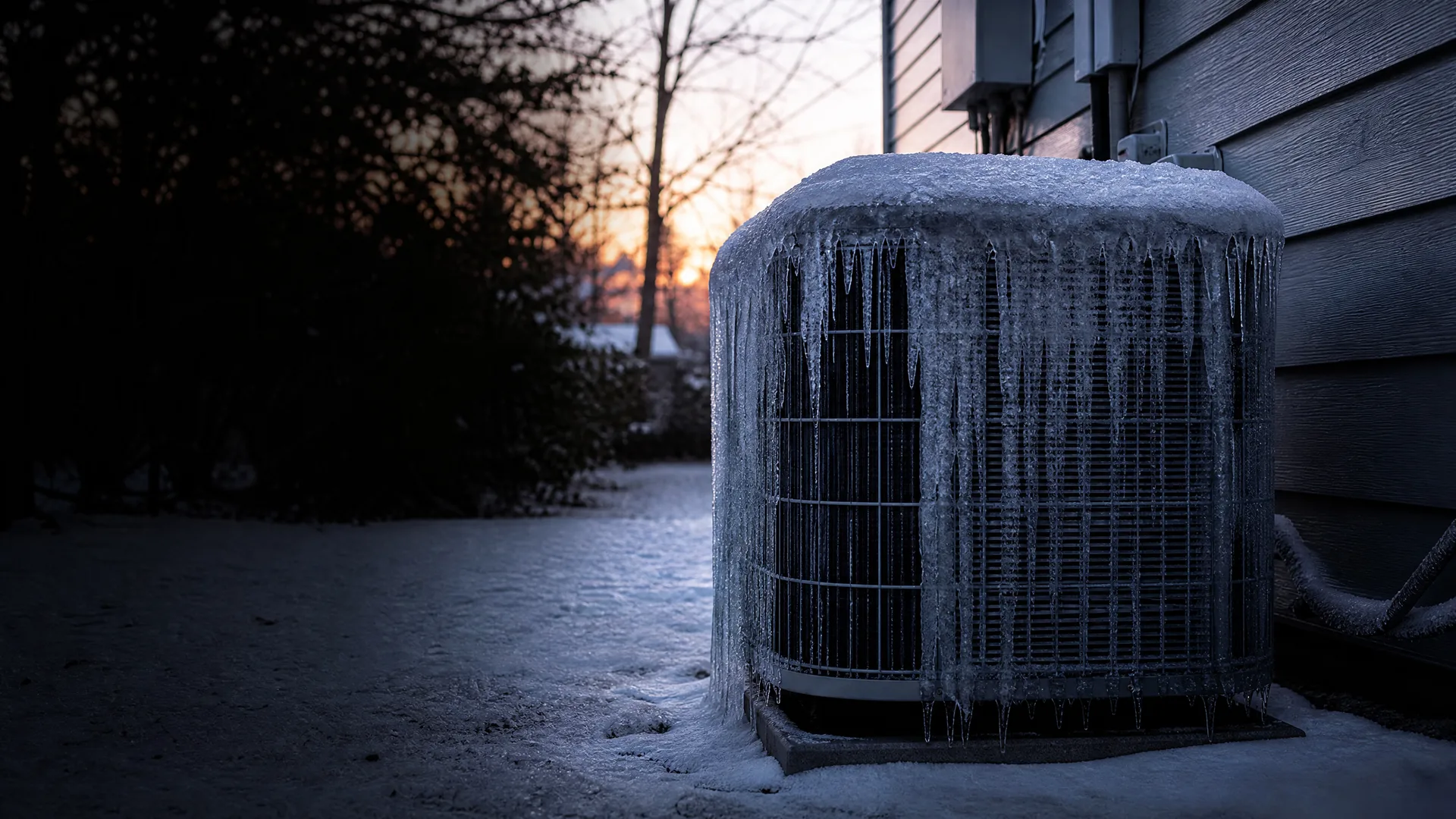
The sun isn't up yet when you walk out for the paper and see it: the outdoor unit in your side yard wearing a thick shell of ice, from the top down to the coil fins. It's one of those nights that dropped hard, the kind Idaho gets a handful of times each winter, and the fan hasn't turned in a while. Inside, the air handler has been running since 2 a.m., and the house still feels a few degrees off. You think about the aux light that's been lit since you went to bed. Calling around for someone who can look at it before work would be its own chore on a morning like this.
If your heat pump is leaning on aux heat more than it should, that's not something to live with until spring. Idaho power is cheap, but resistance heat still costs more to run than the compressor, and a heat pump that can't carry a cold night on its own usually has a reason: low refrigerant, a failing defrost control, a compressor losing strength. Figuring out which one means getting a contractor out to look at the actual unit in your yard. Left alone, you're the one checking the thermostat every cold snap, wondering if tonight's the night it runs aux heat till morning again. Instead of searching around for someone licensed, calling a few places, explaining the same thing about the aux light every time, you can hand that off. Answer a few questions about what you're seeing and a contractor who works on heat pumps in your area will reach out to you directly, so the next cold night isn't another guessing game.
Cold snap hits, temperatures drop into the teens or lower, and the aux light comes on to help the heat pump keep the house at temperature. It runs alongside the compressor or takes over for a stretch, then backs off once the outdoor temperature climbs back up. The electric bill reflects it that month, but the house stays warm and nothing is wrong with the equipment. This is what aux heat is there for. Once the cold breaks, the light goes off and the heat pump goes back to carrying the house on its own, the way it does most of the winter.
Aux light stays on through a mild stretch, or the house still feels cool even with it running. That's the heat pump falling short of what it should manage on its own, and aux heat stepping in to cover the gap night after night. Left alone, it keeps leaning on the more expensive backup heat while the real issue, whether low refrigerant, a failing compressor, or something else, goes unaddressed. The bill keeps climbing and the underlying problem doesn't fix itself. This is the case worth having looked at rather than waiting out.



This is what a working outdoor unit looks like: clear on all sides, fins open to the air, sitting clean on its pad. Air moves through it the way it's supposed to, so the compressor can pull heat out of cold air without help. Aux heat stays short and rare, the way it's meant to be.

Dirt, leaves, and plant matter packed into the fins block the airflow the compressor depends on. A unit choked like this can't pull heat the way it should, even on a mild day, and the thermostat leans on aux heat to cover for it. Left alone, it adds up on the electric bill all winter.

Power in Idaho is cheap, but aux heat still costs more to run than the compressor does, and you'll see it if it's running more than it should. A bill that jumps after a cold snap, with nothing else in the house changed, is worth a second look. That's the kind of thing you'd likely catch before it turned into a bigger repair, since you're already someone who checks on a bill that looks off instead of shrugging it past.
If you're not sure whether what your thermostat is doing is normal for a cold night or a sign the heat pump needs attention, that's not something you have to work out on your own by reading more pages. You can get matched with a contractor who knows Idaho heat pumps and have them reach out to look at your specific system, instead of searching around, calling a few places, and explaining the same thing to each one before you even get a quote to compare.

At 11.83 cents per kilowatt-hour, aux heat running for a few minutes during a cold snap won't do much to your bill. It's the hours-long stretches that add up, since resistance heat pulls a lot more power than the compressor to put out the same warmth.
EIA-861 2025 statewide residential average



Summers near Idaho homes average a dew point of 42°F in June, July and August, according to NOAA climate data. That's dry air, the kind that doesn't ask much of your heat pump's compressor when it's cooling the house. But the same dry air pulls moisture out of everything outdoors over the winter, including the frost that builds on the outdoor unit's coil during a cold snap. A coil that frosts up fast and thick makes the heat pump work harder to pull heat from the air, which is part of why aux heat kicks in more on those nights.
NASA POWER T2MDEW county cells weighted by homes
Aux heat is backup. It steps in when the heat pump can't keep up on its own, and a few minutes here and there on a cold night is normal. Hours of it, or the aux light coming on when it's not even that cold outside, means the heat pump isn't carrying the load it should. That's worth looking at before the next cold snap, not after. Instead of searching through contractors, calling a few, explaining the same problem each time, and sorting through quotes to figure out who to trust, you can get matched with a contractor who works on heat pumps in Idaho and let them reach out to you. You still know your thermostat, you still know what the aux light is telling you, and now you know what to do about it.
It costs nothing to send, and you don't have to hire anyone.
A heat pump that needs a repair doesn't fix itself with the seasons. Sending a request means skipping the part where you call around and explain the same problem more than once. A contractor who works on heat pumps gets in touch, and you go from there.