Two different switches
Auxiliary heat turns on by itself when the outdoor unit needs help. Emergency heat is one you set yourself, and it shuts the outdoor unit off completely.

Stop chasing a heat pump pro
That orange light on your thermostat usually means your heat pump has switched to backup heat, often electric resistance coils, because it can't pull enough warmth from the cold outside air on its own. It's normal on the coldest nights, but if it's staying lit when the weather isn't that bad, something's not working right. Below is what's behind it and when to get it looked at.
Send it todayEmergency heat is a setting you turn on yourself, and it forces your heat pump to stop trying to pull warmth from outside air and run on backup heat alone, usually electric resistance coils. You'd use it if the outdoor unit is frozen over, not running, or making noise you don't trust, because it takes the compressor out of the job while someone looks at it. It's different from the auxiliary heat that kicks in on its own during a cold snap. That one is automatic and temporary. Emergency heat stays on until you switch it back, and it costs more to run since the coils are doing all the work the compressor normally shares. If you've had to turn it on and leave it on, that's usually a sign the heat pump itself needs a look, not just cold weather doing what cold weather does.


Flip the thermostat to emergency heat and the outdoor unit shuts off completely. Nothing out there spins or defrosts. Every bit of warmth comes from the electric coils in the air handler, the same backup coils auxiliary heat uses, except now you're the one who turned them on instead of the system doing it on its own when it needed help. That's the real difference between the two settings people mix up. Auxiliary heat is automatic. Emergency heat is a choice you make, usually because something outside stopped working right, a frozen coil, a dead fan motor, a reversing valve stuck in the wrong position. A contractor can check those parts and find out which one failed. Running on the coils alone for a day or two while that gets sorted won't hurt anything. It costs more to run than your heat pump normally does, coils alone against cheap Idaho power still add up, but that's a short-term trade, not a long-term plan. If it's still on after a couple weeks, the heat pump needs fixing, not just a different setting.




Auxiliary heat turns on by itself when the outdoor unit needs help. Emergency heat is one you set yourself, and it shuts the outdoor unit off completely.
If the system stays on emergency heat after a cold night passes, the outdoor unit likely isn't running at all. That's worth having looked at.

Electric resistance coils use more power than the compressor and fan that normally move heat for you. Power in Idaho is cheap, so a night or two on emergency heat won't alarm you. But if a heating bill comes in high and you know the thermostat has been sitting on emergency heat for days, that's the coils doing all the work instead of the heat pump. It's a sign something outside stopped the system from running the way it should, not a reason to just turn the setting back to auto.

Most homes here heat with gas, so a stuck heat pump isn't the only thing standing between you and warmth. But if your heat pump is frozen over, won't start, or sounds wrong, leaving it switched to emergency heat doesn't fix any of that. It just routes around the problem. The outdoor unit still needs to be looked at, and the longer it sits unused in bad shape, the more likely a small issue, a frozen coil or a dead fan motor, turns into a bigger repair once someone finally gets out to it.
You might notice the outdoor unit isn't running at all, even though the house is warming up fine. Sometimes there's a layer of ice on the coil that hasn't melted off in days. The air coming out of the vents may feel hotter than usual, since it's coming straight off electric coils instead of the heat pump. If the thermostat has shown that emergency heat light for more than a day, something is likely keeping the outdoor unit from running on its own, not just a cold snap. Left alone, you're heating the house entirely on electric resistance, which costs more than a working heat pump, and whatever stopped the outdoor unit doesn't fix itself.


Your request stays with one local pro.
Send the request and finding a pro stops being your problem.
It costs nothing to send, and you don't have to hire anyone.
You've had it on emergency heat for a night or two and the house is warm, but now you're wondering if leaving the outdoor unit off this long is hard on the system, or if you're just avoiding a problem instead of fixing one.
Running on emergency heat doesn't hurt the heat pump. The outdoor unit just sits idle while the electric coils in the air handler do the work, so there's nothing running that could wear out faster. The risk isn't to the equipment, it's to your wallet and to whatever made you switch it on in the first place. If there's ice on the coil or the outdoor unit won't start, that problem doesn't go away on its own while you're on emergency heat. It just sits there waiting, and the heat pump won't go back to pulling warmth from the outside air until someone qualified clears whatever's stopping it.

Idaho summers stay dry. Average dew point across June, July and August runs 42°F, which is why the air never feels heavy even when it's hot out, according to NOAA climate data. That dryness is why your heat pump's outdoor unit rarely struggles to shed heat in summer. It's the opposite season where the trouble starts. Cold, dry winter air holds little moisture for the coil to pull warmth from, and that's what pushes the system into backup heat or, if you've switched it yourself, emergency heat. The dry summers tell you the outdoor unit isn't fighting humidity. Winter is where it earns its keep.
NASA POWER T2MDEW county cells weighted by homes



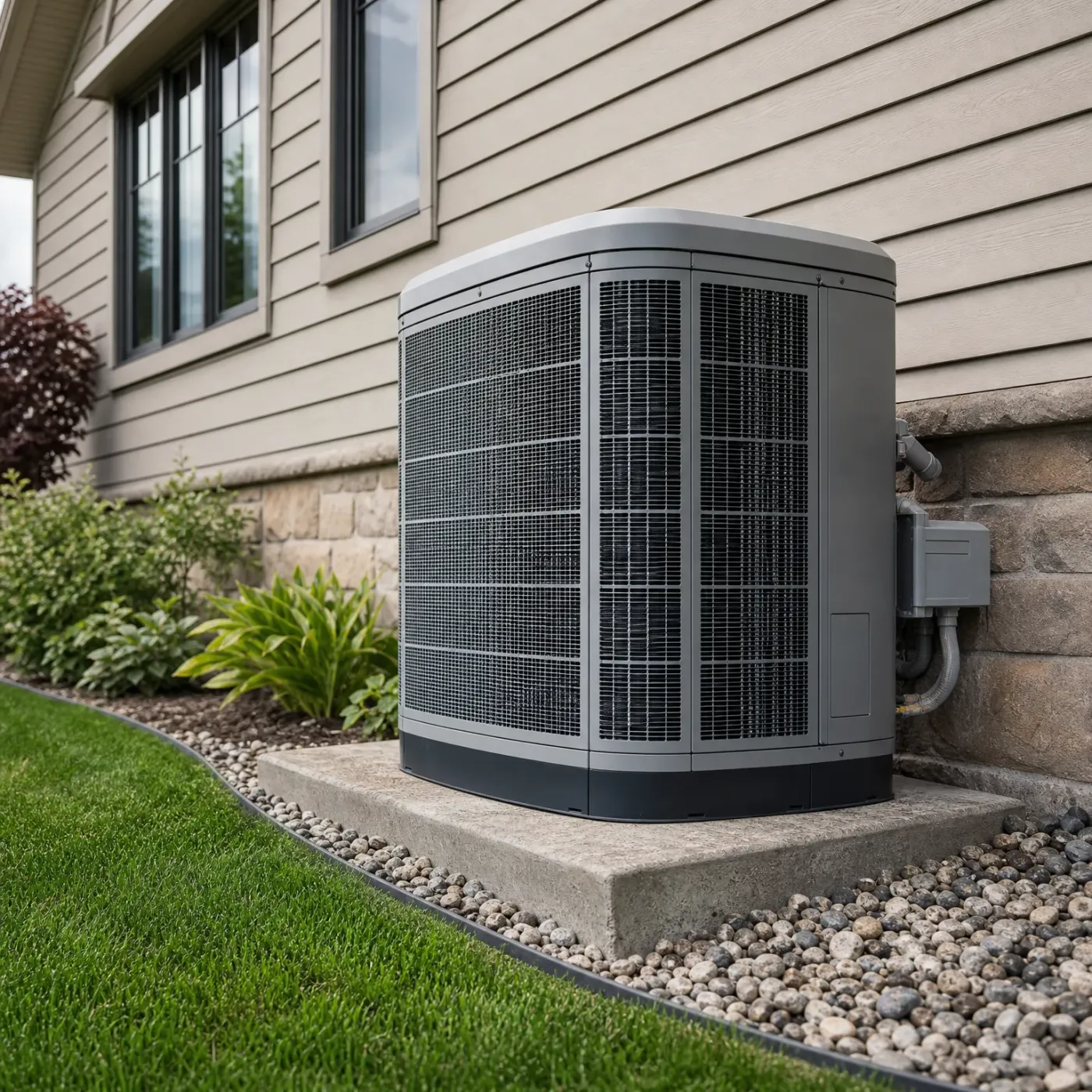
The outdoor unit sits on its pad, lines and conduit connected, nothing blocking it. Air moves through the coil fins freely in both directions. That's what lets it pull heat from outside air on a cold night without help from the backup coils.

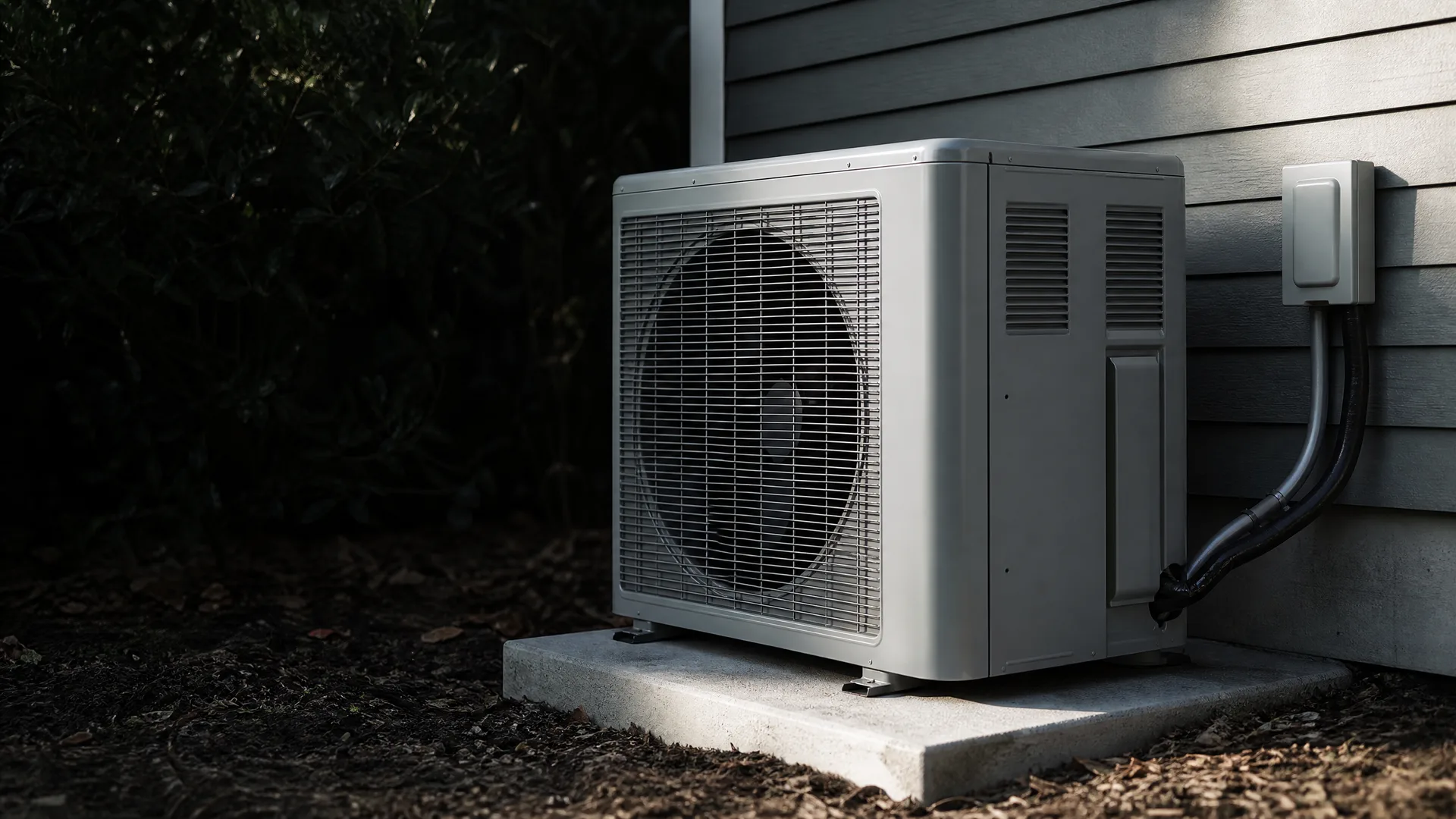
These fins are caked dark with dust and debris, and the grille behind them is just as dirty. Airflow through a coil like this drops off fast. A heat pump working against that kind of buildup is the one that ends up stuck running on backup heat alone.
At that rate, a night or two on the electric coils adds a little to your bill, not a lot. It's running the compressor for days that costs you, since those coils use more power than the heat pump needs for the same job.
EIA-861 2025 statewide residential average
Emergency heat is just a switch. It means the thermostat is telling the air handler to run the electric coils and leave the outdoor unit alone, nothing more. That's fine for a night when the coil is iced over or the fan won't turn, but it's not where the thermostat should sit once the outdoor unit is clear and working again. If it's still there after things thaw out, something didn't reset on its own, and that's worth a second set of eyes rather than a guess.
A contractor who works on heat pumps through an Idaho winter has already seen most of what causes this. A frozen coil, a fan motor that won't start, a defrost board that didn't cycle. They know what to check first because they've checked it before, on the same kind of system, in the same cold. That's different from a general repair call where the tech is working it out as they go.
The request goes to one contractor, not a handful. You get one call back, from someone local, instead of sorting through competing bids before anyone's even looked at the unit. Once that outdoor unit is running the way it's supposed to, the thermostat goes back to auto, and the heat pump goes back to carrying the load it was sized for, with the coils only stepping in when they're actually needed.
Finding a pro stops being your job