Running the way it should
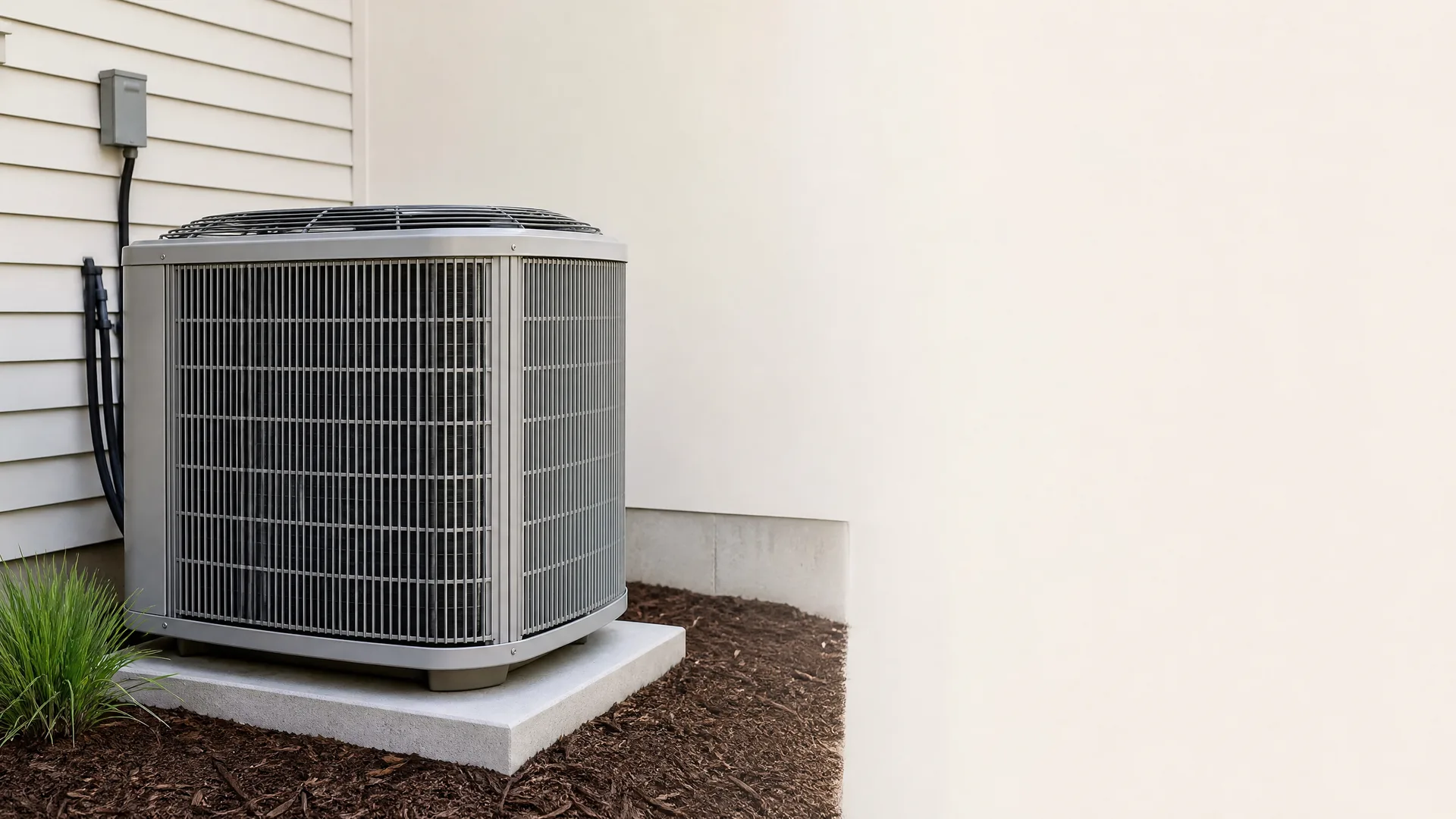
This is a condenser doing its job. Air moves through the coil fins, the fan spins free in its cage, and the sound from the pad is just that low hum. Nothing rattles against the cabinet and nothing grinds underneath it.

A loud noise from your AC usually points to something loose or something straining. A rattle is often a panel vibrating or a stick or bit of gravel caught in the outdoor fan cage, something Idaho's dry summer dust and wind can blow in. A squeal points to the fan motor bearing going bad. A grinding or screeching that gets worse points to the same thing further along. A banging means something has broken loose inside, often a piston pin or connecting rod in the compressor, and that one doesn't fix itself. A hissing can mean refrigerant escaping from a line, which also shows up as weaker cooling on a hot afternoon. None of these quiet down on their own, and running the system while a part is failing tends to let it damage whatever is next to it. Catching it now, while it's still just a noise, is usually the difference between a repair and a much bigger one.




Different sounds point to different parts, and the order they show up in matters. A bang right when the unit kicks on or shuts off usually traces back to the compressor itself, a piston striking a valve that has worn down inside the sealed system. A screech is almost always the outdoor fan motor bearing, metal wearing against metal until it starts to grind. Buzzing is more often electrical than mechanical, a loose wire or a contactor that is not making clean contact when it switches power to the outdoor unit. Clicking that repeats every few seconds is usually that same contactor, trying and failing to hold the connection. If you hear a steady hum but no air is moving at all, that often means the compressor or fan motor is seized, still pulling power but no longer turning. Idaho's dry summer heat puts long hours on that outdoor fan motor and its bearings, which is part of why this wear shows up here.



You're out watering the flower beds, the evening sun low and gold over the fence line. The AC kicks on behind you, that familiar hum, except there isn't one. You turn and see the condenser fan sitting still while the unit buzzes on. No spin, no breeze coming off the top grille. The air around it feels warmer than it should, still and thick after a hot, dry day. You crouch down and look through the side grate. Nothing visibly jammed, no stick caught in the blades, just a motor running hot with nowhere for that heat to go. Inside, you already know the house is starting to lose ground against the evening warmth.
A rattle rarely stays the same. The outdoor unit runs for hours on end through an Idaho summer, and anything loose keeps vibrating against sheet metal that whole time. A screw that backed out a quarter turn in June can work itself further out by August. What started as a faint tick against the cabinet can turn into a steady clatter once the panel has had all summer to shake against its frame.
The outdoor fan motor spins on a sealed bearing, and that bearing has grease packed inside it from the factory. Once the grease dries out or the bearing wears, metal rides on metal instead of turning smooth, and that's the screech. It won't quiet back down on its own, and a motor that keeps running without that bearing can seize or burn out the windings.
Stand near the outdoor unit and the sound usually tells you where to look. A rattle rises and falls with the wind, loudest when gusts pick up off the dry ground. A squeal holds steady the whole time the unit runs, not just at startup. A grinding or metal-on-metal sound means something is already wearing against something else, and it won't go back to normal on its own. A hard bang when the compressor kicks on or shuts off is a different problem than a steady buzz while it runs. Left alone, a worn part tends to fail the rest of the way during a stretch of hot days, which is when the house needs the AC most and a contractor's schedule is tightest.


A grinding or screeching compressor does not fix itself, and running it that way just wears the parts underneath it faster. In an Idaho summer, with the unit cycling on for hours most afternoons, a bearing or valve already going bad gets worse fast. Some of what's listed above you can check yourself, a loose panel, a stick in the fan cage. But a noise coming from inside the compressor or from a seized fan motor means opening up the unit, and that's not something to take on with a wrench from the garage. The longer a grinding sound runs, the more it can turn a repair into a full replacement. Hand it off and stop listening for it every time the AC kicks on. You don't need to diagnose it yourself to get it looked at.

This is a condenser doing its job. Air moves through the coil fins, the fan spins free in its cage, and the sound from the pad is just that low hum. Nothing rattles against the cabinet and nothing grinds underneath it.

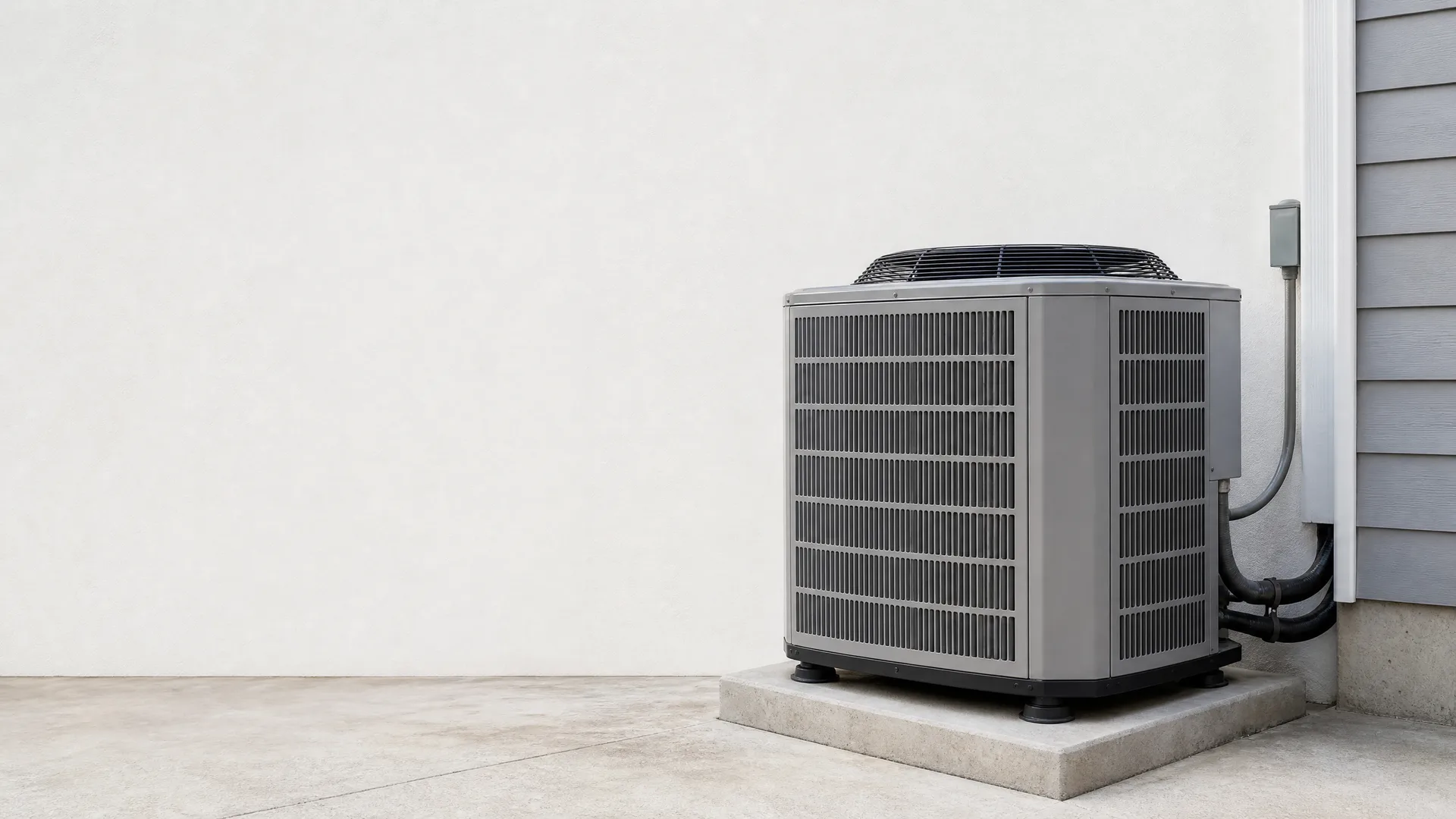
Same unit, same pad, but the sound coming off it has changed. A grind or a screech like this usually means a part inside is already wearing, not just dirty or loose, and it keeps wearing every hour the compressor runs.
At 11.83 cents a kilowatt-hour, running the outdoor unit through an Idaho summer afternoon doesn't cost much on its own. But a grinding motor or a failing compressor pulls harder to keep turning, and that strain shows up on the bill before it shows up as a breakdown.
EIA-861 2025 statewide residential average
A grinding compressor or a screeching fan motor is not something to sit on. Those sounds mean metal is already wearing against metal, and an Idaho summer gives the unit no real break to slow that down. It runs most afternoons from June through September, and every hour on a bad bearing or a failing valve adds wear that was not there the day before. Getting a contractor out now, while the unit still runs, usually means a repair instead of a system that quits outright on a 95 degree day.
A rattle that shows up only when the wind kicks up, or a panel buzzing lightly against the cabinet, is not an emergency. It is worth checking, maybe a quick look to see if something is loose or caught in the fan cage, but the unit can keep running while you watch it. If the sound stays the same from week to week and the air coming out still feels cold, there is time to schedule the repair around your week instead of dropping everything for it.


Idaho summers are dry, and that changes what dirt does inside the unit. Average dew point across June, July and August runs 42°F, according to NOAA climate normals, which is low enough that sweat evaporates fast and the air never feels heavy. But dry air carries dust, and a dry summer kicks up a lot of it off bare ground and gravel. That dust settles on the condenser coil and in the fan cage instead of washing off like it might somewhere humid. Grit packed into the fan blades throws them slightly off balance, and an off-balance fan is what turns a quiet hum into a rattle or a grind over a few weeks of running.
NASA POWER T2MDEW county cells weighted by homes

Most of what your AC makes noise about is simple once you know what to listen for. A rattle is something loose or something caught. A squeal or a screech is a belt or a bearing wearing down. A grinding or banging sound means metal is already hitting metal inside the unit, and that one does not wait. Where the sound falls on that line tells you how much time you have.
If you have gotten this far, you already know which kind you are dealing with. What is left is getting a licensed contractor out to look at the unit itself, and that part is no longer something you have to chase down on your own. Send the form and a contractor who works on units like yours in Idaho will reach out to you directly. You go back to watering the flower beds, and the noise becomes someone else's problem to solve.


You're not committing to anything by asking.
A noise that's new is worth checking before it decides for you when the AC gets fixed. Idaho summers don't let a condenser rest much between June and September, and a part already wearing down keeps wearing down every hour it runs. Sending the request now just gets a contractor looking at it sooner.