AC blowing warm air in Boise City, ID

Get matched with a pro who works on air conditioners in Ada County.

Get my match

Warm air from your vents usually means the compressor outside has stopped working while the indoor fan keeps running, so you still feel airflow, just not cold air. The most common cause is a dirty air filter or a clogged outdoor condenser that's made the system overheat and shut the compressor down to protect itself. A low refrigerant charge from a slow leak does the same thing, especially after a run of 95 degree days when the system never gets a break. It can also be a failed capacitor or contactor, parts that wear out from the heat and the long hours Boise City summers ask of them. If the thermostat is set to cool and the air coming out is room temperature or warmer, the system needs a look before the compressor takes more damage trying to run. Waiting it out in August rarely fixes itself.

A gray outdoor air conditioner condenser unit on a concrete pad beside a house with white horizontal siding and a brick foundation, with a wall-mounted disconnect box and conduit, and a green shrub with mulch at left.

Clean coil, cold air

A condenser like this one pulls heat out of your home and dumps it outside through those coils. When the grille and coils stay clear, the unit breathes right and the compressor doesn't labor to keep up. Airflow at the vents stays cold.

An outdoor air conditioning condenser unit on a concrete pad beside a house with white horizontal vinyl siding, with a gray electrical disconnect box and refrigerant lines on the wall behind it.

Caked with grime, running hot

Dirt built up like this across the grille and top cover blocks the airflow the condenser needs to shed heat. The compressor runs hotter and harder, and some units trip a safety switch and shut off, leaving the indoor fan blowing air that never gets cold.

A woman in a thick cream turtleneck sweater stands in a warmly lit living room with lamps, a shelf and sofa behind her, looking out a window where snow falls against a bare tree.
A woman in a gray turtleneck sweater stands beside a window with snow falling outside, in a lamp-lit living room with a sofa, shelving unit and coffee table behind her.
A woman in a gray turtleneck sweater stands beside a window looking out at falling snow and evergreen trees, with a lamp-lit living room, sofa, fireplace and built-in shelves behind her.
A woman in a cream cowl-neck knit sweater stands beside a large window looking out at snowy trees, with a lamp-lit living room, sofa, shelves and lit candles behind her.

The indoor blower and the outdoor compressor are two separate jobs, and either one can fail while the other keeps running. That's why you still get airflow, just not cold air. Refrigerant can leak out slowly over a season, and once the charge drops too low, the system trips off on pressure as a safety measure, not because anything indoors has changed. A run capacitor can wear out the same way, leaving the outdoor fan or compressor unable to start even though power is reaching the unit. Ice sometimes builds up on the indoor coil when airflow is restricted, and that ice melts between cycles, which can feel like warm or even damp air at the vents. A tripped breaker or a bad contactor will cut power to the outdoor unit by itself, so the blower inside has nothing to pull cold air across. And sometimes the fix is as simple as the thermostat switched to "fan" instead of "auto," which keeps air moving whether or not the cooling system underneath is doing anything at all.

Why the Air Turns Warm

  • A refrigerant leak drops the charge low enough that the compressor trips off on pressure while the blower keeps pushing air.
  • A failed run capacitor can leave the outdoor fan or compressor unable to start even though the unit still draws power.
  • Ice on the indoor coil from restricted airflow will melt between cycles and show up as warm, sometimes damp air at the vents.
  • A tripped breaker or bad contactor cuts power to the outdoor unit alone, so the indoor blower runs with nothing to cool the air.
  • A thermostat set to fan instead of auto keeps air moving across the vents even when the cooling system below it isn't running.
  • Low airflow across the outdoor condenser from a blocked coil makes the compressor work harder until it shuts down on high pressure.
A gray outdoor air conditioner condenser unit on a concrete pad beside a house with horizontal siding and a stucco foundation, with a disconnect box and conduit on the wall, decorative gravel, mulch, and a shrub nearby.
A unit like this one sits clear on its pad, with nothing blocking the airflow it needs to pull heat out of the house.
An outdoor air conditioning condenser unit on a concrete pad beside a house with horizontal lap siding, with an electrical disconnect box and conduit on the wall, mulch and a green shrub to the right, and a concrete walkway in the foreground.
Dirt packed into the coil grilles chokes airflow, and the compressor behind that wall box works harder until it gives out.
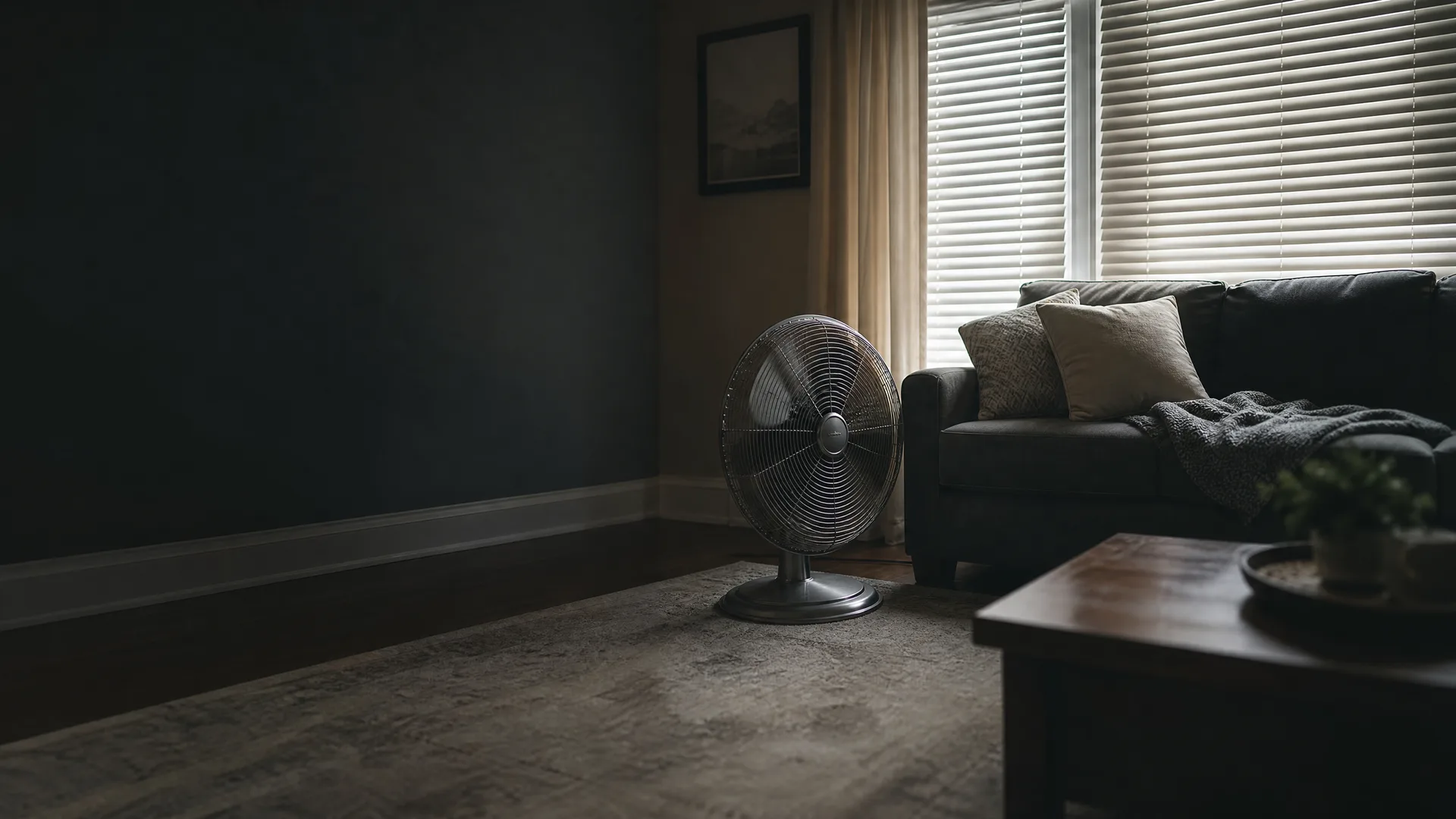
A dimly lit living room with a table fan on a patterned rug, a dark sofa with cushions and a blanket beside blinded windows, a framed picture on the wall, and a wooden coffee table with a potted plant in the foreground.

By three in the afternoon the sun is flat against the blinds and you've kept them shut since noon. The floor fan is going next to the couch, turning the same warm air over and over. You already checked the vent above the kitchen table and held your hand under it, and it's just air, no bite to it at all. Outside, the unit by the fence hasn't made its usual hum in a while. You know this house, you know that sound, and you know it isn't there right now. The dog's stretched out on the tile instead of the rug. Nobody's said anything about it yet, but everyone's noticed.


Get matched with an air conditioner pro in Ada County

A licensed pro who repairs air conditioners in Ada County gets your request.

No charge to send it. You decide if you hire them.

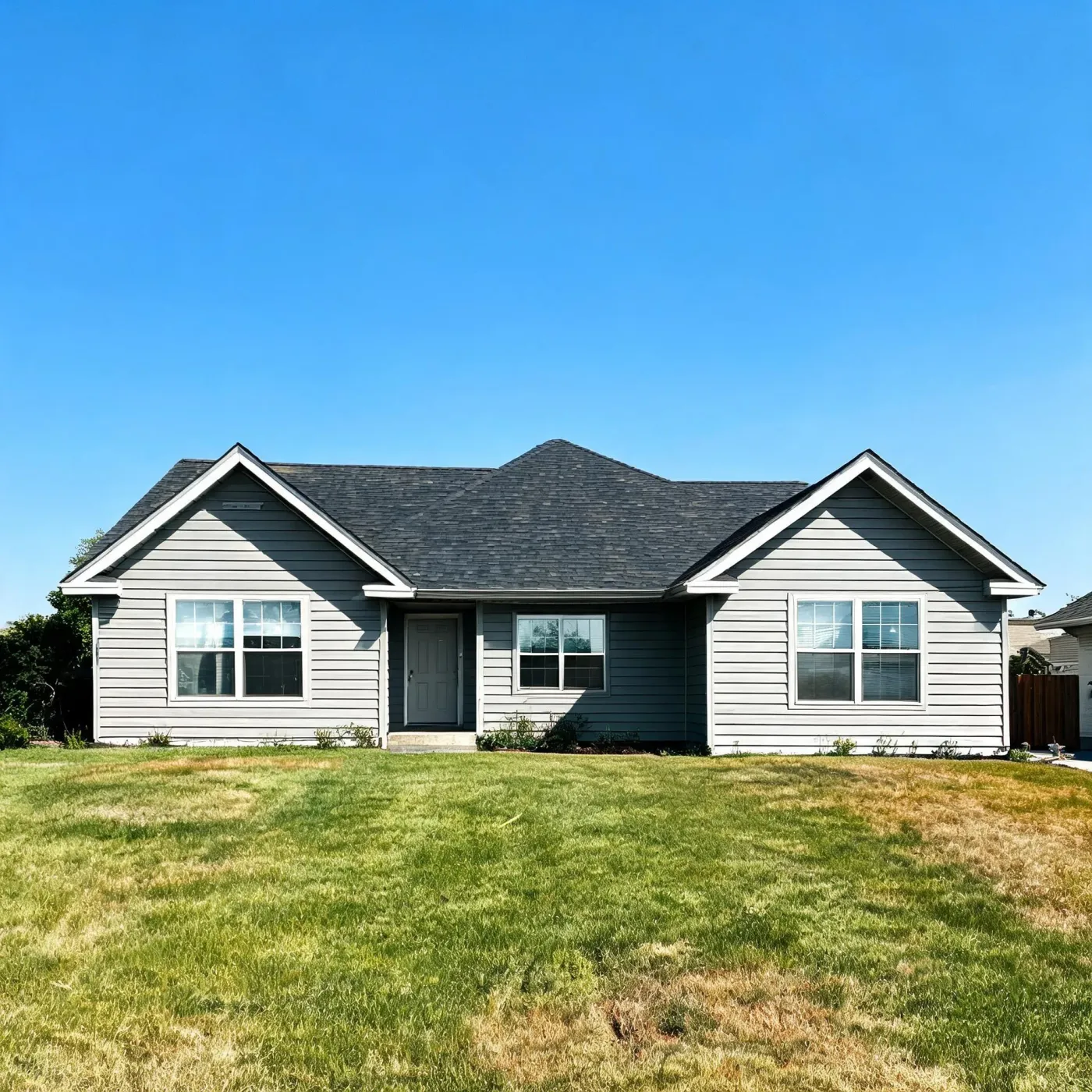
Single-story gray horizontal-siding house with two front gables, dark shingle roof, white-trimmed windows and a gray front door, fronted by a patchy green lawn under a clear blue sky.

The National Weather Service puts the average summer dew point in Ada County at 40°F, which is dry even by Boise City standards. Dry air like that pulls moisture out of everything, your skin, your lawn, the swamp cooler down the street, but it also means a working air conditioner here has an easier job removing humidity than units in muggier states. So when your vents start blowing warm, dryness isn't the cause. A compressor that's stopped or a coil caked with dust works the same whether the air outside feels crisp or heavy. The dry summer just means you'll notice the warm air faster, because there's no mugginess to mask it.

NASA POWER T2MDEW

Fix It Now or Let It Ride

Fix it now

  • A technician can usually trace warm air to one part, the capacitor, the contactor or the refrigerant charge, in a single visit.
  • If the compressor still runs but trips on pressure from a low charge, sealing the leak and recharging it restores cold air without replacing the unit.
  • A system under ten years old with one failed part has a lot of working life left in the compressor, coils and ductwork.
  • Catching a dirty coil or weak capacitor now keeps the compressor from working harder and failing on its own.
  • Repair costs less upfront and gets cold air back the same day in most cases.

Wait and watch

  • Running the system with the compressor cycling on and off from a bad part strains it further each time it tries to start.
  • A refrigerant leak left alone doesn't seal itself, and the charge keeps dropping until the compressor won't run at all.
  • Ice that forms on a struggling coil can back up into the line set and reach the compressor itself.
  • An older system that's already lost one major part, like the compressor, is more likely to lose another soon after.
  • Delaying means more days of warm air through the house while the fan runs and the compressor doesn't.
  1. The thermostat calls, but the outdoor compressor fails to start

  2. The indoor blower keeps running and pushes air through the vents

  3. With no heat removed outside, that air arrives at room temperature

  4. A low charge or bad capacitor keeps tripping the compressor off

Why does your house feel warmer by the afternoon

You'll feel it first in the rooms that get the most sun, then everywhere else. The air at the vent is moving but it's not cold, maybe barely cooler than the room itself. The thermostat might say 74 while the house sits closer to 80. Outside, the compressor unit may be silent when it should be running, or running but not doing much. Left alone through a string of hot Ada County afternoons, the indoor blower keeps pushing that same warm air, your energy use climbs for no comfort gained, and whatever is wrong with the compressor or the charge tends to get worse, not better, the longer it runs that way.

An outdoor air conditioner condenser unit on a concrete pad beside a house with light horizontal vinyl siding, surrounded by bare dirt, gravel and dry leaves, with refrigerant lines and conduit running along the wall.
Before you get your air conditioner repair
A gray outdoor air conditioner condenser unit on a concrete pad beside a house with horizontal lap siding, with a flowering shrub at left and a disconnect box with conduit on the wall at right.
After you get your air conditioner repair

40°F average summer dew point

Dry air like Ada County's won't tell you a charge is low or a capacitor is failing. The only way to know is a technician checking pressures and amp draw at the unit.

Reach a local pro

One part, one visit

A technician checks the capacitor, the contactor and the refrigerant charge in order, since any one of them can stop the compressor while the blower keeps running.

Reach a local pro

Cooling runs June through August

Three months is the whole job for your air conditioner here, June through August. That's a short stretch to carry the entire year's cooling, so when the compressor quits in July there's no slow season left to coast through on a floor fan. A short summer is still the one that matters.

NOAA nClimDiv 1991-2020

A gray outdoor air conditioner condenser unit on a concrete pad beside a house with dark horizontal siding and a stone base, surrounded by gravel, with a flowering shrub at left and a concrete walkway in front.

Running clean

A unit like this one sits clear on its pad, gravel swept back and nothing crowding the sides. The compressor inside pulls in air, does its work and sends cold air back through the vents without strain. Airflow stays steady and the house holds the temperature you set.

An outdoor air conditioner condenser unit sits on a concrete pad beside a stucco wall, with refrigerant lines and conduit running to the wall and a shrub to the left.

Choked and worn

Grime has built up across the fins and the casing shows its age. Lines still run into the wall, but a coil this caked can't shed heat the way it needs to, and the compressor behind it works harder until something in it fails. That's when the vents start blowing warm.

A man with graying hair and a beard in a plaid flannel shirt stands indoors looking out a frosted window at snow-covered trees, with a ceramic mug on the sill.
A smiling man with short dark curly hair and stubble, wearing a navy T-shirt, sits on a beige sofa looking down toward a dark object in the foreground, with a living room, round mirror, lamp and bright window behind him.
A woman in a tan sweater and jeans stands in the open black-framed front doorway of a white single-story house, while a blonde woman in an orange sweater and jeans walks toward her along a concrete paver path bordered by shrubs.

Warm air at the vents means the compressor stopped, not the fan

That's the whole answer. The blower is still moving air, so you feel it at the vents, but nothing outside is pulling the heat out of it. A dirty filter, a bad capacitor, a low refrigerant charge, any of these can be the reason, and a technician checking pressures and amp draw at the unit is how you find out which one it is.

You don't need to guess at it yourself or ride it out until August. A local contractor who works on these units every summer in Ada County can look at yours, tell you what failed, and get the compressor running again. You'll be matched with one contractor, not a handful calling at once, and they'll reach out to you directly once they have your information.

A dark ceramic mug on a round wooden table beside a light grey sofa with a woven cushion and knit throw, with a window, potted plant, floor lamp and wooden cabinet blurred in the background.
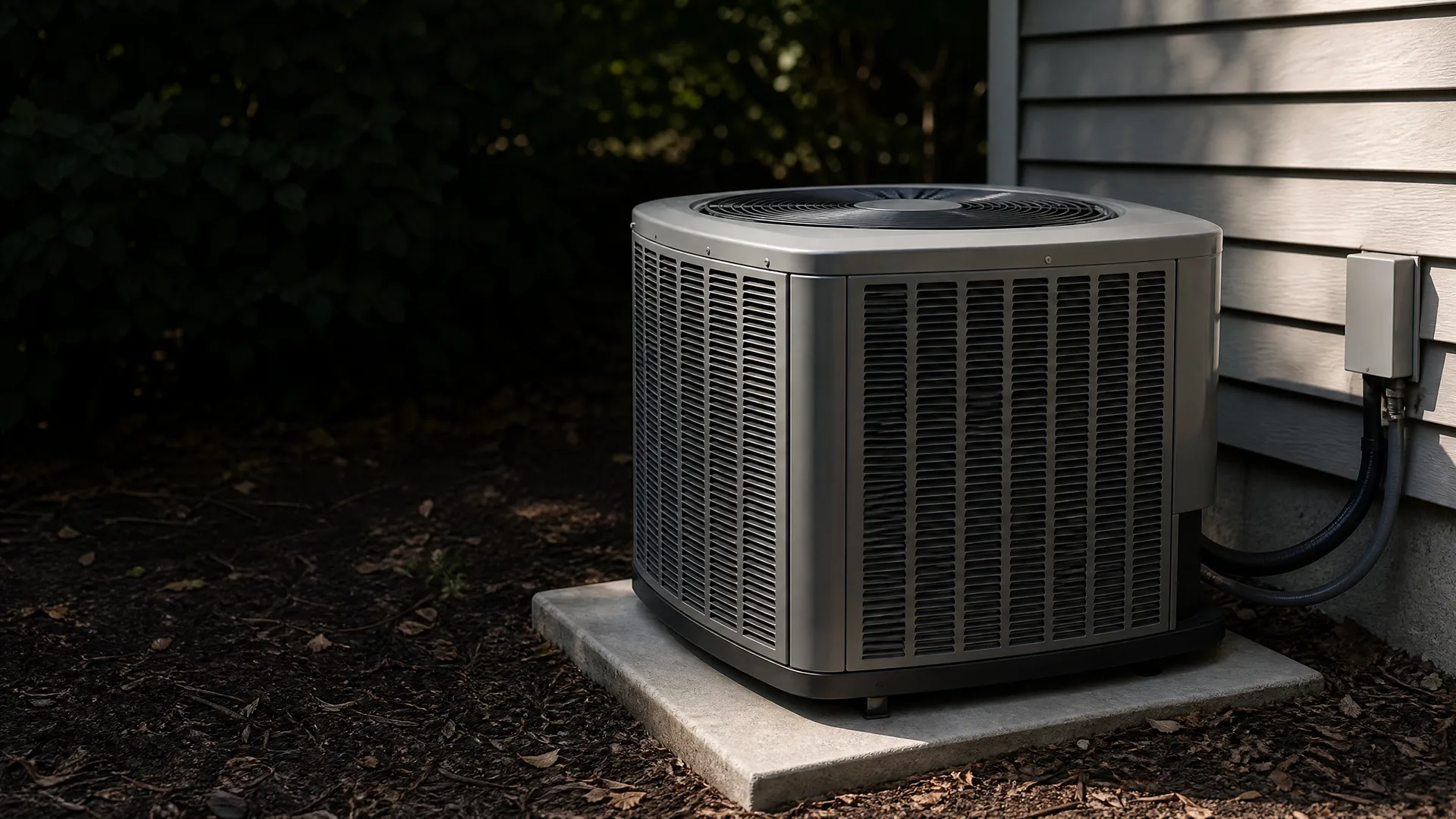
An outdoor air conditioner condenser unit on a concrete pad beside a house with horizontal lap siding, with an electrical disconnect box and conduit on the wall and dark mulch and shrubs around it.

A local pro for your air conditioner repair

RepairCentral ACAda County, ID
Step 1 of 2

What ZIP code is the job in?